Burundi
A landlocked highland nation located in the western branch of the East African Rift, known for Lake Tanganyika shores, royal drum traditions, and coffee and tea production. Travelers should monitor local safety conditions.
Burundi (Republic of Burundi)
| Capital | Gitega (political), Bujumbura (economic) |
|---|---|
| Continent | Africa |
| Languages | Kirundi, French |
| Currency | Burundian franc (BIF FBu) |
| Time Zone | UTC+2 |
| Dialling Code | +257 |
| Area / Population | 27,800 square kilometers / Approximately 13 million |
| Visa | Most foreign visitors can apply for a visa on arrival or an e-visa to Burundi, but multiple safety advisories recommend against travel to the country. If travel is essential, stay updated with the latest travel advisories and purchase insurance covering emergency medical care and evacuation. |
| Best Season | The dry seasons from June to September and December to February are relatively suitable for travel. The rainy seasons (February to May and October to November) feature muddy roads and difficult travel conditions. Check local safety conditions before traveling. |
| Main Cities | Bujumbura, Gitega, Gishora, Kibira National Park, Ruvubu National Park, Lake Tanganyika, Rutovu, Lake Nyanza |
Burundi in Detail
Burundi Overview
Burundi (officially the Republic of Burundi) is a landlocked country in Central Africa, situated in the western branch of the East African Rift. It borders Rwanda to the north, Tanzania to the east and south, and the Democratic Republic of the Congo across Lake Tanganyika to the west. Covering an area of approximately 27,800 square kilometers, the country is predominantly mountainous, with a population of around 13 million, making it one of Africa’s more densely populated nations. Its political capital is Gitega, while its economic capital and largest city is Bujumbura.
The official languages are Kirundi and French, with English and Swahili also spoken in business and border areas. Burundi, part of the Great Lakes region along with Rwanda, is primarily composed of Hutu people, along with Tutsi and Twa communities. Its society has long been rooted in agriculture and pastoralism. It’s important to note that Burundi has experienced complex political and social security situations over the past decade. Travelers should closely follow consular advisories from their home countries’ foreign ministries and local embassies or consulates, and carefully assess the necessity of travel.
Geography and Climate
Burundi lies on the Congo-Nile Divide, characterized mainly by plateaus and mountains sloping from west to southeast. The western plains along Lake Tanganyika are at lower elevations, while the central and eastern regions consist of undulating highlands, with the highest peaks located in the southern Muyinga area. Lake Tanganyika is the second deepest lake in the world, reaching about 1,470 meters at its deepest point, second only to Lake Baikal. It is also a vital freshwater resource and supports fishing industries along its shores.
The climate is tropical highland, moderated by altitude, with temperatures generally ranging between 15–25°C. Nights are cooler in the central and eastern highlands. The year is divided into dry and rainy seasons: the drier periods are from June to September and December to February, while the rainy seasons occur from February to May and October to November, bringing concentrated rainfall and often muddy, difficult road conditions. Burundi is home to one of the southernmost sources of the Nile River, with the Kagera River’s source near Rutovu considered one of its origins.
Historical Background
Burundi historically developed a kingdom system centered on monarchy, closely linked with the neighboring Kingdom of Rwanda. In the late 19th century, it was incorporated into German East Africa, and after World War I, it became a Belgian mandate territory. Burundi gained independence in 1962 as a constitutional monarchy, transitioning to a republic in 1966. Over the following decades, the country underwent multiple political changes and ethnic conflicts, which significantly impacted its development.
From the 1990s to the early 2000s, Burundi experienced a prolonged civil war. After 2005, ceasefires and political transitions were gradually achieved through multilateral mediation, restoring constitutional order. Around 2015, political unrest and security incidents resurfaced, and the situation has remained volatile since. Today, Burundi’s economy is primarily agricultural, with efforts focused on economic recovery and social stability. However, travelers should prioritize safety when planning their trips.
Economy and Currency
Burundi’s economy is heavily reliant on agriculture, with coffee and tea as its most important exports. Cotton, bananas, and fisheries also contribute to the local economy. The industrial base is relatively weak, with manufacturing mainly focused on agricultural processing. Due to longstanding political instability and infrastructure constraints, Burundi is one of the least developed countries in the world. The official currency is the Burundian franc (BIF), issued by the Bank of the Republic of Burundi.
Culture and Society
Burundi’s culture is known for its oral epics, drum music, and choral traditions. The Royal Drum Sanctuary near Gitega in Gishora is a central symbol of Burundi’s drumming heritage. The ceremonial drum performances by the royal drummers (Ingoma) were inscribed on UNESCO’s Representative List of the Intangible Cultural Heritage of Humanity in 2014. Drummers carry and play large wooden drums while dancing, producing deep, resonant rhythms that are iconic to Burundian culture. Cattle also hold significant symbolic value in traditional society, with pastoral poetry and rituals still practiced today.
The diet mainly consists of bananas, beans, cassava, maize, and potatoes, often accompanied by stews made with fish, bean paste, or peanut butter. Small Ndagala fish from Lake Tanganyika are a common ingredient in lakeside areas. Coffee and banana beer are commonly served to guests.
Tourism Overview
Burundi’s tourism offerings are primarily natural and cultural. Bujumbura, on the shores of Lake Tanganyika, features beaches and lakeside scenery. Kibira National Park preserves montane rainforests and chimpanzees along the Congo-Nile Divide. Ruvubu National Park is the country’s largest protected area, home to hippos, buffalo, and crocodiles. Cultural highlights include the southernmost source of the Nile, the Royal Drum Sanctuary in Gishora, and coffee plantations, offering enriching experiences for cultural enthusiasts.
However, due to political and security challenges, Burundi’s tourism infrastructure and transportation options are limited, and accessibility to some attractions is challenging. Before traveling, check the latest safety and entry information through official channels, choose reputable tour operators, avoid sensitive and border areas, and ensure you have adequate insurance, communication, and emergency plans.
Local Currency: Burundian franc (BIF)
Currency Overview
The official currency of Burundi is the Burundian franc (currency code: BIF, symbol: FBu), issued by the Bank of the Republic of Burundi (Banque de la République du Burundi), the country’s central bank. One Burundian franc is subdivided into 100 centimes, but due to low denominations, centime coins are no longer in circulation, and the smallest practical unit is 1 franc.
The Burundian franc is subject to significant exchange rate fluctuations. Historically, there has been a gap between the official and market exchange rates. Due to the underdeveloped financial system, cash is much more widely used than card payments in Burundi. Travelers are advised to exchange for local currency using internationally accepted currencies like U.S. dollars, and to do so through official channels.
Denominations
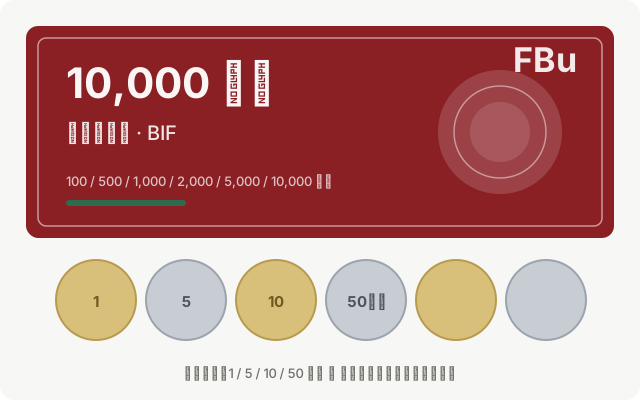
Current banknotes come in denominations of 100, 500, 1,000, 2,000, 5,000, and 10,000 Burundian francs, differentiated by color and design. Notes often feature national symbols, agricultural scenes, and wildlife imagery. Coins are issued in 1, 5, 10, 50, and 100 franc denominations, with smaller coins commonly used for minor transactions.
Because of the small denominations, everyday purchases often involve hundreds or thousands of francs. Carefully check amounts when shopping or dining. Higher-denomination notes were previously issued to combat inflation, so multiple versions may still be in circulation. Be vigilant about authenticity and condition when handling cash.
Cash and Payment Practices
Burundi operates largely on a cash-based economy. Markets, small shops, rural areas, and public transport typically accept only cash. Some hotels, restaurants, and banks in Bujumbura may accept international credit cards, but acceptance is limited and fees may apply. ATMs are mainly found in larger cities, and the availability and withdrawal limits for foreign cards vary by location.
It is advisable to carry a supply of U.S. dollars as backup and exchange for local currency at banks or authorized exchange points in Bujumbura. Keep smaller denomination bills for daily expenses and tipping. Due to the unique local security and financial environment, avoid carrying large amounts of cash or exchanging money through unofficial channels.
Traveler Tips
- Check consular advisories and regulations on entry and foreign currency before travel to avoid issues at borders or with authorities.
- Conduct currency exchanges and payments through banks, hotels, or other official venues, and retain transaction receipts.
- Limited cash and card acceptance means you should prepare alternative payment methods and backup funds.
- When purchasing coffee, tea, or handicrafts with cash, count your change and request a receipt.
Flag Meaning
Flag Design
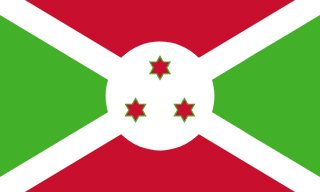
The flag of Burundi is rectangular with a 3:2 aspect ratio. The background is red, divided by a white diagonal cross (forming a St. Andrew’s cross) that also creates four white triangles. At the center is a white circle containing three red six-pointed stars arranged in a triangular pattern, outlined in green. The current design has been in use since June 28, 1967, with adjustments made to the star positions and shapes in 1982.
The contrasting red, white, and green colors create a distinctive design. The white cross divides the flag into four triangular sections, with the central white circle and three red stars forming the focal point. The overall layout is balanced and highly recognizable.
Symbolism
Red represents the struggle and sacrifice for independence and freedom, as well as the blood of the Burundian people. White symbolizes purity and peace, reflecting aspirations for national tranquility. Green stands for hope, progress, and the land. The three red six-pointed stars are the most central symbols, often interpreted as representing the unity and coexistence of the three main ethnic groups—the Hutu, Tutsi, and Twa—and also reflecting the national motto: Unity, Work, Progress.
History and Legal Status
In its early independence period, Burundi’s flag featured royal symbolism, including traditional drums. After the monarchy was abolished in 1966 and the country became a republic, the flag was redesigned to remove royal emblems. The current version with the white cross and three stars was adopted in 1967, with minor adjustments to the star arrangement made in 1982 to create the present standard.
Today, the Burundian flag is widely displayed at government buildings, schools, public gatherings, and sporting events, serving as the country’s official emblem. The three stars and national motto also appear on the coat of arms, official documents, and souvenirs, symbolizing national unity and ambition.
Burundi Travel Guide
All Guides »Burundi Travel Quick Guide: Visas, Safety, Seasons & Budget
Always check safety advisories before considering travel seasons or budgeting; t...
Burundi 7-Day Itinerary: Bujumbura — Lake Tanganyika — Royal Drums — National Parks 7 days
Starting from lakeside towns, the route connects royal drum heritage sites, rain...
Burundi 4-Day Short Trip: Bujumbura and Lake Tanganyika 4 days
Centered around Bujumbura, explore the lake, drums, and markets—experience Burun...
A list of must-visit attractions in Burundi: lakeshores, sacred drums, and rainforests
Organized by type—from Lake Tanganyika to the Gishora Sacred Drum Site, and on t...
Burundi Food Guide: Lake Fish, Bean Paste, and Banana Beer
From small fish in Lake Tanganyika to hearty stews made with homemade bean paste...
Burundi Transport Guide: Getting into Bujumbura, Driving Along the Lakeshore, and Accessing Different Regions
Key transport tips and safety advice for airport transfers, getting around the c...
10 Practical Tips for Traveling in Burundi
Safety comes first—before your itinerary or gear. These key points relate to you...