Sri Lanka
A tropical island nation in the Indian Ocean, renowned for Ceylon tea, the Temple of the Tooth in Kandy, scenic mountain railway rides through tea plantations, and the ancient rock fortress of Sigiriya.
Sri Lanka (Democratic Socialist Republic of Sri Lanka)
| Capital | Colombo |
|---|---|
| Continent | Asia |
| Languages | Sinhala, Tamil |
| Currency | Sri Lankan Rupee (LKR Rs) |
| Time Zone | UTC+5 |
| Dialling Code | +94 |
| Area / Population | 65,610 square kilometers / Approximately 22 million |
| Visa | Most foreign visitors can apply for an Electronic Travel Authorization (ETA) online in advance or obtain a visa on arrival at Bandaranaike International Airport in Colombo. Sri Lanka has previously offered periodic visa-free entry for certain nationalities, but these policies are subject to change. Be sure to check the latest announcements from the relevant immigration authorities before you travel. |
| Best Season | Travel is possible year-round. The best weather on the southwest coast is from December to March, while the east coast is ideal from May to September. The central tea region enjoys clear, dry weather from January to April, making it perfect for tea plantation tours and short hikes. |
| Main Cities | Colombo, Kandy, Nuwara Eliya, Ella, Galle, Sigiriya, Anuradhapura, Mirissa, Trincomalee |
Sri Lanka in Detail
Sri Lanka Overview
Sri Lanka (officially the Democratic Socialist Republic of Sri Lanka) is a tropical island nation located in the Indian Ocean, south of the Indian subcontinent. Formerly known as Ceylon, the country is shaped like a teardrop, separated from India by the Palk Strait at its closest point of about 30 kilometers, hence its nickname “the Pearl of the Indian Ocean.” It covers an area of approximately 65,610 square kilometers, with a highland center surrounded by coastal plains.
The capital, Colombo, is the largest city and the main commercial and transportation hub. The administrative capital is Sri Jayawardenepura Kotte. The population is around 22 million, with the Sinhalese making up about 75%, Tamils about 15%, and other groups including Moors and Burghers. The official languages are Sinhala and Tamil, but English is widely used in tourism and business. The country is a presidential republic divided into nine provinces.
Geography and Climate
Sri Lanka features a highland center surrounded by lower coastal areas. The central region is a plateau over 1,000 meters above sea level, with the country’s highest peak, Pidurutalagala, reaching about 2,524 meters. Adam’s Peak (Sri Pada), a sacred pilgrimage site, is also a popular destination for hikers. The longest river, the Mahaweli River, flows from the central highlands to the northeast coast, and the shoreline is characterized by sandy beaches, lagoons, and mangroves.
The country has a tropical monsoon climate with high temperatures year-round. However, due to the shifting influence of two monsoon seasons, the best travel times vary by region: The southwest monsoon brings rain from May to September, making the southwest coast wetter, while the east coast (including Trincomalee and Arugam Bay) enjoys sunnier weather. The northeast monsoon affects the east and north from October to January, leaving the southwest coast (such as Colombo, Bentota, Galle, and Mirissa) in a dry season. The central tea region, at around 1,900 meters altitude, is cool and misty year-round, often referred to as “Little England,” and is ideal for escaping the heat and exploring tea estates.
Historical Background
Sri Lanka has a recorded history spanning over two millennia. Buddhism was introduced from India in the 3rd century BCE, leading to the establishment of powerful Sinhalese kingdoms in the north-central part of the island, with capitals in Anuradhapura and Polonnaruwa. These kingdoms left behind impressive stupas, reservoirs, and palaces, collectively known as the “Cultural Triangle.”
From the 16th century onward, the island was successively colonized by the Portuguese, Dutch, and British. In 1815, the British made the entire island a crown colony known as Ceylon and developed large-scale tea plantations. Sri Lanka gained independence in 1948, became a republic in 1972, and adopted a presidential system in 1978. From 1983 to 2009, the country experienced a prolonged civil war between the government and the Tamil Tigers. The 2004 Indian Ocean tsunami also caused widespread devastation along the coasts. Since 2009, the country has focused on rebuilding and rapidly reviving its tourism industry. However, it faced a severe economic and foreign exchange crisis around 2022, which has since stabilized gradually.
Economy and Currency
Sri Lanka’s economy is driven by traditional exports such as tea, rubber, and coconut, as well as gemstones, textiles, garments, and tourism. Ceylon Tea is among the world’s most famous black teas, known for its bright floral and fruity notes. The highland-grown tea is a key export. Gemstone mining is also a long-established industry, with Sri Lanka being renowned for its sapphires, rubies, and cat’s eye stones.
The official currency is the Sri Lankan Rupee (LKR, symbol Rs), issued by the Central Bank of Sri Lanka. Due to recent economic fluctuations, exchange rates and prices can vary significantly. Travelers should check the current rates on the day of travel and carry some U.S. dollar cash as a backup.
Culture and Society
Sri Lanka is a Theravāda Buddhist country, with around 70% of the population practicing Buddhism. Stupas and temples can be found throughout the country. The Temple of the Tooth in Kandy houses a sacred relic of the Buddha’s tooth and is a major pilgrimage site. The annual Esala Perahera festival in Kandy, held between July and August, features elaborately adorned elephants and traditional drummers.
The cuisine is centered around rice served with various curries. Coconut milk, ginger, lemongrass, and curry leaves are common ingredients. Popular breakfast items include a bowl-shaped flatbread called appa (in Sinhala) and stir-fried rice flour cakes called kottu roti. The Sinhala and Tamil New Year, celebrated in mid-April, is a major family holiday. When taking photos with Buddha statues, it is respectful to stand with your back to the statue rather than posing directly in front. Shoes must be removed when entering temples, and visitors should dress modestly, covering shoulders and knees, as a sign of respect.
Tourism Overview
Despite its small size, Sri Lanka offers a wide range of experiences within ten days: ancient ruins, mountain tea plantations, wildlife safaris, and tropical beaches. Highlights include the cultural sites of the Cultural Triangle, the Temple of the Tooth in Kandy, the scenic train ride from Kandy to Ella, wildlife in Yala National Park, colonial forts in Galle, and whale watching and snorkeling in Mirissa and Trincomalee. The classic “Cultural Triangle – Tea Country – Southern Coast” loop is well-connected, and hiring a private car with a driver is the most convenient and popular way to explore.
Local Currency: Sri Lankan Rupee (LKR)
Currency Overview
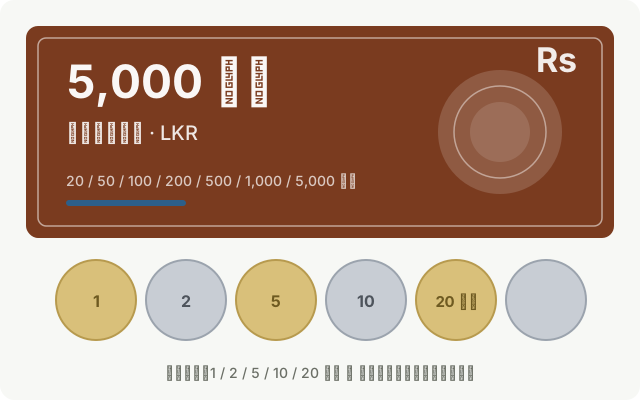
The official currency of Sri Lanka is the Sri Lankan Rupee (currency code: LKR, symbol: Rs; sometimes written locally as රු, and occasionally as SLRs internationally). One rupee is subdivided into 100 cents, though cent coins have largely fallen out of use. The Central Bank of Sri Lanka issues the rupee. Due to economic challenges around 2022, the rupee experienced significant depreciation against the U.S. dollar. Always check the latest exchange rates before traveling.
Denominations
Common banknotes in circulation include denominations of 20, 50, 100, 500, 1,000, and 5,000 rupees. There are also smaller denominations such as 10 rupees and some versions of 2,000 rupees. Each note is distinctly colored: 20 rupees is purplish-red, 50 rupees is blue-purple, 100 rupees is orange-red, 500 rupees is purple, 1,000 rupees is green, and 5,000 rupees is orange-brown. Banknotes often feature historical figures along with national symbols such as the national bird and flower.
Coins come in denominations of 1, 2, 5, and 10 rupees, as well as 25 and 50 cents. However, in daily transactions, rupee coins are more commonly used. Coins are especially handy for temple offerings, street-side tea stalls, and bus fares, so it’s useful to carry a small amount.
Cash and Payment Habits
Sri Lanka is still largely a cash-based society. Tuk-tuks, markets, small shops, tea factories, and temples typically only accept cash. Credit cards such as Visa and Mastercard are accepted in hotels, chain restaurants, larger malls, and some tourist sites. ATMs operated by commercial banks like Commercial Bank, Sampath Bank, and Hatton National Bank are the main source of cash withdrawals, though they may charge several hundred rupees per transaction, with single withdrawal limits around 20,000–50,000 rupees.
It’s advisable to bring U.S. dollars or euros in cash and exchange them at banks, authorized exchange counters, or the airport in Colombo. Exchange rates in the city are usually better than at the airport, and larger denomination USD bills (100 USD) often get better rates. Digital wallets and QR payments are growing in popularity locally but remain less accessible for short-term travelers, so cash remains the most reliable option.
Tips for Travelers
- Attraction tickets, hotels, and some private car services may quote prices in U.S. dollars. Always confirm the payment currency in advance.
- ATMs typically dispense 5,000 and 1,000 rupee notes. Count your money immediately after withdrawal.
- Tipping is customary: around 1,000–2,000 rupees per day for drivers and guides, and 100–200 rupees for porters.
- When leaving the country, you may be asked to show exchange receipts if converting rupees back to foreign currency at the airport. Keep all exchange slips.
Flag Meaning
Flag Design
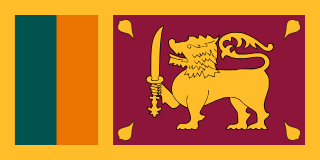
The Sri Lankan flag, commonly known as the “Lion Flag,” has a 1:2 aspect ratio. It is bordered in gold and divided into two main sections: on the hoist side are two vertical equal-width bands of orange (saffron) and green, each occupying about one-sixth of the flag’s width and together one-third of the total. The remaining two-thirds on the fly side is a deep red (maroon) background featuring a golden lion holding a sword in its right paw. At the four corners of the red field are yellow stylized leaves of the Bo tree.
Symbolism
The lion originates from the ancient legends of the Sinhalese people, whose name means “lion people.” It symbolizes bravery and the nation’s heritage, while the sword in its paw represents sovereignty. The deep red background stands for the Sinhalese majority, the orange stripe for the Tamil and Hindu traditions, and the green stripe for Muslim communities such as the Moors. Together, they reflect the country’s multi-ethnic harmony. The gold border signifies Buddhism and enlightenment, as well as unity. The four Bo leaves represent the Buddhist values of kindness, compassion, sympathetic joy, and equanimity.
History and Legal Status
The Lion Flag traces its origins to the royal standards of medieval Sinhalese and Kandyan kingdoms, with the lion holding a sword as a symbol since the 15th century. Upon independence in 1948, the flag included the lion and Bo leaves. In 1951, the orange and green stripes were added to represent Tamil and Muslim communities. In 1972, the design of the Bo leaves and gold border was standardized following the country’s name change to the Republic of Sri Lanka, and the current version was officially adopted in 1978.
Sri Lanka has strict laws governing the use of the national flag. It is prohibited to damage, deface, invert, or otherwise disrespect the flag. Public institutions, schools, and sporting events must follow official flag protocols. As a traveler, maintain a respectful attitude when photographing or using the flag in any form.
Sri Lanka Travel Guide
All Guides »Sri Lanka Travel Quick Guide: Visa Info, Best Seasons, Budget Tips & Temple Etiquette
How to get a visa, which coast to visit in which season, how much you might spen...
Classic 8-Day Sri Lanka Loop: Cultural Triangle, Tea Train, and Southern Coast 8 days
From the ancient Sigiriya Rock Fortress to the Galle Fort, this itinerary covers...
Sri Lanka 4-Day Short Trip: Highlights of the Cultural Triangle and Kandy’s Temple of the Tooth 4 Days
Even with limited time, you can experience the country’s most essential ancient ...
Essential Attractions in Sri Lanka: Cultural Triangle, Central Tea Region, and Southern Coast
From Sigiriya Rock Fortress to Galle Fort, this guide outlines Sri Lanka’s top a...
Sri Lanka Food Guide: How to Eat Rice and Curry, Hoppers, and Ceylon Tea
From stir-fried flatbread under $3 per person to hotel buffets—experience Sri La...
Sri Lanka Transport Guide: Private Car Hire, Tea Train, Tuk-Tuks & Airport Transfers
How to get from the airport into town, whether to hire a car or take the train a...
10 Practical Travel Tips for Sri Lanka: Visa, Cash, and Beach Safety
From confirming your visa to staying safe on the beach, these details can greatl...