Papua New Guinea
One of the most culturally rich countries in the South Pacific, with over 800 languages, birds-of-paradise, and highland tribes weaving together a raw and majestic travel destination.
Papua New Guinea (Independent State of Papua New Guinea)
| Capital | Port Moresby |
|---|---|
| Continent | Oceania |
| Languages | English, Tok Pisin |
| Currency | Papua New Guinean Kina (PGK K) |
| Time Zone | UTC+10 |
| Dialling Code | +675 |
| Area / Population | Approximately 463,000 square kilometres / Approximately 10 million |
| Visa | Most foreign visitors need to apply for an e-Visa (electronic visa) via the Papua New Guinea Immigration website in advance for tourism stays up to 30 days; those joining an approved tour group can obtain a free single-entry 30-day tourist visa. |
| Best Season | The dry season from May to October features relatively cool and dry weather, ideal for highland travel and the Kokoda Track hike; the wet season from November to April brings heavy coastal rainfall and high humidity. |
| Main Cities | Port Moresby, Lae, Mount Hagen, Kokopo, Rabaul, Wewak, Madang, Alotau, Tari |
Papua New Guinea in Detail
Papua New Guinea Overview
Papua New Guinea (officially the Independent State of Papua New Guinea) is located in the southwest Pacific Ocean, occupying the eastern half of New Guinea Island along with nearby islands such as New Britain, New Ireland, Bougainville, and Manus. Covering an area of about 463,000 square kilometres, it is the second-largest country in Oceania. Its capital, Port Moresby, lies on the southeastern coast of New Guinea Island and serves as the national centre for politics, economy, and transport. With a population of around 10 million, the official language is English, while Tok Pisin and Hiri Motu are widely spoken.
Papua New Guinea is incredibly diverse in both nature and culture: its central region is dominated by rugged highland mountains, while the coasts feature volcanoes, coral reefs, and mangroves, and the interior is thick with tropical rainforests and fast-flowing rivers. The rugged terrain and challenging transport have greatly influenced the country’s tribal distribution and cultural variety.
Geography and Climate
Situated on the Pacific Ring of Fire, Papua New Guinea has widespread mountains and volcanoes, with Mount Wilhelm reaching approximately 4,509 metres, the highest peak. The central mountain range divides the coastal lowlands from the highlands, with major rivers like the Sepik and Fly Rivers flowing abundantly. The coasts and islands are lined with coral reefs, and East New Britain Province, where Rabaul is located, is a highly volcanic area. In 1994, eruptions of Mount Tavurvur and Mount Vulcan buried much of Rabaul’s urban area.
The climate is tropical, with hot and humid conditions year-round along the coasts, while the highlands become noticeably cooler with altitude—temperatures at Mount Hagen often require warm clothing at night. The dry season runs from May to October, and the wet season from November to April. Due to the equatorial climate and high rainfall, visitors should take special precautions against mosquitoes and ensure food and water safety.
Historical Background
Human settlement on New Guinea Island dates back tens of thousands of years, making it one of the earliest regions for agricultural development. The inland highlands formed isolated, self-sufficient tribal societies over centuries, which also explains the extreme linguistic diversity. In the 19th century, Germany took control of the northern and northeastern parts (German New Guinea), while Britain declared the southern part a protectorate before transferring it to Australian administration.
After World War I, the German-administered area came under Australian mandate and was administered jointly with the south. During World War II, New Guinea became a key battleground in the Pacific. In 1942, Japanese forces attacked Port Moresby, leading to intense fighting by Allied troops along the Kokoda Track and at Milne Bay—the Kokoda Track remains a potent symbol in the ANZAC military heritage. Papua New Guinea gained independence on 16 September 1975, becoming a constitutional monarchy within the Commonwealth, with the British monarch as head of state represented by a governor-general.
Economy and Currency
The economy of Papua New Guinea relies heavily on mineral resources, with gold, copper, oil, and natural gas exports forming a major part of national income. Major mines such as Ok Tedi and Porgera, along with the liquefied natural gas project in the south, have had profound impacts. Agriculturally, coffee, cocoa, palm oil, and copra are important exports, with Highlands coffee enjoying a strong international reputation. However, due to weak infrastructure and difficult terrain, many rural populations still rely on subsistence farming.
The official currency is the Papua New Guinean Kina (currency code PGK, symbol K), with 1 kina equal to 100 toea. Issued by the Bank of Papua New Guinea, the kina is named after the pearl shells traditionally used in trade in the highlands, while toea refers to another traditional exchange item—both names reflect deep local cultural roots. In recent years, the kina has weakened against foreign currencies, so travellers should monitor exchange rates and carry sufficient cash due to potential limitations on card payments.
Culture and Society
Papua New Guinea is the most linguistically diverse country in the world, with over 800 languages spoken—many by only a few hundred or even dozen people—which makes it a living museum of human linguistic variety. Correspondingly, each tribal area has distinct clothing, adornments, songs, dances, and rituals, with Highlands jewellery made of beads and feathers, elaborate headdresses, body paint, and performances being especially notable.
The bird-of-paradise is the national symbol of Papua New Guinea, and its vibrant feathers have long been used in ceremonial dress. The Huli tribe of the Mount Hagen area is famous for covering their faces and bodies with yellow clay and wearing elaborate 'mudman' headdresses, while communities along the Sepik River are known for wood carvings, totem poles, and unique ceremonial art. The government promotes this diversity globally, with cultural festivals like the Mount Hagen Show serving as flagship events.
Tourism Overview
Papua New Guinea offers a highly authentic travel experience: hiking the Kokoda Track is a goal for many, combining WWII history with rainforest trekking; the Highlands host tribal cultural festivals where visitors can experience unique music, dance, and adornments; the Sepik River allows boat trips into villages to observe wood carving and totem craftsmanship; and East New Britain’s Rabaul and Kokopo offer close encounters with volcanic landscapes and war relics. Birdwatching for birds-of-paradise, diving, and exploring remote coral reefs are also major draws for adventure travellers.
It is important to note that safety is the primary travel risk in Papua New Guinea. Cities like Port Moresby and Lae have relatively high rates of street crime, including robbery, and tribal conflicts sometimes occur in remote areas. Travellers should avoid going out at night, not travel alone, avoid carrying large amounts of cash or valuables, and use reputable tour operators for transport and itineraries. Staying informed about security advisories from your embassy is essential. With good preparation and caution, you can fully enjoy the country’s exceptional natural and cultural wonders.
Local Currency: Papua New Guinean Kina (PGK)
Currency Overview
The official currency of Papua New Guinea is the Papua New Guinean Kina (currency code PGK, symbol K), issued by the Bank of Papua New Guinea. One kina is divided into 100 toea. The term 'kina' comes from the pearl shells historically used as trade items in the Highlands, and 'toea' refers to another traditional exchange medium, giving the currency names rooted in local culture.
Denominations
Common banknotes in circulation include denominations of 2, 5, 10, 20, 50, and 100 kina, featuring images of Parliament House, birds-of-paradise, traditional crafts, and cultural motifs in vivid colours. Coins come in 5, 10, 20, 50 toea and 1 kina (with 2 kina coins also available), though smaller toea coins are less commonly used. Both notes and coins often depict native plants, animals, and tribal art, making the currency one of the more design-forward in the Pacific region.
Cash and Payment Habits
Credit and debit card acceptance is limited mainly to cities: hotels, large supermarkets, petrol stations, and upscale restaurants in Port Moresby and Lae usually accept Visa and Mastercard, though fees and exchange rates may be unfavourable. Markets, taxis, rural guesthouses, ferry tickets, and most local shops only accept cash. Some ATMs operated by Bank South Pacific (BSP), Westpac, and Kina Bank accept UnionPay cards, with some machines offering a Chinese interface, but such ATMs are scarce outside urban areas. It is advisable to carry enough kina cash and prepare small denominations for daily use.
Traveller Tips
- The kina has weakened in recent years; check the daily exchange rate when converting or carrying cash.
- Outside cities, card payments and ATM access are limited—carry ample cash and backup funds.
- ATM withdrawals may incur local bank fees; consider withdrawing larger amounts per transaction.
- Small change is often needed when shopping at markets or small stores—carry small-denomination kina notes and coins.
Flag Meaning
Flag Design
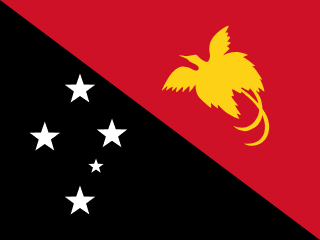
The flag of Papua New Guinea is rectangular with a 3:4 aspect ratio. It is divided diagonally from the bottom left to the top right into two triangles: the upper triangle is black, and the lower is red. The black triangle features a golden-yellow bird-of-paradise (Raggiana bird-of-paradise), while the red triangle displays a white Southern Cross constellation made up of five stars. The red and black colours are tied to traditional local hues, and the bird-of-paradise and Southern Cross are the nation’s most iconic natural and celestial symbols.
Meaning
Red symbolises courage and national vitality, while black represents the skin colour and traditions of the local people. The golden-yellow bird-of-paradise is Papua New Guinea’s national bird, symbolising freedom and national identity. The Southern Cross reflects the country’s location in the Southern Hemisphere and serves as a symbol of guidance. The bird’s plumage has long been used in ceremonial headdresses in the Highlands, representing beauty and dignity. The Southern Cross is one of the most recognisable constellations in the southern night sky, historically used by locals to navigate seasons and directions. The flag masterfully blends natural elements, celestial symbols, and indigenous colours, making it highly distinctive internationally.
History and Legal Status
The flag was designed by 15-year-old student Susan Karike and won a national competition in 1971. It was officially adopted upon the country’s independence in 1975 and has been in use ever since. As a national symbol, it is prominently displayed during Independence Day celebrations, at government buildings, schools, sporting events, and overseas diplomatic missions. Visitors should show respect for the flag, especially in formal settings or when it appears alongside the national coat of arms.
Papua New Guinea Travel Guide
All Guides »Papua New Guinea Travel Quick Guide: Visa, Seasons, Budget & Safety Essentials
A culturally rich yet security-sensitive destination—before departure, carefully...
Papua New Guinea 8-Day Classic Itinerary: Kokoda Track & Highland Tribes 8 days
Combine World War II’s Kokoda Track, Highland tribal cultural festivals, and Sep...
Papua New Guinea 4-Day Short Itinerary: Port Moresby and Nearby Attractions 4 days
With limited time, basing yourself in the capital, Port Moresby, and visiting mu...
Essential Attractions in Papua New Guinea: Kokoda Track and Highland Tribal Culture
From WWII trails and Highland festivals to Sepik River wood carvings and volcani...
Papua New Guinea Food Guide: Earth Oven Roasts, Coconut Fish, and Highland Coffee
From mumu earth oven roasts and coconut fish to highland coffee, Papua New Guine...
Travel Guide: Interisland Flights, PMV Minibuses, and Private Transfers in Papua New Guinea
Due to rugged terrain and safety concerns, getting around Papua New Guinea requi...
Essential Travel Tips for Papua New Guinea: Safety, Health, and Flights – Top 10
Crime prevention, health protection, cash readiness, and flight flexibility are ...