Netherlands
The Netherlands, known as the Low Countries, is famed for its sprawling canals, windmills, tulips, and cycling culture. It is also the homeland of great painters like Rembrandt and Van Gogh.
Netherlands (Kingdom of the Netherlands)
| Capital | Amsterdam |
|---|---|
| Continent | Europe |
| Languages | Dutch |
| Currency | Euro (EUR €) |
| Time Zone | UTC+1 |
| Dialling Code | +31 |
| Area / Population | 41,500 square kilometers / Approximately 17.9 million |
| Visa | Most foreign visitors need to apply for a Schengen visa in advance when visiting the Netherlands. Applications must be submitted to the Dutch embassy or consulate (or visa center) in your own country with fingerprint enrollment, and you are required to purchase travel medical insurance covering the Schengen Area with a minimum coverage of 30,000 euros. It is recommended to apply 1–2 months in advance during peak seasons. |
| Best Season | The best time to see tulips is from April to May. June to August offers mild weather and very long daylight hours. Spring and autumn see fewer tourists, while winter is damp, cold, and windy—ideal for museum visits and urban exploration. |
| Main Cities | Amsterdam, Rotterdam, The Hague, Utrecht, Maastricht, Delft, Giethoorn, Keukenhof |
Netherlands in Detail
Netherlands Overview
The Netherlands (officially the Kingdom of the Netherlands, often referred to as Holland) is located in northwestern Europe, bordered by Germany to the east, Belgium to the south, and the North Sea to the west and north. It is a classic lowland country. With a land area of about 41,500 square kilometers, roughly a quarter of the country lies below sea level. The lowest point, near Rotterdam in the northeast, is about 6.7 meters below sea level. As a result, dikes, sluices, and polders form the most distinctive features of the Dutch landscape. The capital is Amsterdam, while the government, parliament, and royal family are based in The Hague, a coastal city. The country is divided into 12 provinces.
The Netherlands is a constitutional monarchy. The king is the head of state, while executive power is held by the cabinet and the prime minister. As a founding member of the European Union, the Netherlands consistently ranks among the world’s leaders in trade, logistics, agricultural technology, and finance. It is also one of the countries with the highest per capita income and quality of life globally. Despite its small size, it wields disproportionate influence in the world economy.
Geography and Climate
The terrain of the Netherlands is extremely flat. The western part consists of sand dunes and lowlands, while the eastern and southern regions have gently rolling hills. The Rhine, Meuse, and Scheldt rivers flow through the country into the North Sea, forming a vast delta and giving rise to the Delta Works, a world-class water management system. The Zuiderzee project enclosed a bay to create the IJsselmeer, and the reclaimed land of Flevoland has become a developed agricultural and urban area. Polders—land reclaimed from water—are crisscrossed by canals and windmills, which were originally used for drainage.
The climate is temperate maritime, regulated by the North Atlantic Current. Winters are mild (average January temperature around 3°C), and summers are cool (average July temperature around 18°C). Rainfall is evenly distributed throughout the year, and the weather is often cloudy and windy, with frequent changes throughout the day. Carrying an umbrella and a windproof jacket is essential. Late April to May is tulip season, the most popular time to visit. From June to August, daylight lasts well into the evening, making it perfect for cycling and riverside strolls.
Historical Background
During Roman times, the Low Countries were on the frontier of the Rhine defensive line. In the Middle Ages, the region was divided among various counties and duchies, ruled successively by the Burgundian and Habsburg dynasties. Under Spanish rule in the 16th century, religious oppression and heavy taxation sparked resistance, leading to the Eighty Years' War, which began in 1568. In 1581, the seven northern provinces issued the Act of Abjuration, declaring independence from Spain. Their independence was formally recognized by the Treaty of Münster in 1648, establishing the Dutch Republic.
The 17th century was the Dutch Golden Age. The Dutch East India Company (VOC), founded in 1602, became the world’s most powerful trading company. Amsterdam emerged as a global hub for finance and shipping, and masters like Rembrandt, Vermeer, and Frans Hals brought Dutch painting to its peak. The country’s influence later declined, and the Kingdom of the Netherlands was established in 1815. During World War II, the Netherlands was occupied by Germany but rebuilt rapidly afterward. It became a founding member of Benelux, NATO, and the European Community (now the EU). In 2002, the euro officially replaced the Dutch guilder.
Economy and Currency
The Netherlands has a highly open, export-oriented economy. The Port of Rotterdam has long been Europe’s largest port, and Amsterdam Airport Schiphol is a major European air hub. The country is renowned for its flower exports, dairy products, tomatoes, and greenhouse horticulture, consistently ranking among the world’s top exporters. Industrially, multinational giants like ASML (specializing in lithography machines), Philips (medical and lighting technology), Shell (energy), and Unilever (consumer goods) wield global influence. The service and logistics sectors make up the largest parts of the economy.
The official currency is the euro (EUR, symbol €), issued by the European Central Bank system, with the Dutch central bank (De Nederlandsche Bank) managing its circulation. In 2002, euro banknotes and coins replaced the Dutch guilder (Gulden), which had been in use for centuries. Today, the Netherlands is one of the least cash-dependent countries in the world, with debit cards, contactless payments, and the local iDEAL transfer system covering most transactions.
Culture and Society
Dutch society is known for its tolerance, pragmatism, and straightforwardness. People tend to express their opinions directly while respecting personal choices and privacy. Religion plays a diminishing role, and the society is largely secular and diverse. It has a rich artistic tradition, with contributions from the Golden Age masters, Van Gogh’s post-impressionist works, and Mondrian’s abstract art.
Windmills, wooden shoes, tulips, and cheese are among the most iconic symbols of the Netherlands. Gouda and Edam cheeses are national favorites. Major holidays include Sinterklaas (St. Nicholas Day) and King’s Day on April 27, when the country turns orange. The Netherlands is also a cyclist’s paradise, with more bicycles than people, extensive bike lanes, and ample parking facilities.
Tourism Overview
The Netherlands may be small, but it is packed with attractions. Its well-developed rail network makes it easy to travel between cities, most of which are within an hour’s drive from Amsterdam—making it ideal for a hub-and-spoke trip. Amsterdam’s Canal Ring (Grachtengordel) is a UNESCO World Heritage Site, and must-visits include the Rijksmuseum, Van Gogh Museum, and Anne Frank House. Keukenhof Park, the world’s largest tulip garden, blooms in spring. Rotterdam stands out for its modern architecture and port, while Kinderdijk’s windmills are also a UNESCO site. Giethoorn’s canal villages, The Hague’s Peace Palace, Delft’s blue pottery, and Maastricht’s historic old town offer deeper cultural experiences.
Local Currency: Euro (EUR)
Currency Overview
The Netherlands is a member of the Eurozone, and its official currency is the euro (currency code: EUR, symbol: €). Monetary policy is set by the European Central Bank (ECB), while the Dutch central bank (De Nederlandsche Bank, DNB) manages issuance and circulation within the country. One euro is equal to 100 cents. The euro was introduced as an accounting currency in 1999 and became legal tender in the form of banknotes and coins on January 1, 2002, replacing the former Dutch guilder (Gulden, code: NLG).
Denominations
Euro banknotes come in seven denominations: €5, €10, €20, €50, €100, €200, and €500. Each denomination features different colors and architectural styles, with designs inspired by bridges, arches, and windows from various European periods. Real buildings are intentionally avoided to prevent favoring any one country. The €500 note ceased issuance in 2019 but remains legal tender, though it is often refused by merchants. In practice, €5, €10, €20, and €50 notes are the most commonly used.
Euro coins are issued in eight denominations: €1, €2, and 1, 2, 5, 10, 20, and 50 cents. One hundred cents equal one euro. The common side of the coins is identical across all eurozone countries, while the national side is designed individually by each member state. Dutch coins have featured portraits of Queens Wilhelmina, Juliana, and Beatrix, but since 2014, they have shown the current king, Willem-Alexander, along with the inscription in Dutch. All euro coins are valid across the eurozone.
Cash and Payment Habits
The Netherlands has one of the lowest rates of cash usage in the world. Supermarkets, restaurants, train stations, and museums almost universally accept debit cards and contactless payments, while online shopping is dominated by the local iDEAL system. Note that many Dutch merchants only accept debit cards (Debit) or domestic PIN cards, and acceptance of foreign credit cards is relatively low compared to other European countries. Many small shops explicitly indicate that they accept only PIN cards or debit cards.
It is advisable to bring a debit card or chip-enabled credit card that supports contactless payments abroad. You can also exchange a small amount of euros for cash at Amsterdam Schiphol Airport or local banks and GWK Travelex offices. ATMs are widely available, but some may charge fees for foreign cards—always check the screen prompts before withdrawing money. Open-air markets, small cafés, public toilets, and some older parking facilities may still prefer cash.
Traveler Tips
- Most Dutch merchants do not accept foreign credit cards. Debit cards have a much higher success rate.
- Restaurant bills usually include taxes and service charges. Tipping is not mandatory but rounding up or leaving 5–10% is appreciated.
- Public toilets often require payment (around €0.50–€1). Carry small change.
- Euro exchange rates fluctuate. Check the real-time rate before your trip.
Flag Meaning
Flag Design
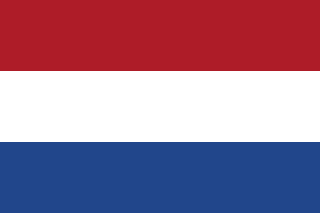
The flag of the Netherlands is rectangular, consisting of three equal horizontal stripes in red, white, and blue from top to bottom. The typical aspect ratio is 2:3. The flag bears no emblem or coat of arms and is one of Europe’s simplest tricolor flags. In official color codes, red is bright vermilion, blue is deep cobalt, and white is pure white. The three stripes are of equal width, without borders or crests.
Meaning
The red, white, and blue color scheme originated from the flag of William of Orange (Willem van Oranje) during the 16th-century revolt against Spanish rule. The original flag had orange, white, and blue stripes—the so-called “Prince’s Flag” (Prinsenvlag)—with orange representing the House of Orange. Over time, the orange stripe faded to red under prolonged exposure to sunlight at sea and was eventually replaced with a more stable and visible red. This change was officially confirmed by a royal decree in 1937.
The three colors carry symbolic meaning: red represents courage and the fight for freedom, white stands for purity, peace, and integrity, and blue symbolizes loyalty and the sea. As one of the earliest adopters of a horizontal tricolor flag, the Dutch design influenced many other nations. The structure and color schemes of several European tricolor flags show clear parallels to the Dutch flag.
History and Legal Status
By 1579, during the Union of Utrecht, the orange-white-blue flag had become a common emblem among the rebelling provinces. By the 1630s, red-white-blue dominated maritime flags and spread worldwide aboard Dutch ships. After the establishment of the Kingdom of the Netherlands in 1813, the red-white-blue flag was adopted as the national flag. On February 19, 1937, Queen Wilhelmina issued a royal decree officially specifying the flag’s colors and design. This date is now considered the origin of the Dutch Flag Day.
Although the orange-white-blue Prince’s Flag is no longer the national flag, it remains closely associated with the Dutch royal family and sports fans. During football matches, Dutch supporters often wear orange, earning the national team the nickname “Oranje.” The flag is widely displayed on King’s Day, national holidays, and official events, and must be treated with proper respect—it should never be flown upside down or used decoratively by cutting it into pieces.
Netherlands Travel Guide
All Guides »Netherlands Travel Quick Guide: Schengen Visa, Best Time to Visit, Budget Reference & Local Etiquette
Find out how to apply for a visa, the best time to visit, daily travel costs, an...
Classic 7-Day Netherlands Itinerary: Amsterdam, Keukenhof, and the North-South Loop 7 days
Based in Amsterdam, this route connects tulip gardens, windmills, a modern port,...
4-Day Netherlands Itinerary: In-Depth Amsterdam and a Day Trip to Windmills and Countryside 4 days
Perfect for a tight schedule: Explore Amsterdam by dividing it into canal, museu...
Essential Dutch Attractions: Canal Cities, Windmills, and Tulip Gardens
A curated list of top attractions across Dutch cities, including highlights and ...
A Guide to Dutch Cuisine: Raw Herring, Fried Meatballs, and Caramel Waffles
Dutch food is hearty and filling, ranging from street-side raw herring to winter...
Netherlands Transport Guide: Schiphol Airport, OV Card, and National Railways
A complete guide to ticket options and money-saving tips for Dutch public transp...
10 Practical Tips for Traveling in the Netherlands
From cards and cash to bike lanes, these details can make your trip to the Nethe...