Myanmar
A land of thousands of glistening stupas, where the Shwedagon Pagoda in Yangon shines brilliantly and hot air balloons float above ancient temples in Bagan, Myanmar is Southeast Asia’s most spiritually vibrant destination.
Myanmar (Republic of the Union of Myanmar)
| Capital | Naypyidaw |
|---|---|
| Continent | Asia |
| Languages | Burmese |
| Currency | Myanmar Kyat (MMK) (MMK K) |
| Time Zone | UTC+6 |
| Dialling Code | +95 |
| Area / Population | Approximately 676,600 square kilometers / Approximately 54 million |
| Visa | Most foreign visitors can apply online for an e-visa in advance (valid for about 28 days, around 50 USD), and enter through international airports such as Yangon, Mandalay, and Naypyidaw. Border passes are also available at some land crossings. Visa and entry policies change frequently—always check the latest official announcements. |
| Best Season | The cool season from November to February offers clear, pleasant weather, making it the best time to visit Bagan, Mandalay, and Inle Lake. March and April are extremely hot, while the rainy season lasts from May to October. |
| Main Cities | Yangon, Mandalay, Bagan, Inle Lake, Naypyidaw, Ngapali, Mrauk U, Taunggyi |
Myanmar in Detail
About Myanmar
Myanmar (officially the Republic of the Union of Myanmar) is located on the western edge of the Southeast Asian mainland, bordering the Bay of Bengal and the Andaman Sea to the southwest, India and Bangladesh to the northwest, China to the northeast, and Thailand and Laos to the southeast. Covering an area of approximately 676,600 square kilometers, it is the second-largest country in Southeast Asia and one of the most geographically and ethnically diverse nations on the Indochinese Peninsula. Its capital is Naypyidaw, which replaced Yangon as the capital in 2005.
With a population of around 54 million, ethnic Burmans make up about 70% of the population, alongside more than 130 other ethnic groups including Shan, Karen, Rakhine, and Mon. Theravāda Buddhism is the dominant religion, deeply integrated into daily life, and monks hold a revered status in society. The official language is Burmese, though English is still commonly used in tourism and business settings.
Geography and Climate
Myanmar features mountainous borders with a central lowland plain: the Rakhine Yoma range in the west, the foothills of the Himalayas in the north, the Shan Plateau in the east, and the fertile Irrawaddy River delta in the center—the country’s most densely populated and agriculturally rich “rice bowl.” The highest peak is Hkakabo Razi near the northern border with China, reaching approximately 5,881 meters. The Irrawaddy River flows from north to south, serving as the nation’s lifeblood, along with other major rivers such as the Salween and Chindwin.
The climate is tropical monsoon, divided into three seasons: the cool season from November to February, with dry, sunny weather, is ideal for travel; the hot season from March to May, when temperatures in central areas—including Bagan—can exceed 40°C; and the rainy season from June to October, when southwestern monsoons bring heavy rainfall, especially to coastal and delta regions, with annual precipitation ranging from 2,000 to 5,000 millimeters. The best time to visit Bagan, Mandalay, and Inle Lake is during the cool season.
Historical Background
Myanmar has a long and illustrious history. In the 11th century, King Anawrahta of the Pagan Dynasty unified the region and established Theravāda Buddhism as the state religion, commissioning the construction of thousands of stupas across the Pagan Plain, creating the legendary “City of a Thousand Temples” that still stands today. By the late 13th century, Pagan declined due to invasions, followed by the rise of the Toungoo and Konbaung Dynasties, which established Myanmar as a major power in Southeast Asia.
In the 19th century, Britain gradually annexed Myanmar through three Anglo-Burmese Wars, incorporating it into British India. Teak, rice, and gems were heavily exported, while colonial rule introduced railways, ports, and modern urban infrastructure. On January 4, 1948, Myanmar gained independence from Britain and became the Union of Myanmar. Since then, the nation has experienced political turbulence and social upheaval. Travelers should consult the latest safety advisories from their home country’s foreign ministry and plan itineraries carefully to avoid conflict zones and border areas.
Economy and Currency
Myanmar’s economy is primarily agricultural, with key crops including rice, beans, sesame, and corn. Natural gas, jade, teak, and gemstones are major exports, with Myanmar being one of the world’s top jade producers. Due to weak infrastructure and shifting global conditions, Myanmar remains a developing economy with significant urban-rural disparities.
The official currency is the Myanmar Kyat (MMK), symbolized by “K,” issued by the Central Bank of Myanmar. Historically, Myanmar had both official and market exchange rates, leading to significant fluctuations. While credit card acceptance is limited, travelers often carry U.S. dollars in cash, which must be in pristine condition.
Culture and Society
Buddhism deeply influences Myanmar’s culture. Stupas and temples dominate both urban and rural landscapes, and daily life includes rituals like almsgiving. Many Burmese men become temporary monks at least once in their lives. The people are known for their warmth and hospitality, often greeting others with smiles. Traditional attire includes the sarong-like longyi worn by all genders, and thanaka—a yellow cosmetic paste made from tree bark—is a common skincare tradition.
The annual Thingyan Water Festival in mid-April marks the Burmese New Year, with nationwide celebrations and water-splashing festivities. Myanmar’s cuisine blends Indian, Thai, and Yunnanese influences, featuring sour, spicy, and aromatic flavors. Staples include mohinga (fish noodle soup), laphet thoke (tea leaf salad), and various curries. Visitors should always show respect at religious and national sites.
Tourism Overview
Myanmar is one of Southeast Asia’s most spiritually rich and culturally unique destinations. Yangon’s Shwedagon Pagoda, nearly 98 meters tall and covered in gold leaf, adorned with diamonds and gemstones, is the country’s most sacred site. Other highlights include the Sule Pagoda, Bogyoke Aung San Market, and the scenic Yangon Circle Train. Mandalay, the cultural heart, boasts the Mandalay Palace, Mahamuni Buddha Temple, Inwa Ancient City, and Sagaing Hill, while the iconic U Bein Bridge offers stunning sunset views over Taungthaman Lake.
Bagan is home to over 2,000 ancient stupas, a UNESCO World Heritage Site since 2019, and a hotspot for hot air balloon rides. Inle Lake features unique one-legged rowing fishermen, floating markets, and the iconic Jumping Cat Monastery. Ngapali Beach is renowned for its white sands and tranquil waters, while Mrauk U attracts history enthusiasts with its temple ruins. Myanmar is ideal for travelers seeking a slower pace, cultural immersion, and photography opportunities.
Local Currency: Myanmar Kyat (MMK) (MMK)
Currency Overview
The official currency of Myanmar is the Myanmar Kyat (currency code: MMK, symbol: K, English name: Kyat, pronounced similarly to "ka" in Burmese). Issued by the Central Bank of Myanmar, 1 Myanmar Kyat is subdivided into 100 pya, though pya coins are no longer in practical use. The Myanmar Kyat is not a freely convertible currency and is generally not available for direct exchange outside the country. Travelers typically bring cash into Myanmar and exchange it locally.
Denominations
Common banknotes in circulation include denominations of 50, 100, 200, 500, 1,000, 5,000, and 10,000 kyats, featuring images of historical figures, Buddhist motifs, and cultural elements. Coins exist in 1, 5, 10, 50, and 100 kyats, but are rarely used in daily transactions. Notably, Myanmar issued unusual denominations such as 15, 25, 35, 45, 75, and 90 kyats during the 1980s and 1990s, most of which are now out of circulation and sought after by collectors.
Cash and Payment Practices
Myanmar is a cash-based society. While some upscale hotels, large malls, and select travel agencies in Yangon and Mandalay accept Visa and Mastercard, the vast majority of restaurants, markets, taxis, and ticket counters only take cash. ATMs are available in major cities and airports and may support withdrawals via UnionPay or Visa, but they are often scarce, have low withdrawal limits, and may be unreliable. Travelers should not rely solely on ATMs for funds.
A critical tip for visitors: Myanmar banks and exchange counters enforce strict standards for U.S. dollar bills—they typically only accept crisp, uncreased, and unmarked notes printed after 2006. Even minor flaws can lead to rejection or lower exchange rates. It’s advisable to use kyats for everyday expenses and reserve U.S. dollars for hotels and high-value transactions, always confirming the quoted currency and exchange rate in advance.
Traveler Tips
- Carrying new, crisp U.S. dollar bills is essential for smooth currency exchange in Myanmar.
- Exchange money at banks or authorized booths rather than informal street vendors.
- ATMs are rare and prone to malfunctions—carry enough cash and distribute it securely.
- Some hotels and attractions quote prices in U.S. dollars—clarify the currency and change policy to avoid disputes.
Flag Meaning
National Flag Design
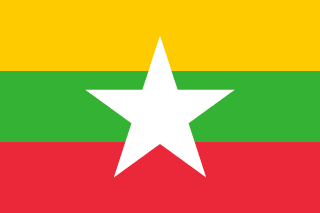
The current flag of Myanmar is rectangular with a 2:3 aspect ratio. It consists of three horizontal stripes of equal width: yellow on top, green in the middle, and red at the bottom. Centered on the flag is a large white five-pointed star, with its points facing upward and toward each corner of the flag. The design is simple, balanced, and text-free, making it easily recognizable even from a distance.
Symbolism
The yellow stripe represents unity and solidarity among the people, green symbolizes peace, tranquility, and the country’s lush landscapes, while red stands for courage and determination. The white star embodies purity and the unity of Myanmar’s diverse ethnic groups, as well as hope for the nation’s future. Together, the colors and star reflect the ideals of national harmony, unity, and peaceful progress, serving as a powerful national emblem. The flag is commonly displayed at schools, pagodas, government buildings, and sporting events.
History and Legal Status
From its independence in 1948 until 1974, Myanmar used a red flag with a blue canton in the upper left corner, featuring a large white star and smaller stars. In 1974, a socialist-style flag depicting a gear and rice ears was adopted. On October 21, 2010, Myanmar officially introduced the current tricolor flag, replacing the previous design after more than three decades. Today, the flag is prominently displayed across government institutions, pagodas, schools, and sports venues. Public disrespect or desecration of the flag is punishable by law.
Myanmar Travel Guide
All Guides »Myanmar Travel Quick Guide: Visa, Best Time to Visit, Budget Tips, and Etiquette & Taboos
Get all the essentials on visas, seasons, budget, and Buddhist etiquette — plus ...
Classic 7-Day Myanmar Itinerary: A Complete Guide to the Pagoda Tours of Yangon, Bagan, and Mandalay 7 days
From the golden Shwedagon Pagoda in Yangon to the thousands of ancient temples i...
Myanmar 4-Day Short Trip: In-Depth Guide to Mandalay’s Ancient Capitals and U Bein Bridge 4 Days
Organized by direction around Mandalay, this 4-day itinerary covers ancient capi...
A must-visit list of attractions in Myanmar: All-inclusive guide to Yangon, Bagan, Mandalay, and Inle Lake
From the Shwedagon Pagoda in Yangon to the thousands of ancient temples in Bagan...
A Guide to Myanmar Cuisine: Mohinga, Lahpet Thoke, and Myanmar Milk Tea
Influenced by Indian, Thai, and Yunnan cuisines, Myanmar food is known for its t...
Complete Guide to Transportation in Myanmar: Domestic Flights, Overnight Buses, and Circular Trains
Travel between cities is via domestic flights and overnight buses, while within ...
10 Practical Tips for Traveling in Myanmar: Cash, Shoe-Removing Etiquette, and Safety Advice
Keep in mind U.S. dollar bills, shoe-removing customs, monk-related taboos, and ...