Malta
A crossroads at the heart of the Mediterranean, this archipelagic nation is famed for its Knights of St. John heritage, golden limestone old towns, Blue Grotto, and English-friendly environment.
Malta (Republic of Malta)
| Capital | Valletta |
|---|---|
| Continent | Europe |
| Languages | Maltese, English |
| Currency | Euro (EUR €) |
| Time Zone | UTC+1 to UTC+2 |
| Dialling Code | +356 |
| Area / Population | 316 square kilometres / Approximately 520,000 |
| Visa | As a Schengen Area country, Malta requires most international visitors to apply for a Schengen visa through the Maltese Visa Centre; travellers who already hold a valid Schengen visa from another country may enter without needing a separate Maltese visa. |
| Best Season | May–June and September–October offer warm seas and fewer tourists; July–August is busiest and hottest, but the island enjoys abundant sunshine year-round, making winter ideal for city sightseeing. |
| Main Cities | Valletta, Mdina, Sliema, St. Julian’s, The Three Cities, Marsaxlokk, Gozo Island |
Malta in Detail
Overview of Malta
Malta (the Republic of Malta) is an archipelagic nation in the central Mediterranean, comprising the main island of Malta, Gozo, Comino, and several minor uninhabited islands. With a land area of just 316 square kilometres and a population of about 520,000, it is the smallest EU member state by area. Located approximately 90 kilometres south of Sicily and 300 kilometres north of the North African coast, it sits at a strategic chokepoint along Mediterranean east–west shipping routes and has been contested by maritime powers since antiquity. The capital, Valletta, is a Baroque fortress city built entirely for defensive purposes and was inscribed as a UNESCO World Heritage Site in 1980.
Malta gained independence from Britain in 1964, became a republic in 1974, joined the EU in 2004, and adopted the euro in 2008. Its official languages are Maltese and English. English is widely used in administration, the judiciary, and education, making Malta one of Europe’s—and the world’s—key destinations for English language study, with numerous international students enrolling in language schools annually.
Geography and Climate
The Maltese archipelago consists of coralline and globigerina limestone, featuring low, undulating terrain with a maximum elevation of just 253 metres. There are no permanent rivers or lakes, and freshwater is sourced from groundwater and desalination. The coastline is rugged and indented, with steep cliffs and rocky beaches as well as scattered sandy coves; the western Dingli Cliffs face the open sea, while the southern coast is riddled with caves, including the famous Blue Grotto. Uninhabited Comino is renowned for its azure shallow bays and the Blue Lagoon.
The climate is typically Mediterranean: long, hot, and dry summers with July averages around 30°C, moderated by sea breezes; mild, wet winters with January averages around 13°C, making it one of Europe’s few year-round travel destinations. Sea temperatures peak from July to September, ideal for swimming and snorkelling, while spring and autumn see brief wildflower blooms and are great for hiking coastal trails.
Historical Background
Malta’s history predates written records: the megalithic temple complexes such as Ġgantija, built around 5,500 years ago, predate the Egyptian pyramids and are UNESCO-listed. The Phoenicians, Carthaginians, and Romans successively ruled the islands, and legend holds that the Apostle Paul shipwrecked here in 60 AD, introducing Christianity. Arab rule from the 9th century laid the linguistic foundation of Maltese, followed by Norman control in 1091 and subsequent generations of Sicilian dynasties.
In 1530, the Holy Roman Emperor granted Malta to the Knights of St. John, who ruled for over 260 years: repelling the Ottoman siege in 1565 and beginning construction of the capital, named after Grand Master Valletta, in 1566. Napoleon occupied Malta in 1798, but British rule lasted over a century starting in 1800. Malta served as a crucial Allied Mediterranean hub in both world wars, earning the George Cross for civilian bravery—a medal now featured on its flag. After independence in 1964, Malta transitioned into a developed economy based on tourism, finance, and maritime services.
Economy and Currency
Malta is a high-income developed economy with key sectors including tourism and related services, financial services, online gambling and gaming, ship registration and transshipment logistics, and more recently, serving as a filming location for maritime TV dramas and films. In January 2008, Malta adopted the euro (EUR, symbol €) as its official currency, replacing the former Maltese lira; its euro coins feature motifs such as the Maltese cross, megalithic temple altars, and the national coat of arms, appealing to collectors.
Culture and Society
A predominantly Catholic nation, Malta has over 300 churches across the islands, with vibrant parish festivals (festa) throughout summer, illuminated by fireworks, brass band parades, and church lights. Maltese, the only Semitic (Arabic-related) language written in Latin script in Europe, incorporates many Italian and English loanwords. The architecture features a uniform honey-coloured limestone backdrop, giving the islands a warm golden hue under sunlight. The cuisine blends Italian and British influences, with rabbit stew considered the national dish and pastizzi (flaky pastry snacks) a ubiquitous treat.
Tourism Overview
Malta’s biggest tourism advantage lies in its density: within an hour’s drive, visitors can explore Valletta’s Baroque churches and Knights’ palaces, the historic harbours of The Three Cities, Mdina’s medieval streets, the Blue Grotto and megalithic temples of the southern coast, and the resort scenery of Gozo and Comino’s Blue Lagoon. Following the 2017 collapse of the iconic Azure Window sea arch on Gozo, the surrounding inland sea and coastline remain popular photography spots. With its English-speaking environment, sunny beaches, diving, and island-hopping opportunities, Malta caters to cultural, beach, and language-learning travellers alike, making it a prime choice for European winter and off-season trips.
Local Currency: Euro (EUR)
Currency Overview
Malta’s official currency is the euro (currency code EUR, symbol €), which has been in circulation since January 2008, replacing the higher-denomination Maltese lira. As the 15th EU member state to adopt the euro, Malta’s price levels are mid-range among Western European countries. One euro equals 100 cents and is fully interchangeable across the eurozone—no currency exchange is needed when travelling from Valletta to Paris.
Denominations
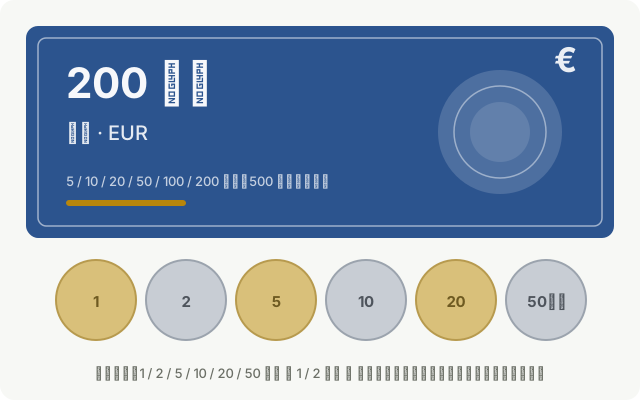
Banknotes, issued uniformly across the eurozone by the European Central Bank system, come in common denominations of 5, 10, 20, 50, 100, and 200 euros. Coins are issued in 1, 2, 5, 10, 20, and 50 cents, as well as 1 and 2 euros. Maltese coins feature distinctive reverse designs: 1, 2, and 5-cent coins depict the altar relief of the Mnajdra megalithic temples; 10, 20, and 50-cent coins show the Maltese coat of arms; and 1- and 2-euro coins bear the iconic white-and-red Maltese cross on a white background. These designs are also sought after by coin collectors.
Cash and Payment Habits
Malta has a well-developed card-payment environment, with credit cards widely accepted in restaurants, supermarkets, taxis, and ferries. Local ride-hailing apps (Bolt, eCabs) and online bookings are predominantly cashless. However, old-town snack stalls, pastizzi bakeries, ferry kiosks, and some rural shops still prefer cash, so it’s handy to carry small-denomination bills (€5–20) and coins. Foreign currency can be exchanged at banks and airport kiosks, and ATMs are densely located in urban areas like Valletta and Sliema, with most supporting UnionPay or international cards.
Traveler Tips
- Restaurant bills may include service charges and cover fees (coperta)—check the fine print on menus before ordering.
- Snack stalls and rural markets only accept cash, so keep €5–20 notes handy.
- Holders of other Schengen visas can enter Malta directly without exchanging local currency.
- Some older POS terminals may have limited compatibility with foreign card networks, so carrying backup cash is advisable.
Flag Meaning
Flag Design
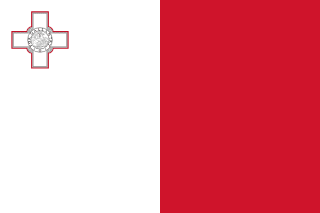
The Maltese flag is a rectangular banner divided vertically into equal white (left) and red (right) halves, with a 2:3 aspect ratio. A grey George Cross with a red outline is inset in the upper left white field, ensuring visibility against the white background. The simple yet striking colour scheme, combined with this unique emblem, makes the Maltese flag one of the few national flags in the world centred around an honorary military decoration.
Meaning
White symbolises peace and purity, while red represents the blood of those who sacrificed for the nation and the courage of its people. The George Cross in the upper left was awarded by King George VI of the United Kingdom in April 1942 to the entire island of Malta in recognition of its civilian resilience under intense Axis bombing during World War II. Inscribed with “For Gallantry,” the medal stands as both a collective historical honour and a symbol of Maltese national spirit.
History and Legal Status
The red and white colours originate from the heraldic traditions of the Knights of St. John and earlier Norman rule. British colonial flags once bore the Union Jack canton. The current design was officially adopted upon independence in 1964, placing the George Cross directly on the white field with a red border, and has remained unchanged since the establishment of the republic in 1974. The flag and national coat of arms are regulated by the Constitution and the National Emblems Act, flown on national holidays (such as Independence Day on 21 September, Freedom Day, and Republic Day) and government buildings, and displayed alongside the Maltese cross at sporting events as a key national identifier.
Malta Travel Guide
All Guides »Malta Travel Quick Guide: Schengen Visa, Best Seasons, Island Budgets & Church Etiquette
How to get to the island nation of the Knights surrounded by Mediterranean sunsh...
Malta 7-Day Classic Itinerary: Valletta, the Three Cities, and a Gozo Island Hopping Route 7 days
Centered around the capital of the Knights of St. John, this route connects the ...
Malta 4-Day Short Trip: Slow Travel Through the Main Island’s Districts – Fortress Capitals and the Silent City 4 days
No need to island-hop to enjoy a full four days: explore the fortress capital, h...
Essential Attractions in Malta: Knights’ Heritage, Megalithic Temples, and the Blue Lagoon Coast
From Baroque cathedrals and Knights’ palaces, to megalithic temple complexes ove...
Malta Food Guide: Stewed Rabbit, Pastizzi, and Meals at Mediterranean Fishing Villages
A blend of Knights Templar, Italian, and British influences, Malta’s cuisine is ...
Malta Transport Guide: Airport Shuttles, Ferries & Tallinja Card Essentials
The main island has a dense bus network, ferries cross Grand Harbour, and inter-...
10 Practical Tips for Traveling in Malta: Visas, Sun Protection, Island-Hopping, and Study Abroad Essentials
From Schengen visas, church dress codes, and sun protection to the Tallinja bus ...