Georgia
A Caucasus nation at the crossroads of Europe and Asia, famed for its 8,000-year-old winemaking tradition, Eastern Orthodox ancient churches, and snow-capped mountain scenery.
Georgia
| Capital | Tbilisi |
|---|---|
| Continent | Asia |
| Languages | Georgian |
| Currency | Georgian lari (GEL ₾) |
| Time Zone | UTC+4 |
| Dialling Code | +995 |
| Area / Population | 69,700 square kilometers / Approximately 3.7 million |
| Visa | Most foreign visitors can apply for an e-Visa to Georgia; travelers holding valid Schengen, U.S., Canadian, or other visas or residence permits may enter visa-free under certain conditions, as per Georgian regulations. Georgia’s entry policies change frequently, so always check the latest announcements from the Georgian Ministry of Foreign Affairs and its embassies or consulates before traveling, and carry proof of onward travel and accommodation. |
| Best Season | The most comfortable weather for city and mountain travel is from May–June and September–October; winter is ideal for skiing in places like Kazbegi and Gudauri; July–August is hot and lively along the Black Sea coast. |
| Main Cities | Tbilisi, Mtskheta, Kazbegi, Gori, Signagi, Telavi, Batumi, Kutaisi |
Georgia in Detail
Overview of Georgia
Georgia (საქართველო in Georgian) is located in the Caucasus region at the crossroads of Europe and Asia. It borders Russia to the north, Armenia and Turkey to the south, Azerbaijan to the southeast, and the Black Sea to the west. With a land area of 69,700 square kilometers, its capital Tbilisi lies on the Kura River and serves as the country’s political, economic, and cultural center. The Georgian language belongs to the South Caucasian language family and uses a unique Georgian alphabet. The population is about 3.7 million, with the majority practicing Eastern Orthodoxy.
Situated at the crossroads of Europe and Asia, Georgia has historically been a hub of East-West trade and cultural exchange. It is known for its wine culture, Eastern Orthodox traditions, and stunning Caucasus mountain landscapes, and has become a popular independent travel destination in the Caucasus in recent years.
Geography and Climate
Georgia’s terrain is dominated by the Greater and Lesser Caucasus mountain ranges. The Greater Caucasus forms a natural border with Russia to the north, with Mount Shkhara at 5,068 meters being the highest peak. The western Black Sea coast features moist subtropical plains, while the eastern part consists of relatively dry plateaus and valleys.
The climate varies widely: the western Black Sea coast is warm and humid, with high rainfall in cities like Batumi; eastern areas like Tbilisi have a temperate continental climate with hot summers and cold winters; the high mountain regions experience harsh, snowy winters and are popular ski destinations. The diverse terrain means Georgia can have very different climates and landscapes even within the same season, so pack accordingly for your destination.
Historical Background
Georgia is one of the world’s oldest civilizations, with ancient kingdoms such as Colchis and Iberia recorded in history. Christianity was adopted in the 4th century, making Georgia one of the first countries to embrace the faith. The Kingdom of Georgia flourished during the 11th to 13th centuries under rulers like King David IV, Queen Tamar, and the Bagrationi dynasty, leaving behind a wealth of churches and monasteries.
Later, the region was contested by Mongols, Timurids, Ottomans, and Persians. In the late 18th century, Georgian principalities sought Russian protection, and by the 19th century, Georgia was incorporated into the Russian Empire. It briefly declared independence in 1918, was annexed by the Soviet Union in 1921, and became independent again after the USSR’s collapse in 1991. Since then, it has pursued stability and reform, with tourism growing rapidly.
Economy and Currency
Georgia’s economy is based on services, agriculture, tourism, and transit transport. Key exports include wine, mineral water, nuts, and agricultural products. Tourism has grown rapidly in recent years, becoming an important sector for attracting foreign investment and foreign exchange. The national currency is the Georgian lari (GEL), which introduced its own symbol ₾ in 2014. Cities like Tbilisi have active financial and commercial environments, with widespread use of bank cards and contactless payments.
Culture and Society
Georgian culture is rooted in Eastern Orthodoxy, a unique language, and its script. Churches and monasteries are integral to both urban and rural landscapes and daily life. Georgia is considered one of the cradles of world wine, with its traditional qvevri (clay pot) winemaking method—practiced for around 8,000 years—recognized by UNESCO as intangible cultural heritage.
The cuisine features bread, cheese, walnuts, and spices. Supra (Georgian feasts) and the tamada (toastmaster) tradition add a highly ritualistic dimension to dining. Family and hospitality are highly valued, and visitors are often warmly welcomed. Bringing a small gift when visiting someone’s home is a polite gesture.
Tourism Overview
Georgia attracts travelers with its diverse natural and cultural experiences: Tbilisi’s Old Town offers sulfur baths, the Narikala Fortress, and the Peace Bridge, blending old and new. Mtskheta is home to the Svetitskhoveli Cathedral and Jvari Monastery, key religious and historic sites. In the north, Kazbegi (Stepantsminda) and the Gergeti Trinity Church are famed for their mountain and church views. The Kakheti wine region includes towns like Signagi and Telavi, along with many wineries. Gori is the birthplace of Stalin, with related museums preserved.
Western Georgia’s Batumi is a Black Sea resort known for modern architecture and beach life. Other sites like the cave city of Uplistsikhe, the cave monastery of Vardzia, and the Svaneti villages of Mestia and Ushguli are great for deeper exploration. Roads and public transport are still developing, and mountain routes are weather-dependent, so self-driving or hiring a car is convenient.
Local Currency: Georgian lari (GEL)
Currency Overview
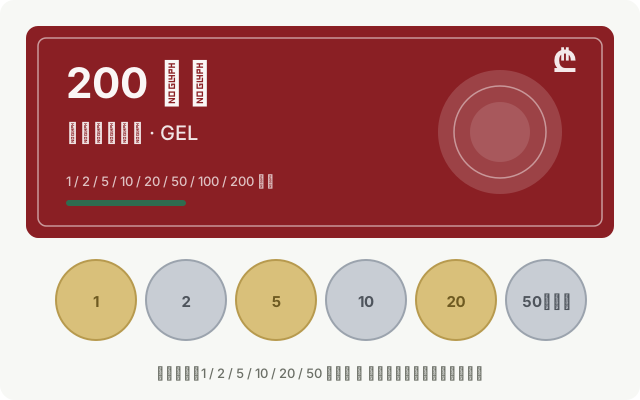
The official currency of Georgia is the lari (currency code GEL, symbol ₾). One lari equals 100 tetri. Issued by the National Bank of Georgia, the lari was introduced in 1995, replacing the interim currency, the kupon. In 2014, the National Bank of Georgia introduced a unique symbol for the lari (₾). The lari follows a floating exchange rate system, with rates for major currencies like the U.S. dollar and euro fluctuating according to market conditions. The central bank may intervene to prevent excessive volatility. The lari can be freely exchanged for U.S. dollars and euros within Georgia, but its convertibility abroad is limited—it’s best to exchange any leftover lari before leaving the country, as it’s generally not accepted overseas. Since 2016, the National Bank has issued new banknotes with improved security features, though old notes remain in circulation.
Denomination System
Banknotes in circulation include denominations of 1, 2, 5, 10, 20, 50, 100, and 200 lari. They often feature historical figures, cultural heritage, and landscapes of Georgia. Coins come in denominations of 1, 2, 5, 10, 20, 50 tetri, as well as 1 and 2 lari, including commemorative coins for collectors. Tetri are commonly used in cash transactions, especially for change.
Cash and Payment Habits
Georgia has one of the highest levels of bank card and contactless payment adoption in the former Soviet region. Restaurants, hotels, supermarkets, and taxis in cities like Tbilisi and Batumi generally accept card payments and mobile payments, including Visa and Mastercard; some also accept UnionPay. ATMs are widely available in cities and tourist areas and dispense lari. Be aware that both your bank and the ATM operator may charge fees. There are many official currency exchange points in urban areas where U.S. dollars and euros are easiest to exchange; rates at airports and tourist spots are usually slightly less favorable than those at banks.
In rural and mountainous areas, some small shops and markets still primarily deal in cash. Carry a small amount of cash for emergencies, and keep smaller bills handy for transport and snacks. Always use banks or licensed exchange offices, check the amount received, and keep your receipt. Avoid street money changers to prevent counterfeit currency or scams. You can ask to check security features on large bills when receiving them.
Tips for Travelers
- Cards are widely accepted in cities, but carry cash for mountains and markets.
- Use banks or licensed exchange services for currency exchange and keep your receipts.
- Be aware of potential double fees when withdrawing cash from ATMs.
- Some merchants may charge extra fees for foreign cards—ask before paying.
Flag Meaning
Flag Design
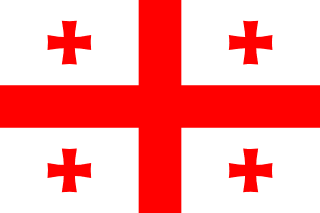
The flag of Georgia is rectangular, with a 2:3 length-to-width ratio. It features a large red St. George’s cross extending across the entire white field, with four smaller red crosses in each corner, totaling five crosses—hence it is often called the “five-cross flag.” The central cross spans from edge to edge, dividing the white background into four equal quadrants, with the four smaller crosses positioned precisely in the centers of each quadrant. The flag uses only the colors red and white, with a simple yet striking design; the red is a pure, bright red.
Meaning
White symbolizes purity and peace, while the red cross represents Christ and faith. The central cross is generally regarded as the Cross of St. George, which is also the basis for the association of the English word “Georgia” with the saint. The four smaller crosses resemble the Jerusalem Cross, also known as the “Bolnisi Cross,” symbolizing Christian protection and national unity. The overall design is believed to be derived from the flag used by the medieval Kingdom of Georgia.
History and Legal Status
The five-cross flag originated from a flag used during the medieval Kingdom of Georgia (circa 13th century) and served as a historical and cultural symbol for centuries, appearing in medieval chronicles and church frescoes. After Georgia’s independence in 1991, other flags were used temporarily until January 14, 2004, when the parliament officially adopted the five-cross flag as the national flag. Its specifications, colors, and display protocols are defined by the constitution and relevant laws. Government buildings, schools, and military/police institutions regularly raise the flag, and many residents also display it at home during national and religious holidays such as Easter. Today, the flag is ubiquitous in government offices, schools, churches, and sports events, serving as a powerful emblem of Georgian national identity and Eastern Orthodox tradition.
Georgia Travel Guide
All Guides »Georgia Travel Quick Guide: Visas, Seasons, Budget, Etiquette & Practical Tips
From e-visas and visa exemptions to the country’s distinct travel seasons and co...
Classic 7-Day Georgia Itinerary: Tbilisi — Kazbegi — Kakheti 7 days
Start from the Old Town of Tbilisi, head north to Kazbegi to see the snow-capped...
Georgia 4-Day Short Trip: In-Depth 4-Day Tour of Tbilisi Old Town and Nearby Attractions 4 days
You can still have a fantastic time just staying in Tbilisi: a one-day itinerary...
Essential Attractions in Georgia: Old Towns, Snowy Mountains, and Kakheti Wine Region
From Tbilisi’s Old Town and sulfur baths to the Gergeti Trinity Church in Kazbeg...
Georgia Food Guide: Khachapuri, Grilled Meats & 8,000 Years of Wine Tradition
Bread, cheese, and walnuts form the flavor base of Georgian cuisine, complemente...
Georgia Travel Guide: Airport Transfers, Public Transport & Mountain Transport
Covers how to get from Tbilisi Airport into the city, using the metro and transi...
10 Practical Tips for Traveling in Georgia: Mountains, Wine Country, and Etiquette
From booking sulfur baths to mountain road conditions and toasting etiquette, th...