France
A romantic Western European powerhouse defined by art, fashion, cuisine, and wine—from Parisian museums to lavender fields in Provence and the French Riviera, it is one of the world’s most visited countries.
France (French Republic)
| Capital | Paris |
|---|---|
| Continent | Europe |
| Languages | French |
| Currency | Euro (EUR €) |
| Time Zone | UTC+1 to UTC+2 |
| Dialling Code | +33 |
| Area / Population | Approximately 550,000 square kilometers (mainland) / Approximately 68 million |
| Visa | Most foreign visitors need a Schengen short-stay visa (Category C) to visit France. Appointments must be made at a visa center and fingerprints taken. Supporting documents include an itinerary, hotel and flight bookings, travel insurance, and proof of funds. Once approved, travelers can stay up to 90 days within a 180-day period. |
| Best Season | The most pleasant and least crowded times for city and cultural trips are April–June and September–October. July–August is peak season for lavender in Provence and the French Riviera—busy, more expensive, but lively in the south. |
| Main Cities | Paris, Versailles, Provence, Nice, Lyon, Marseille, Bordeaux, Strasbourg, Loire Valley |
France in Detail
Overview of France
France (the French Republic) is located in Western Europe. Its mainland has a roughly hexagonal shape, bordered by Belgium and Luxembourg to the north, Germany, Switzerland, and Italy to the east, Spain and Andorra to the south, the Bay of Biscay of the Atlantic Ocean to the west, and the Mediterranean Sea to the south. It faces the United Kingdom across the English Channel to the northwest. The mainland covers about 550,000 square kilometers, making it the largest country in Western Europe. In addition, France has several overseas departments and territories scattered across the Caribbean, Indian Ocean, and South Pacific. The capital, Paris, is situated on the Seine River and serves as the political, economic, cultural, and fashion hub, as well as one of the most visited cities globally.
France is a semi-presidential republic, with the President as the head of state and the Prime Minister leading the government. Its parliament consists of the National Assembly and the Senate. France is a permanent member of the United Nations Security Council, a core member of the European Union, and a founding member of the eurozone. It wields global influence in culture, diplomacy, and military affairs, and is also one of the main drivers of European integration.
Geography and Climate
France features diverse terrain: the Alps dominate the southeast, where Mont Blanc (approximately 4,808 meters, on the Franco-Italian border) is the highest peak in Western Europe; the Pyrenees lie along the southwestern border with Spain; the Central Massif occupies the central region; and the north and west consist of plains and hills, crisscrossed by major rivers such as the Seine, Loire, Rhône, and Garonne. The French Riviera and Provence along the Mediterranean coast are famed for sunshine, lavender, and olive groves. The Loire Valley, known for its château-lined banks, is called the Garden of France and is ideal for road trips and cycling.
The climate is shaped by oceanic, continental, and Mediterranean influences: the west has a temperate maritime climate, mild and moist; the east and center have a temperate continental climate, cold winters and hot summers; the southern Mediterranean coast enjoys a Mediterranean climate with hot, dry summers and mild, sunny winters. Overall, April–June and September–October are the most comfortable periods nationwide, while July–August is peak season for southern beaches and lavender fields. Many locals take August off, and some small shops may close for weeks.
Historical Background
Anciently known as Gaul, France was conquered by the Romans in the 1st century BC. Later, the Franks established a kingdom, and in the year 800, Charlemagne was crowned Emperor of the Romans. The Capetian dynasty was founded in 987, and Paris gradually became the political center. During the Hundred Years' War (1337–1453), Joan of Arc became a national heroine. The Renaissance flourished in the royal court during the 16th century, and in the 17th century, Louis XIV built the Palace of Versailles, establishing France as a dominant power in Europe.
The French Revolution of 1789 overthrew the monarchy and introduced the ideals of liberty, equality, and fraternity, which profoundly influenced the world. This was followed by the First Republic, the Napoleonic Empire, and multiple restorations of the monarchy. The Third Republic was established in 1870. France played a major role in both World War I and World War II, with Paris being liberated after the Allied D-Day landings in 1944. In 1958, Charles de Gaulle founded the Fifth Republic, establishing the current semi-presidential system. Together with Germany, France became a core driver of European integration.
Economy and Currency
France is one of the world’s leading economies, excelling in aerospace, nuclear energy, automotive manufacturing, luxury goods, cosmetics, agriculture, and tourism. Well-known global companies include Airbus, Renault, LVMH, and L'Oréal. As a founding member of the eurozone, France has used the euro (EUR, symbol €) as its official currency since 2002, replacing the franc, which had been in use for centuries. Wine, cheese, perfume, and high fashion are iconic elements of the country’s image, and its agricultural and food processing industries hold significant importance in Europe.
Culture and Society
French culture has had a profound global impact: philosophy, literature, painting, cinema, architecture, and fashion have long led trends in Europe and beyond. The collections at the Louvre, Musée d'Orsay, and Centre Pompidou are world-renowned. The French language is considered a language of culture and diplomacy. Everyday life is shaped by French cafés, bakeries, and markets. Society values quality of life and work-life balance, with long lunch breaks and August as a national holiday period when many businesses close.
French cuisine is a key part of the culture. In 2010, the French gastronomic meal was inscribed on UNESCO’s Intangible Cultural Heritage list. Table manners are refined, with specific sequences for aperitifs, cheeses, and desserts. Social etiquette includes greeting people upon entering shops or elevators, and using polite phrases before ordering in English is appreciated.
Tourism Overview
France is among the most visited countries in the world. Paris offers classic city sightseeing centered around the Eiffel Tower, the Louvre, the Arc de Triomphe, the Champs-Élysées, and Notre-Dame Cathedral. The Palace of Versailles and Loire Valley castles showcase royal and aristocratic life. Provence is famous for its lavender fields, the Palace of the Popes in Avignon, and picturesque hilltop towns. The French Riviera, including Nice, Cannes, and Monaco, represents resort and yachting culture. Other highlights include Mont-Saint-Michel, Bordeaux and Burgundy wine regions, medieval towns in Alsace, and Alpine ski resorts. France’s railway network, anchored by the TGV high-speed trains, enables efficient intercity travel, ideal for in-depth exploration.
Local Currency: Euro (EUR)
Currency Overview
The official currency of France is the euro (currency code EUR, symbol €). One euro equals 100 cents (centimes). The euro is managed centrally by the European Central Bank (ECB), while eurozone national central banks handle issuance and circulation. The Banque de France is a key member. France, as a founding eurozone member, adopted the euro in 1999 when it was launched. In 2002, euro banknotes and coins officially replaced the franc, which had circulated for centuries. The old franc banknotes, some of which featured the French central bank logo and portraits of historical figures, were withdrawn from circulation that year.
Denominations
Euro banknotes come in seven denominations: €5, €10, €20, €50, €100, €200, and €500. Designed uniformly by the ECB, the front features architectural styles like windows, while the back shows bridges. Colors and sizes differentiate them: €5 (grey), €10 (red), €20 (blue), €50 (orange), €100 (green), €200 (yellow-brown), and €500 (purple). The €500 note has not been issued since 2019 but remains legal tender—it is rarely seen in daily use, and most French merchants do not accept it.
Euro coins are issued in eight denominations: €1, €2, and 1, 2, 5, 10, 20, and 50 cents. The common side displays the value and a map of Europe, while the national side varies by country. France often uses motifs such as the sower, Marianne, and the European star tree. Euro coins are accepted in all eurozone nations, so it’s normal to receive coins from Germany, Spain, or Italy while in France.
Cash and Payment Habits
Card payments and contactless transactions are widely used in France. Supermarkets, restaurants, metro ticket machines, and most shops accept foreign Visa, Mastercard, and mobile payments. Some small stores may set minimum card purchase amounts (commonly €10) or only accept cash. Carrying a small amount of cash (€50–100) is advisable. Paris Metro accepts Navigo Easy cards or single tickets; mobile ticketing is also available in recent years. Download the official transport app before traveling.
Foreign currency exchange is available at banks, airports, and exchange bureaus in city centers. Rates at airports and tourist spots are usually less favorable; city banks and authorized exchange services offer better rates. ATM withdrawals typically incur fees. French ATMs often charge foreign cards several euros per transaction, so it’s best to withdraw larger amounts at once. For tax refunds, purchases must exceed approximately €100 at participating retailers, and the refund process is handled at airport self-service kiosks upon departure.
Traveler Tips
- France and Germany both use the euro, but the UK uses the British pound. Prepare the correct currency or use a card when traveling between France and the UK.
- The €500 note is no longer issued and is generally not accepted by merchants. Avoid obtaining large denominations when exchanging currency.
- Some small shops have minimum card purchase limits. Carry a few small bills (€5, €10, €20) for convenience.
- Service charges are usually included in restaurant bills in France, so tipping an extra 15% is unnecessary. Leaving small change or around 5% is appreciated if service was good.
- There are regulations on declaring large amounts of cash when entering or leaving France. Check requirements in advance if carrying significant sums.
Flag Meaning
Flag Design
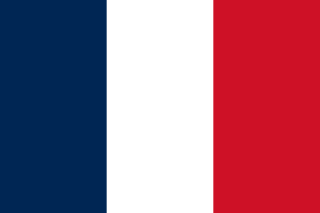
The French flag, known as the tricolore, consists of three vertical stripes of equal width: blue on the hoist side, white in the middle, and red on the outside. The aspect ratio is 2:3. The three colors are bright and easily recognizable, making it one of the most well-known flags in the world. Around 2020, the French presidential palace began using a darker shade of blue and red in certain official settings to align more closely with the historical version from the French Revolution. However, the brighter tones remain the commonly used version.
Meaning
Blue and red originate from the coat of arms of Paris, while white has historically been associated with royalty and purity. During the French Revolution in 1789, the Paris National Guard combined the blue and red of Paris with the white representing the monarchy, forming the tricolor. It was later adopted as the national flag. Today, the tricolore is widely seen as a symbol of the principles of liberty, equality, and fraternity, as well as the unity of citizens under the republican system—the spirit promoted in the Declaration of the Rights of Man and of the Citizen. The three colors are thus often referred to as the republican colors.
History and Legal Status
The tricolore first appeared during the French Revolution in 1789. In 1794, the National Convention officially replaced the former royal white flag with the blue, white, and red tricolore. The flag was briefly abolished during the Bourbon Restoration in 1814 but reinstated after the July Revolution of 1830. It became a symbol of the republic during the 1848 Revolution and has been used continuously since the Third Republic. During World War II, the tricolore took on meanings of resistance and national dignity under German occupation, while the Free French Forces used the Cross of Lorraine as their emblem.
According to the French Constitution and related laws, the tricolore is the national emblem of the French Republic. Along with the “Marseillaise” anthem, the statue of Marianne, and the motto of liberty, equality, and fraternity, it forms the symbolic system of the republic. Government buildings, schools, and public institutions often fly the flag, and it is prominently displayed during national celebrations like Bastille Day on July 14. Public disrespect or damage to the flag may be considered illegal in France, and visitors should treat it with respect.
France Travel Guide
All Guides »France Solo Travel Quick Guide: Schengen Visa, Best Seasons, Budget & Local Etiquette
How to apply for a Schengen visa, which months are most pleasant to visit, how m...
Classic 7-Day France Itinerary: Paris – Loire Valley – Provence – French Riviera 7 days
From museums along the Seine to lavender fields and the Mediterranean in souther...
France 4-Day Short Trip: In-Depth Exploration of Paris by District Without Detours 4 days
Even with just four days, you can fully experience Paris: the itinerary is divid...
Complete list of must-visit attractions in France: Paris landmarks, castles and historic sites, and the coastal scenery of southern France
From museums in Paris to the châteaux of the Loire Valley, lavender fields in Pr...
The Ultimate Guide to French Cuisine: Baguettes, Cheese, Escargot, and Regional Specialties of Southern France
The essence of French cuisine lies in everyday fare: from croissants at the bake...
Complete Guide to Transportation in France: TGV High-Speed Rail, Paris Metro, and Airport Transfers
Understand TGV ticketing rules, Paris metro fare systems, and how to get from ea...
10 Essential Travel Tips for France: Polite Phrases, Anti-Pickpocketing, and Ticket Booking Savings
Saying hello, watching your bag, and booking tickets in advance—doing these thre...