Fiji
A South Pacific island-hopping destination renowned for the Mamanuca Islands, the kava ceremony, the "Bula" greeting, and being the filming location of *Cast Away*.
Fiji (Republic of Fiji)
| Capital | Suva |
|---|---|
| Continent | Oceania |
| Languages | English, Fijian, Hindi |
| Currency | Fijian Dollar (FJD FJ$) |
| Time Zone | UTC+12 (UTC) |
| Dialling Code | +679 |
| Area / Population | Approximately 18,300 square kilometers / Approximately 930,000 |
| Visa | Most foreign visitors can enter Fiji visa-free, typically by presenting a valid passport, a return or onward ticket, and proof of accommodation. The length of stay is determined by immigration authorities upon arrival. For work, study, or long-term stays, the appropriate visa must be applied for in advance. Please refer to the latest announcements from the Fijian Immigration Department before traveling. |
| Best Season | The dry season from May to October features lower humidity and stable weather, making it the best time to visit. The wet season from November to April has higher temperatures and humidity, and may be affected by tropical cyclones. |
| Main Cities | Nadi, Denarau Island, Suva, Coral Coast, Mamanuca Islands, Yasawa Islands, Monuriki Island, Lautoka |
Fiji in Detail
About Fiji
Fiji is an island nation located in the southwestern Pacific Ocean, north of New Zealand, at the cultural crossroads of Melanesia and Polynesia. It consists of around 333 islands, approximately 110 of which are inhabited, with a total land area of about 18,300 square kilometers. The capital, Suva, is situated on the southeastern coast of the main island Viti Levu and serves as the country’s political, economic, and cultural center. Nadi is the international gateway and a major tourism hub. The official languages are English, Fijian, and Hindi, and the country’s most notable social characteristic is its multicultural population.
Fiji is a member of the Commonwealth and operates under a parliamentary democracy. Its economy is driven primarily by tourism, sugarcane, fishing, and remittances, with tourism being the largest source of foreign exchange. The population is predominantly made up of indigenous Fijians (iTaukei) and Indo-Fijians, and the coexistence of these two major ethnic groups has created a unique blend of cuisine, religion, and festivals, making Fiji one of the most culturally rich island nations in the South Pacific.
Geography and Climate
The Fijian archipelago centers around the two main islands, Viti Levu and Vanua Levu, along with resort islands such as the Mamanuca Islands and Yasawa Islands. Most of the islands are volcanic, surrounded by coral reefs along the coasts, with mountainous terrain and tropical rainforests inland. The Sigatoka River flows through the southern part of the main island, forming fertile valleys and dune landscapes.
The climate is tropical maritime, warm year-round, with an average annual temperature of about 25–28°C. The period from May to October is relatively dry and cool, with low humidity and stable weather, making it the peak travel season. The wet season from November to April brings higher temperatures and humidity, along with the potential for tropical cyclones. Due to the southeast trade winds, the windward eastern side (such as Suva) receives significantly more rainfall than the western side (such as Nadi), so Nadi and Denarau Island tend to have more sunny days, making them better suited for beach holidays.
Historical Background
Fiji has a settlement history of about three thousand years, originally inhabited by seafarers from Melanesia who later intermingled with Polynesians. In 1643, Dutch explorer Abel Tasman became the first European to reach Fiji, followed by British explorers and missionaries. In 1874, Fijian chiefs ceded the islands to Britain, making Fiji a British colony. Starting in 1879, Britain brought indentured laborers from India to cultivate sugarcane, laying the foundation for the Indo-Fijian community.
Fiji gained independence on October 10, 1970, as a member of the Commonwealth. In 1987, a military coup temporarily turned it into a republic, and the country experienced several coups and constitutional changes. From 2006 to 2014, it underwent a military-led transition, and parliamentary elections resumed in 2014, gradually stabilizing the political situation. In 2022, Fiji held a general election and saw a change in government, continuing to focus on tourism and regional cooperation for national development.
Economy and Currency
Fiji’s economy is centered on tourism, with visitors mainly coming from Australia, New Zealand, North America, and other countries. Other important sources of income include sugar, fishing, bottled water exports, and overseas remittances. Due to the limited scale of the island economy and high import dependence, some goods can be relatively expensive. The official currency is the Fijian Dollar (FJD), issued by the Reserve Bank of Fiji, and its value remains relatively stable.
Culture and Society
Fijian culture blends indigenous Fijian traditions with Indo-Fijian influences. The common greeting “Bula” (meaning hello or wishing good health and longevity) is one of the most frequently heard words by visitors, reflecting the warm and friendly atmosphere of Fijian society. The kava (known locally as yaqona) ceremony is central to traditional social interactions, often used in village welcome ceremonies to show respect. Indo-Fijians have contributed Hindu temples, Diwali celebrations, and richly spiced curry cuisine, with Nadi’s Hindu temples being a notable attraction.
Indigenous Fijians maintain clan and village structures, with the chief system still influential in communities. Traditional arts include masi (tapa cloth), wood carving, and weaving, while fire-walking is a famous traditional performance on islands like Beqa. The harmonious coexistence of diverse ethnic groups is a key feature of Fijian society, allowing visitors to experience both Pacific and South Asian cultural elements within the same country.
Tourism Overview
Fiji is one of the most well-established resort destinations in the South Pacific. Nadi serves as the gateway, with Denarau Island hosting upscale resorts and golf courses. The Mamanuca and Yasawa Islands are ideal for island-hopping and snorkeling, offering clear waters and abundant coral. The Coral Coast and Sigatoka Sand Dunes combine natural beauty with cultural heritage. Monuriki Island gained fame as the filming location of *Cast Away*.
In addition, visitors can explore outer islands such as Robinson Crusoe Island and various private island resorts for activities like snorkeling, scuba diving, deep-sea fishing, and sailing. Fiji’s visa-free policy, along with well-developed honeymoon and diving packages and convenient flight connections, makes it a popular choice for island getaways and romantic trips.
Local Currency: Fijian Dollar (FJD)
Currency Overview
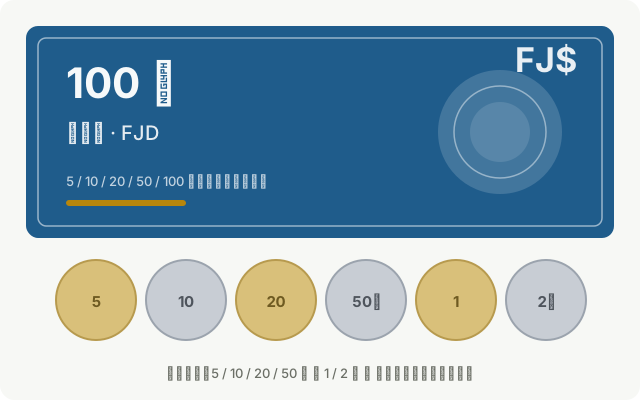
The official currency of Fiji is the Fijian Dollar (currency code: FJD, symbol: FJ$, often written as $ or FJD locally). One Fijian Dollar is equal to 100 cents. The currency is issued by the Reserve Bank of Fiji, which formulates monetary policy and manages the country’s exchange rate. The Fijian Dollar is one of the more stable currencies among Pacific island nations and is relatively easy to exchange locally. Its banknotes and coins feature distinct local natural and cultural themes, often collected by visitors as souvenirs.
Denominations
Currently circulating banknotes come in denominations of 5, 10, 20, 50, and 100 Fijian Dollars, featuring designs based on the country’s flora and fauna, traditional crafts, landscapes, and notable figures, all in vibrant colors. There are also 2 Fijian Dollar banknotes and commemorative issues. Coins include 5, 10, 20, and 50 cents, as well as 1 and 2 Fijian Dollars, often displaying national emblem elements and local animal motifs. Coins are commonly used for small change, and small transactions are very common in markets.
Cash and Payment Habits
Resorts, hotels, restaurants, car rental companies, and supermarkets in Fiji generally accept international credit cards such as Visa and Mastercard. ATMs are widely available in Nadi and Suva. However, cash is the primary method of payment in markets, small shops, buses, taxis, and villages. Overall, card payments are more convenient in urban areas and resort districts, while outer islands and rural areas rely more on cash.
It is recommended to carry some cash for markets, boat tickets, and small purchases, while using cards for larger expenses. Foreign currency can be exchanged at Nadi Airport, banks, and authorized exchange bureaus. Local businesses generally do not accept direct exchange of foreign currencies, so it is advisable to bring US Dollars or Australian Dollars. ATM withdrawals incur fees, so it is best to withdraw larger amounts at once to reduce costs. Note that most prices in Fiji already include tax, and restaurant bills usually include a service charge. Tipping is optional, but small gratuities for hotel porters and room service are appreciated.
Traveler Tips
- Cards are accepted in resort areas, but carry cash for villages, markets, and buses.
- Buses and taxis usually require cash payment, so prepare small bills.
- Fijian Dollars can be exchanged back into foreign currency before departure; currency exchange counters are available at the airport.
- Expenses at resorts can often be charged to your room bill, making checkout more convenient.
Flag Meaning
Flag Design
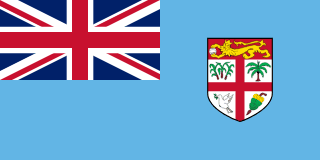
The Fijian flag is rectangular, with a 1:2 aspect ratio. The flag features a light blue background, with the Union Jack (the British flag) in the upper left corner (near the flagpole) and the shield from the Fijian coat of arms on the right side (fly side). The light blue background represents the Pacific Ocean surrounding the islands, while the Union Jack and the shield reflect Fiji’s historical ties to Britain and its national cultural symbols. The shield includes images of a lion, palm tree, sugarcane, coconut, banana, and a dove of peace, symbolizing historical connections, agricultural production, and peace.
Meaning
The light blue color symbolizes the Pacific Ocean and the island environment, with its pure and bright tone highlighting the maritime nature of the nation. The Union Jack represents Fiji’s historical connection to Britain as a Commonwealth member, while the shield symbolizes the country’s natural resources, agricultural heritage, and traditional society. Together, the flag embodies the island nation’s maritime setting, multicultural identity, and historical legacy, making it one of the most recognizable flags in the South Pacific.
History and Legal Status
The current Fijian flag has been in use since the country’s independence in 1970 and remains the official national symbol. It is worth noting that around 2016, the Fijian government publicly proposed replacing the flag and removing the Union Jack, seeking public input on a new design. However, this plan was ultimately not implemented, so the existing flag remains Fiji’s official banner, featuring the light blue background with the Union Jack and shield, used in official settings and sporting events.
Today, the Fijian flag is widely displayed at government buildings, schools, ports, stadiums, and international competitions. The notable performance of the Fiji national rugby team on the global stage has contributed to the flag’s high recognition worldwide.
Fiji Travel Guide
All Guides »Fiji Travel Quick Guide: Visa-Free Entry, Seasons, Budget, and Kava Etiquette
This South Pacific island nation offers visa-free entry for many international v...
Fiji 7-Day Classic Itinerary: Nadi — Mamanuca Islands — Coral Coast — Suva 7 Days
Experience island-hopping, snorkeling, sand dunes, and capital city culture all ...
Fiji 4-Day Itinerary: Nadi, Denarau, and Mamanuca Island Hopping 4 Days
With limited time, focus on the Nadi area to experience resorts, Indian flavors,...
Must-visit attractions in Fiji: island-hopping, sand dunes, and the filming location of *Cast Away*
Explore Fiji’s top destinations and recommended durations by region—from the Mam...
Fiji Food Guide: Lovo Earth Oven, Coconut Seafood, and Indian Curry
A fusion of Pacific flavors and Indian spices—sample everything from earth-oven ...
Fiji Transport Guide: Nadi Airport, Inter-Island Ferries & Main Island Loops
From Nadi Airport into town and to Mamanuca Island-hopping ferries—get all Fiji ...
10 Practical Tips for Traveling in Fiji
Visa-free entry, cash preparation, kava etiquette, and safety at sea—these detai...