Denmark
A kingdom of fairy tales and design, famed as the land of bicycles, New Nordic cuisine, LEGO, and Hans Christian Andersen’s stories.
Denmark (Kingdom of Denmark)
| Capital | Copenhagen |
|---|---|
| Continent | Europe |
| Languages | Danish |
| Currency | Danish Krone (DKK kr) |
| Time Zone | UTC+1 (GMT+1) |
| Dialling Code | +45 |
| Area / Population | 43,000 square kilometres (excluding Greenland and the Faroe Islands) / Approximately 5.95 million |
| Visa | Denmark is part of the Schengen Area. Holders of a regular passport need to apply for a Schengen visa in advance, which can be submitted to the Danish embassy or consulate in your own country or at a visa application center. Both single and multiple-entry visas for stays up to 90 days are available. Please ensure your passport and travel documents are complete before departure. |
| Best Season | The best time to visit cities and the coast is from May to August when days are long and the climate is pleasant. December offers a festive Christmas market atmosphere, ideal for short urban trips. |
| Main Cities | Copenhagen, Aarhus, Odense, Aalborg, Roskilde, Helsingør, Ribe, Billund, Skagen |
Denmark in Detail
Overview of Denmark
Denmark (officially the Kingdom of Denmark) is located in Northern Europe, comprising the Jutland Peninsula and over 400 surrounding islands. It borders Germany to the south, the North Sea to the west, and the Kattegat and Øresund straits to the east, facing Sweden and Norway across the water. The mainland covers approximately 43,000 square kilometres, making it the smallest country in the Nordic region by area, but when including the autonomous territories of Greenland and the Faroe Islands, the kingdom spans a vast territory. The capital, Copenhagen, is situated on the eastern coast of Zealand and serves as the nation’s political, economic, and cultural hub, as well as one of the most vibrant cities in the Nordic region. Denmark is a constitutional monarchy with a parliamentary democracy, where the monarch is the head of state.
With a population of around 5.95 million, Danish society is highly urbanized, with the Copenhagen metropolitan area accounting for about one-third of the population. The kingdom consists of the mainland, as well as the autonomous territories of Greenland and the Faroe Islands, both of which enjoy extensive self-governance. Only defence and foreign affairs are managed centrally from Copenhagen. The diversity in size, climate, and landscapes between the mainland and its territories often surprises visitors.
Geography and Climate
Denmark is predominantly flat, with almost no high mountains—the highest point is just around 171 metres. The landscape is mainly made up of farmland, pastures, and coastlines, featuring a long and intricate coastline with numerous sandy beaches. The country has a temperate maritime climate, with mild winters and cool summers. Precipitation is fairly evenly distributed throughout the year, and the weather is changeable, often described as experiencing “all four seasons in a day.” Summers offer long daylight hours, with sunset occurring very late, making it an ideal time for outdoor and seaside activities. Winters are damp and cold with shorter daylight hours, so warm clothing and rain protection are recommended.
Historical Background
The Danes are a significant branch of the Vikings. During the reign of King Harald Bluetooth in the 10th century, Denmark was unified and converted to Christianity, marking the foundation of the modern kingdom. Later, Denmark established the Kalmar Union, which at one point dominated the Nordic region and the Baltic Sea. From the 17th century onwards, the country’s power declined, and it ceded various territories. Amid the wave of European revolutions in 1848, Denmark adopted a constitution in 1849, establishing a constitutional monarchy and parliamentary system. During World War II, Denmark was occupied by Germany but rebuilt after the war and developed into a welfare state. It joined the European Community (now the EU) in 1973 but retained its own currency and many independent policies, resulting in a unique situation of being “in the EU but not using the euro.”
Economy and Currency
Denmark has a highly developed and open economy, leading the world in sectors such as shipping and logistics, wind energy, pharmaceuticals and chemicals, design and manufacturing, agriculture, and food processing. Well-known companies such as Maersk, Vestas, Novo Nordisk, and LEGO all originated here. Agriculture is known for its exports of pork and dairy products. As an EU member, Denmark has negotiated to retain its independent monetary policy and has not adopted the euro. The official currency is the Danish Krone (DKK, symbol kr).
Culture and Society
Denmark is the homeland of Hans Christian Andersen, and its national character is shaped by its fairy tale heritage, minimalist design, and the “hygge” philosophy of life. Hygge emphasizes comfort, warmth, and simple pleasures, often expressed through candlelight, hot drinks, and time spent with friends. Danish society is marked by high levels of trust, low income inequality, and cycling is the primary mode of transport and recreation for many, with Copenhagen even earning the title “City of Cyclists.” In terms of cuisine, the New Nordic cuisine movement, represented by restaurants like Noma, has gained global recognition for its emphasis on local ingredients, seasonal fermentation, and minimalist presentation.
Tourism Overview
Denmark’s tourism highlights include refined cities and themed experiences: the colourful harbour houses of Nyhavn and Tivoli Gardens in Copenhagen, the Little Mermaid statue in Langelinie Park, Hans Christian Andersen’s childhood home in Odense, LEGOLAND in Billund, and the Viking Ship Museum in Roskilde, among others. The country’s compact size and efficient transport system—accessible by bike or train—make it ideal for relaxed 3–7 day itineraries, often combined with trips to Malmö in Sweden or northern Germany.
Local Currency: Danish Krone (DKK)
Currency Overview
The official currency of Denmark is the Danish Krone (currency code DKK, symbol kr, referred to in Danish as krone, plural kroner). One krone is divided into 100 øre, though øre coins have largely fallen out of daily use. The Danish Krone is issued by Danmarks Nationalbank (the Danish National Bank). Although Denmark is an EU member, it has not adopted the euro. The krone has historically been pegged within a narrow band under the European Exchange Rate Mechanism II (ERM II), resulting in relatively stable exchange rates.
Denomination System
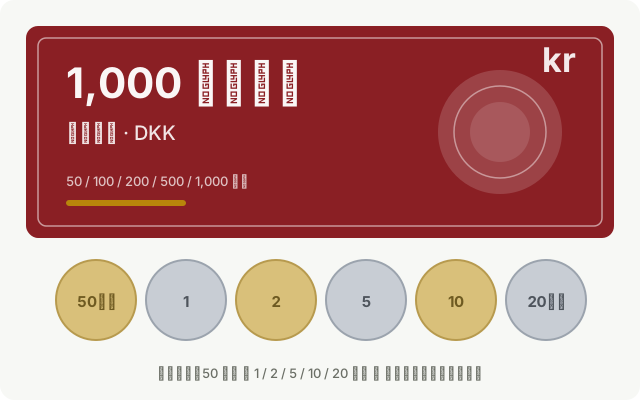
Current banknotes in circulation come in denominations of 50, 100, 200, 500, and 1,000 kroner. Each denomination is distinguished by colour and design, featuring themes such as Danish bridges, historic buildings, and notable figures, all with a clean aesthetic. Coins are issued in 50 øre, as well as 1, 2, 5, 10, and 20 kroner, with the 20 kroner coin featuring a distinctive hole in the centre.
Cash and Payment Habits
Denmark is one of the most cashless societies in the world, with card and mobile payments accepted almost everywhere. Locals widely use MobilePay for transfers and payments, and the national Dankort debit card is nearly ubiquitous. International visitors can use credit cards (Visa/Mastercard, with international transactions enabled) for almost all purchases, from restaurants and supermarkets to public transport.
Cash usage is very low, and some merchants may not accept large bills. There is no need to exchange large amounts of kroner. Cash can be withdrawn from ATMs at airports, banks, and in town centres.
Traveler Tips
- Denmark has high prices; a bottle of water often costs 15–25 kroner, and restaurant meals typically range from 150–350 kroner.
- Card payments are widespread, so it’s advisable to rely mainly on international credit cards and carry only a small amount of cash for emergencies.
- Tipping is not mandatory. Service charges are usually included in the bill, but you may voluntarily leave 5–10% if you’re satisfied.
- Non-EU residents can claim a VAT refund on purchases, provided they meet the minimum spend per store and keep their receipts.
Flag Meaning
Flag Design
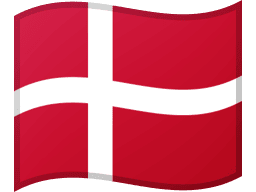
The Danish flag is known as the “Dannebrog,” meaning “the flag of the Danes.” It features a white Scandinavian (Nordic) cross on a red background. The proportions of the flag vary slightly depending on use, but commonly approximate 28:34 to 28:37, with the cross shifted slightly towards the hoist. The red and white colours provide a strong contrast, and the design is simple yet dignified, serving as the original model for the Nordic cross flag family.
Meaning
The Nordic cross symbolises the Christian faith and is also regarded as a cultural bond uniting the Nordic countries. Red represents courage and vitality, while white stands for peace and purity. The Dannebrog’s cross design has profoundly influenced the flags of other Nordic nations such as Sweden, Norway, Finland, and Iceland, and is considered the archetype of the Nordic cross flag.
History and Legal Status
The Dannebrog is one of the oldest national flags still in use today. Legend has it that in 1219, during the Battle of Lyndanisse in what is now Estonia, the Danish flag miraculously fell from the sky, turning the tide of battle in favour of the Danes. Historians believe the flag may have originated from crusader banners, and by the 14th century, it was widely used as a symbol of the Danish monarchy and state. Today, the Dannebrog remains beloved by the Danish people and is commonly displayed during birthdays, holidays, and sporting events. June 15th, known as “Valdemar’s Day” or Danish Flag Day, is celebrated with flag-raising ceremonies. Danish law regulates the appropriate use and display times of the flag, and Danish merchant ships at sea are required by law to fly the flag. It is also customary to raise the flag daily at churches, public buildings, and private homes.
Denmark Travel Guide
All Guides »Denmark Travel Quick Guide: Visa, Best Time to Visit, Budget & Cycling Etiquette
Understand Schengen visas, the best seasons, your budget, and cycling rules — th...
Classic 6-Day Denmark Itinerary: Copenhagen – Odense – Aarhus – Billund 6 days
See the capital, a fairy-tale town, Jutland’s culture, and the home of LEGO—all ...
Denmark 3-Day Itinerary: An In-Depth Exploration of Copenhagen 3 days
Enjoy the capital only: Explore castles and royal palaces, design districts, and...
Essential Attractions in Denmark: From Nyhavn to the Birthplace of LEGO
A city-by-city guide to Denmark’s top sights, with highlights and recommended vi...
A Guide to Danish Cuisine: Open-Faced Sandwiches, Red Sausages, and New Nordic Food
From street hot dogs to Michelin-starred New Nordic cuisine, Denmark offers a mo...
Denmark Transportation Guide: Metro, Intercity Trains, and Bicycles
Understanding Copenhagen’s metro, DSB trains, and rental bikes makes getting aro...
10 Practical Tips for Traveling in Denmark
From payment methods and cycling to tax refunds and avoiding common pitfalls, th...