Comoros
A spice island nation in the Indian Ocean, famed for ylang-ylang, vanilla, and active volcanoes, where Arab, Swahili, and French cultures intertwine.
Comoros (Union of the Comoros)
| Capital | Moroni |
|---|---|
| Continent | Africa |
| Languages | Comorian, Arabic, French |
| Currency | Comorian franc (KMF CF) |
| Time Zone | UTC+3 |
| Dialling Code | +269 |
| Area / Population | Approximately 1,862 square kilometers / Approximately 850,000 |
| Visa | Most foreign visitors can apply for a visa in advance at the Comorian embassy or consulate in their own country, or obtain a visa on arrival at Moroni's Said Ibrahim International Airport. The visa on arrival is a biometric visa requiring an on-site photo and fingerprint, costing 30 euros, with a maximum stay of 45 days. Applicants must have a passport valid for at least 6 months, return or onward flight tickets, proof of accommodation, and pay the visa fee in cash. Holders of diplomatic or service passports may enter visa-free. A separate French visa is required for travel to Mayotte. |
| Best Season | The dry season from May to October offers moderate temperatures and less rainfall, making it the best time to visit; the rainy season from November to April is hot and humid, with tropical cyclones and storms possible from January to March, which may affect sea travel and inter-island flights. |
| Main Cities | Moroni, Karthala Volcano, Grande Comore Island, Mohéli Marine Park, Anjouan Island, Mutsamudu, Fomboni, Iconi |
Comoros in Detail
Overview of the Comoros
The Comoros (officially the Union of the Comoros) is an island nation in the western Indian Ocean, at the northern end of the Mozambique Channel, situated between Madagascar and the African mainland. It consists of three main islands: Grande Comore, Mohéli, and Anjouan, and also claims sovereignty over Mayotte to the southeast (currently administered by France). The country covers an area of approximately 1,862 square kilometers, with its capital, Moroni, located on the western coast of Grande Comore. Moroni serves as the national center for politics, economy, and shipping.
The Comoros is an Islamic nation where Comorian (a dialect of Swahili) is commonly spoken in daily life, while Arabic and French are also official languages. The population is around 850,000, with a significant diaspora whose remittances form an important part of the economy. The country operates under a federal system, with each island enjoying considerable administrative autonomy.
Geography and Climate
All three main islands of the Comoros are volcanic in origin, featuring rugged terrain with narrow coastal plains and coral reefs. Karthala Volcano on Grande Comore, standing at about 2,361 meters, is the highest peak in the country and one of the most active and largest volcanic craters in the world, with a history of multiple eruptions. Mohéli has relatively gentler topography and well-developed coral reefs. Anjouan is known for its mountainous landscape and terraced fields.
The climate is tropical maritime, divided into distinct dry and wet seasons: the dry season from May to October has temperatures around 20-28°C and is relatively dry, while the wet season from November to April is hot, humid, and marked by concentrated rainfall. Tropical cyclones and storms may occur from January to March, affecting maritime activities and inter-island flights. The warm coastal waters are suitable for swimming and snorkeling year-round.
Historical Background
The Comoros archipelago has been settled since ancient times by migrants from East Africa, Arabia, and Madagascar. From the medieval period onward, it became part of the Indian Ocean trade network, with Arab and Persian merchants introducing Islam and Swahili culture. Various sultanates emerged on the islands, leaving behind mosques, fortresses, and stone structures in coastal towns.
France began gradually taking control of the islands in 1841, and by 1912, the Comoros became part of French Madagascar. In 1946, it was designated a French overseas territory. The Comoros declared independence in 1975, but Mayotte chose to remain under French administration following a referendum and continues to be a French overseas department. Post-independence, the Comoros experienced political instability, with secessionist movements emerging in Anjouan and Mohéli in 1997. A new constitution in 2001 established the federal structure of the Union of the Comoros. The country, founded on Islam, retains French administrative traditions and exemplifies a blend of Arab, Swahili, and French cultures.
Economy and Currency
The Comorian economy is primarily agricultural, with ylang-ylang (used in perfumes), vanilla, cloves, and coconuts as key export crops. The country is a leading global producer of ylang-ylang essential oil, earning it the nickname "the spice island of the Indian Ocean." Fisheries, remittances, and a growing tourism sector also contribute to the economy. Limited natural resources and a small market make the country highly dependent on foreign aid and imports. The official currency is the Comorian franc (KMF), issued by the Central Bank of the Comoros, which maintains a fixed exchange rate with the euro.
Culture and Society
Comorian society is deeply influenced by Islam and Swahili traditions, with mosques and extended families forming the core of daily life. The elaborate "Grand Mariage" (Great Wedding) is a significant social ceremony, often involving substantial expense to display family status. Music features Tarab and traditional drumming, while women often adorn themselves with fragrant oils and spices. The cuisine blends East African, Arab, and French flavors, with rice, coconut milk stews, seafood, and spices being staples. French and Arabic are used in administration and education, while Comorian is the everyday lingua franca.
Tourism Overview
The Comoros remains a niche destination, appealing for its pristine and tranquil environment. Hikers can summit Karthala Volcano on Grande Comore to gaze into its massive crater. Mohéli Marine Park is a nesting site for green turtles and a renowned snorkeling destination, with prehistoric coelacanths (also known as gombessa) inhabiting its waters. Anjouan showcases layers of Arab and Swahili culture through its old towns and terraces. Moroni’s historic mosques and spice-scented markets offer a glimpse into local life. Tourism infrastructure is basic, with limited transport and accommodation options, and French and Comorian are the main languages spoken. The destination suits travelers seeking authentic experiences and who are comfortable with some inconvenience.
Local Currency: Comorian franc (KMF)
Currency Overview
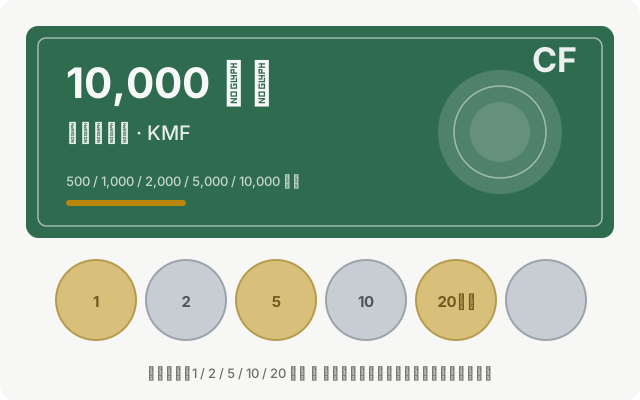
The official currency of the Comoros is the Comorian franc (currency code KMF, symbol CF, also written as FC). Issued by the Central Bank of the Comoros, the franc is pegged to the euro at a fixed rate (1 euro ≈ 491.96775 Comorian francs), ensuring relative stability. One Comorian franc equals 100 centimes, though subunits are rarely used in daily transactions. The currency is issued by the Central Bank of the Comoros and backed by exchange arrangements with the French Treasury, contributing to its credibility in the region.
Denominations
Banknotes currently in circulation come in denominations of 500, 1,000, 2,000, 5,000, and 10,000 francs, often featuring designs of local flora, fauna, traditional artifacts, and Islamic cultural elements. Coins are issued in 1, 2, 5, 10, 20, 25, 50, and 100 francs, with varying materials and sizes. Daily transactions typically use banknotes ranging from 500 to 5,000 francs.
Cash and Payment Practices
The Comoros operates largely as a cash-based economy. Markets, small shops, taxis, and ferries generally accept only cash, while international credit cards are only usable at a few hotels and banks in Moroni. ATMs are scarce, making cash withdrawal inconvenient. Travelers are advised to bring euro or U.S. dollar cash and exchange it for Comorian francs at banks or authorized exchange offices in Moroni. Euros may be accepted directly at some local businesses, but change is usually given in Comorian francs.
Traveler Tips
- Carry sufficient euro or U.S. dollar cash, as card payments and ATM withdrawals are very limited in the Comoros.
- Visa on arrival fees must be paid in cash, so prepare 30 euros in small denominations.
- The Comorian franc is pegged to the euro, so major exchange rate fluctuations are unlikely.
- Cash exceeding the allowed duty-free limit must be declared upon departure. Protected species products such as tortoiseshell, turtle shells, and coelacanths are strictly prohibited from being taken out of the country.
Flag Meaning
Flag Design
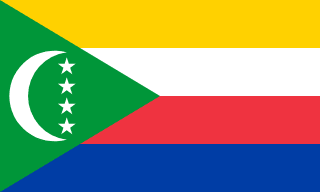
The flag of the Comoros consists of four horizontal stripes: yellow, white, red, and blue, from top to bottom. On the hoist side is a green isosceles triangle containing a white crescent moon and four white five-pointed stars. The flag’s aspect ratio is approximately 3:2, with the four stars arranged in an arc on the side of the crescent where it opens.
Meaning
The four colors and stars represent the four main islands of the Comoros: yellow for Grande Comore, white for Mohéli, red for Anjouan, and blue for Mayotte. The green triangle, white crescent, and stars symbolize Islam, as well as national unity and hope for the future. The flag design reflects the federal structure of the Comoros, emphasizing both the individuality and unity of its islands.
History and Legal Status
The Comoros has used various flag designs since gaining independence. The current version was adopted in 2001 and officially implemented in 2002, replacing the previous green flag with a crescent and stars. The new design uses four horizontal color bands to signify the coexistence of the four islands and serves as an important national symbol following the establishment of the federal constitution. The flag is widely displayed at government buildings, schools, and embassies, and its respectful treatment is upheld by both law and social custom. The arrangement of the four color bands is also interpreted as a representation of the equal status of the islands within the union. The crescent and stars face the right side of the flag, symbolizing a forward-looking vision. On national holidays and religious occasions, the flag is prominently displayed in public spaces as a mark of respect for the nation and faith.
Comoros Travel Guide
All Guides »Comoros Travel Quick Guide: Visas, Seasons, Budget & Etiquette
Know these key points—visa on arrival, best travel in the dry season, and cash i...
7-Day Comoros Island-Hopping Itinerary: Grande Comore – Mohéli – Anjouan 7 Days
A three-island journey through volcanoes, marine parks, and spice-filled old tow...
Comoros 4-Day Short Trip: In-Depth Exploration of Grande Comore Island 4 days
Explore Grande Comore Island in Four Days: A Loop of Moroni Old Town, Karthala V...
Must-visit attractions in the Comoros: volcanoes, marine parks, and spice old towns
Each of the three islands has its highlights: Karthala Volcano, Mohéli Marine Pa...
Comoros Food Guide: Coconut Fish Stew, Vanilla Lobster & Spiced Flavors
A blend of East African, Arab, and French cuisines meets the spices of the India...
Comoros Transport Guide: Airport Transfers, Inter-Island Flights, and Ferries
Travel between the three islands is via ferries and small planes, while taxis ar...
10 Practical Tips for Traveling to Comoros
Visa on arrival, cash, and religious etiquette are three key points. Understandi...