Chile
A narrow, north-south stretched country spanning about 4,300 kilometers, famous for the Atacama Desert, Patagonian glaciers, Easter Island moai, and Central Valley wines.
Chile (Republic of Chile)
| Capital | Santiago |
|---|---|
| Continent | South America |
| Languages | Spanish |
| Currency | Chilean Peso (CLP $) |
| Time Zone | UTC-4 to UTC-3 (UTC-3 during South American Daylight Time) |
| Dialling Code | +56 |
| Area / Population | 756,000 square kilometers / Approximately 20 million |
| Visa | Travelers entering Chile visa-free for up to 90 days may do so if holding a valid U.S. or Canadian visa (with at least 6 months validity). Otherwise, a Chilean tourist visa must be applied for in advance. Chile has strict biosecurity regulations—do not bring fresh fruits, meats, or seeds into the country. Please refer to the latest announcements from the Chilean embassy or consulate in your own country. |
| Best Season | The Southern Hemisphere summer (December to March) is ideal for visiting central cities and hiking in Patagonia; northern Atacama Desert is enjoyable year-round, with the best stargazing in winter nights; autumn (March to May) is perfect for grape harvest and winery tours in the Central Valley. |
| Main Cities | Santiago, Valparaiso, San Pedro de Atacama, Puerto Natales, Punta Arenas, Easter Island, La Serena, Puerto Montt |
Chile in Detail
About Chile
Chile (officially the Republic of Chile) is located in the southwestern part of South America, bordering the Pacific Ocean to the west, the Andes Mountains to the east (which form a natural boundary with Argentina), Peru to the north, and Bolivia to the northeast. The country is extremely long and narrow, stretching about 4,300 kilometers from north to south, while averaging only around 180 kilometers in width from east to west, making it one of the most elongated countries in the world. Its land area is approximately 756,000 square kilometers (excluding claimed Antarctic territory). The capital, Santiago, is situated in a central valley basin and serves as the national center for politics, economy, culture, and transportation, with its metropolitan population accounting for roughly one-third of the country’s total.
Chile also governs islands in the Pacific such as Easter Island (Rapa Nui) and the Juan Fernández Islands, and maintains scientific research stations in Antarctica. Spanish is the official language. Economically and in terms of public safety, Chile consistently ranks among the more developed countries in South America.
Geography and Climate
Chile’s terrain is divided into three major zones from north to south: the northern Atacama Desert—one of the driest places on Earth—rich in copper mines and salt flats, where cities like Antofagasta and San Pedro de Atacama are located; the central Mediterranean-climate Central Valley, the core of the country’s population, agriculture, and wine production, home to Santiago and Valparaiso; and the southern region of forests, glaciers, and fjords, where Torres del Paine National Park and the Patagonian Plateau are known for their granite spires, glaciers, and strong winds.
Climate varies significantly with latitude: the north has a tropical desert climate with large day-night temperature differences and intense sunlight; the central region has a Mediterranean climate—mild and rainy in winter, hot and dry in summer—renowned as a major wine-producing zone in the Southern Hemisphere; the south features a temperate oceanic climate, cool and rainy year-round with strong winds; Easter Island has a subtropical oceanic climate. Due to its location along the Pacific Ring of Fire, Chile experiences frequent earthquakes and volcanic activity, and travelers should stay alert to local warnings.
Historical Background
Northern Chile was influenced by Inca culture before the arrival of the Spanish, while central and southern regions were home to indigenous peoples such as the Mapuche. In the mid-16th century, the Spanish conquered Chile, and Santiago was founded in 1541. During the colonial period, Chile was part of the Viceroyalty of Peru, with an economy centered around livestock and wheat. Chile began its independence movement in 1810 and officially declared independence in 1818. In the 19th century, conservative and liberal factions alternated in power, and through the War of the Pacific in the late 1800s, Chile gained control of mineral-rich territories in the north, leading to a period of economic prosperity.
The 20th century saw political ups and downs in Chile. A military coup in 1973 led to a period of military dictatorship, and democratic elections were restored in 1990. Since then, Chile has pursued sustained economic openness, maintaining relatively fast growth throughout the 1990s and 2000s. It signed free trade agreements with multiple economies, including China, becoming one of Latin America’s most open economies, and joined the OECD in 2010.
Economy and Currency
Chile is a globally significant producer of copper, with copper exports long serving as a major source of national fiscal and foreign exchange income. The economy also includes mining, forestry, fishing, agriculture, and services. The Central Valley produces internationally acclaimed wines made from Cabernet Sauvignon, Carmenère, and Sauvignon Blanc, and the export of agricultural products such as cherries, blueberries, and salmon has grown considerably. Chile is also an important trading partner of China in Latin America, and the China-Chile Free Trade Agreement has been in effect since 2006 and continues to be upgraded.
The official currency is the Chilean Peso (Peso chileno, currency code CLP, symbol $), issued by the Central Bank of Chile (Banco Central de Chile). One peso is nominally equal to 100 centavos, but due to long-term inflation, subunits are no longer in circulation. The smallest circulating unit is 1 peso, and denominations are typically large numbers. Chile follows an inflation-targeting monetary policy framework, and the peso is among the more actively traded currencies in Latin America.
Culture and Society
Chilean culture is shaped by a blend of indigenous, Spanish colonial, and European immigrant influences: the north, including the Atacama and Easter Island, preserves indigenous traditions; central Chile has strong hacienda culture and Catholic festivals; the south is home to enduring Mapuche heritage and craftsmanship. Poets Pablo Neruda and Gabriela Mistral—Latin America’s first Nobel Literature laureate—have established Chile as a nation of literature. The colorful hillside houses and street art of Valparaiso are recognized as a UNESCO World Heritage Site.
Culinary highlights include fresh seafood along the coast, with dishes such as ceviche (marinated raw fish), Caldillo de Congrio (conger eel soup), Paila Marina (seafood stew), grilled meats (asado), and corn pastries (pastel de choclo). Wines and Pisco (a grape brandy) from the Central Valley are common pairings at meals.
Tourism Overview
Chile’s tourism landscape spans deserts, glaciers, and islands: the Atacama Desert in the north features Moon Valley, geysers, and salt flats, and is one of the world’s top stargazing destinations; central Chile centers on Santiago, Valparaiso’s colorful hills, and wine regions, offering both urban and culinary experiences; southern Patagonia is famed for Torres del Paine National Park’s W Trek, granite towers (Las Torres), and massive glaciers, with Puerto Natales as the main gateway; Easter Island is home to iconic Moai statues representing the mysterious Rapa Nui culture, and is one of Chile’s most recognizable UNESCO World Heritage Sites.
Due to the country’s vast north-south span, it’s difficult to cover all attractions in a single trip. It’s recommended to plan by region—northern desert, central cities and wine country, or southern Patagonia and Easter Island. The best season for southern trekking is the Southern Hemisphere summer (October to March), when accommodations and campsites should be booked well in advance.
Local Currency: Chilean Peso (CLP)
Currency Overview
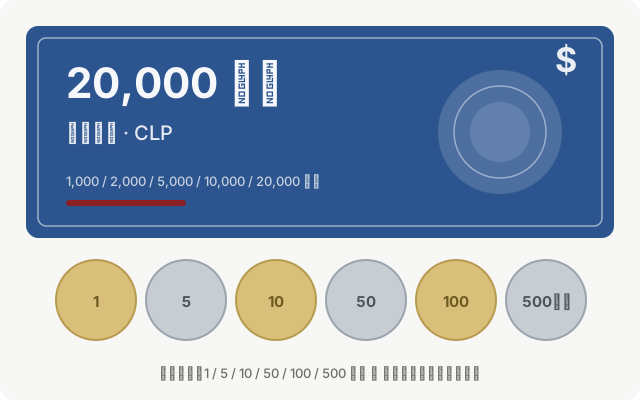
The official currency of Chile is the Chilean Peso (currency code CLP, symbol $, Spanish: Peso chileno), issued by the Central Bank of Chile (Banco Central de Chile). One peso is nominally equal to 100 centavos, but due to long-term inflation, coin subunits are no longer in use—the smallest circulating unit is 1 peso, and prices often appear as large numbers. Chile practices inflation targeting, and its monetary policy is relatively stable, making the peso one of the more actively traded currencies in Latin America.
Denominations
Current banknotes come in denominations of 1,000, 2,000, 5,000, 10,000, and 20,000 pesos, featuring themes related to Chilean historical figures, nature, and cultural landmarks—such as poet Gabriela Mistral, navigators, and ecological scenes. Coins are issued in 1, 5, 10, 50, 100, and 500 pesos, with 100 and 500 pesos being the most commonly used. Coins also depict national symbols such as the coat of arms, the llama (guanaco), and the monkey puzzle tree (Araucaria).
Cash and Payment Habits
Chile has a relatively modern payment environment in South America. Hotels, restaurants, shopping malls, and supermarkets in cities like Santiago and Valparaiso generally accept international credit cards. UnionPay cards may also be used at some merchants and ATMs, and mobile payments and card transactions are common for small purchases. However, markets, street food vendors, rural areas, long-distance buses, and some national park service points still primarily deal in cash, with frequent use of small coins—so it’s advisable to carry some cash.
Foreign currency exchange is mainly done in U.S. dollars, available at airports, banks, and authorized exchange offices. Exchange rates in the city are usually better than at the airport. ATMs are widely distributed in urban and tourist areas, and cash withdrawals are convenient, though fees and withdrawal limits may apply.
Tips for Travelers
- Chilean peso denominations are large, and prices are often marked in thousands (e.g., 5.000 means 5,000 pesos)—pay attention to decimal notation.
- Restaurant bills usually include tax. Mid- to high-end restaurants may add a 10% service charge, which is optional; tipping is generally not expected at casual eateries.
- Entrance fees to national parks, Easter Island, and other attractions are often paid separately—buy tickets in advance via official channels and carry some cash just in case.
- Easter Island has higher prices and limited flights—bring enough cash and essentials when departing from Santiago.
Flag Meaning
Flag Design
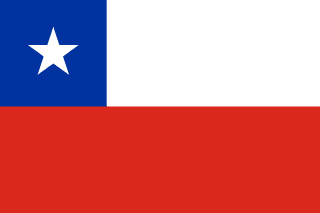
The Chilean flag (Bandera de Chile) consists of two horizontal bands and a blue square in the upper left corner: the top half is white, the bottom half is red, and the blue square—equal in height to the white band—is positioned in the upper left, featuring a white five-pointed star in the center. The flag has a 3:2 aspect ratio. Because of its red, white, and blue color scheme and single central star, it is known as La Estrella Solitaria (The Lone Star). The white and red bands are of equal width, occupying the upper and lower halves of the flag respectively, with the blue square taking up part of the upper left—making the star appear slightly offset toward the hoist side, giving the flag high visibility and making it one of the most distinctive flags in South America.
Meaning
The white symbolizes the snow of the Andes Mountains and purity, the red represents the blood and sacrifice shed for independence and freedom, and the blue stands for the sky and the vast Pacific Ocean. The white five-pointed star in the upper left corner is the central element of the flag, symbolizing a guiding star for the nation and representing unity and republican ideals. The combination of the three colors reflects the country’s history, nature, and republican spirit, while the single star is often interpreted as a pursuit of unity and progress—Chileans often take pride in their flag, known as La Estrella Solitaria.
History and Legal Status
Chile used various flags during its independence movement, but the current design was established in 1817 under the leadership of independence figures such as Bernardo O'Higgins and has remained largely unchanged since. The national flag, coat of arms, and anthem are Chile’s national symbols. Around September 18th each year, Chile’s National Day, the flag is legally required to be displayed at government buildings and public institutions, and is also commonly hung at homes and businesses—it is one of the country’s most ceremonious national holidays. Disrespectful treatment of the flag or coat of arms may be subject to legal consequences, and travelers are advised to show respect.
Chile Travel Guide
All Guides »Chile Travel Quick Guide: Visas, Seasons, Budgets & North-South Differences
How to dress, how to spend, and where to go in a country spanning 4,300 kilomete...
Classic 10-Day Chile Itinerary: Santiago — Atacama — Patagonia 10 days
From the world’s driest desert to Patagonian glaciers, this route covers Chile’s...
Chile 4-Day Short Trip: Santiago and Valparaíso 4 days
Centered around Santiago, this short trip bundles the capital, wine country, and...
Essential Attractions in Chile: Deserts, Glaciers, and Island Moai
From the world’s driest desert to Patagonian glaciers, here’s a regional guide t...
Chilean Food Guide: Seafood, Grilled Meats, and Wine
A long coastline and the wine-growing valleys of the Central Valley create a uni...
Chile Transportation Guide: Flights, Long-Distance Buses, and Car Rentals
Chile’s long, narrow shape shapes how you get around — here’s how to combine fli...
10 Practical Tips for Traveling in Chile
From regional climate differences to preparing for the Torres del Paine hike, th...