Tuvalu
A tiny coral atoll nation in the central Pacific, known for its extremely low elevation, unique Polynesian culture, and pristine lagoon scenery at the edge of the world.
Tuvalu
| Capital | Funafuti |
|---|---|
| Continent | Oceania |
| Languages | Tuvaluan, English |
| Currency | Australian Dollar (AUD A$) |
| Time Zone | UTC+12 |
| Dialling Code | +688 |
| Area / Population | 26 square kilometers / Approximately 11,000 |
| Visa | Most foreign visitors can obtain a visa on arrival at Funafuti Airport, typically valid for around 30 days. You’ll need to show your passport, return flight ticket, and proof of accommodation. Tuvalu does not have a diplomatic or consular presence in all countries, and visa policies can change frequently. Always confirm with the Tuvalu government or its mission in Fiji before traveling. |
| Best Season | The dry season from May to October offers calm seas and plenty of sunshine, making it the best time to visit. The rainy season from November to April brings a higher risk of tropical cyclones. |
| Main Cities | Funafuti, Vaitupu, Nukufetau, Nanumea, Nui, Niutao, Nanumanga, Vaitupu |
Tuvalu in Detail
About Tuvalu
Tuvalu is a tiny island nation in the central South Pacific Polynesian archipelago, lying roughly along the line between Hawaii and Australia. It consists of nine coral atolls and islands—six atolls and three raised coral islands—with a total land area of just 26 square kilometers, making it the fourth-smallest country in the world, only larger than Vatican City, Monaco, and Nauru. With a population of about 11,000, it is also the second least populous sovereign nation. The capital, Funafuti, is located on the eponymous atoll, with government offices, banks, hospitals, and the main port concentrated in the village of Vaiaku on the main island of Fongafale. Both Tuvaluan and English are official languages. Tuvalu gained independence from the United Kingdom in 1978 and is now a member of the Commonwealth.
Geography and Climate
The nine islands and atolls of Tuvalu are made up of coral reefs and sandbanks, with an extremely flat terrain. The highest point in the country is only about 4.6 meters above sea level. There are no hills, rivers, or springs, and residents rely entirely on rainwater collection and small desalination facilities for fresh water. The climate is tropical maritime, with temperatures typically ranging between 26 and 32 degrees Celsius and high humidity. The relatively cooler dry season runs from May to October, while the rainy season lasts from November to April, with occasional tropical cyclones. Due to its very low elevation, rising sea levels pose the most direct existential threat to Tuvalu. Coastal erosion, stronger storm surges, and increasing groundwater salinity are growing concerns, making Tuvalu one of the most frequently mentioned countries in global climate change discussions.
Historical Background
Polynesian navigators settled here around two to three thousand years ago, forming traditional societies based on family and island communities. The first recorded European contact was by Spanish navigator Mendaña in 1568. In the 19th century, Western whalers, slave traders, and missionaries arrived, and Christianity profoundly transformed local society. The islands were once known as the Ellice Islands, became a British protectorate in 1892, and were merged with the Gilbert Islands as a British colony in 1916. They were administratively separated in 1975, and Tuvalu declared independence on October 1, 1978. The name “Tuvalu” means “eight standing together” in the local language, referring to the eight inhabited islands at the time—though a ninth later became inhabited, slightly altering the original meaning.
Economy and Currency
Tuvalu has an extremely small economy and relies heavily on overseas income. One major source is the licensing of its national internet domain—“.tv”—which corresponds to the country’s abbreviation and is commercially licensed to global registrars, generating substantial and sustainable annual revenue used for education and infrastructure. This is considered an interesting case of “small nation economics” in the digital age. Another key income stream is the Tuvalu Trust Fund, established in 1987 with contributions from Australia, New Zealand, the United Kingdom, and others, with investment returns helping to subsidize public finances. Additional income comes from overseas remittances and fishing license fees. There is no national paper currency; the official legal tender is the Australian Dollar. Tuvalu issues its own coins equivalent in value to the Australian Dollar, as well as a variety of collectible commemorative coins aimed at global markets.
Culture and Society
Tuvalu is a typical Polynesian society where extended family and community sharing are central to life. Land, boats, and fishing catches are traditionally shared according to customary practices. Christianity, predominantly Congregationalist, has a profound influence, and Sunday church services are the most important weekly event. Traditional group singing and dancing, known as fatele, involve the whole community during festivals and farewells, accompanied by singing and drumming. Due to limited resources, many young people emigrate to Fiji, New Zealand, and Australia, with remittances supporting families back home. In 2023, Tuvalu signed the Falepili Union treaty with Australia, which includes a climate mobility clause offering a structured pathway for Tuvaluans to relocate to Australia, as well as provisions on security and defense cooperation. This is seen as the world’s first bilateral security agreement centered on climate issues. Tuvalu has also proposed a “digital nation” initiative, aiming to preserve its national culture and administrative functions in digital form.
Tourism Overview
Tuvalu is one of the most remote and hard-to-reach travel destinations in the world, with only a few thousand visitors each year, mostly adventurous travelers and niche explorers. International flights are limited to a few weekly services from Fiji Airways’ hub in Suva to Funafuti, and seats can be scarce—early booking is essential. Key experiences include snorkeling and fish-watching in Funafuti’s crystal-clear lagoon, taking a small boat to picnic on deserted sandbanks outside the atoll, exploring remnants from the World War II-era U.S. military presence, watching the Pacific sunset from coastal causeways, and spending a day immersed in the uniquely unhurried island life with some of the friendliest locals you’ll meet. There are no large resort hotels—accommodation mainly consists of family-run homestays, which are basic but authentic. Ideal for travelers with time to spare seeking truly unique experiences.
Local Currency: Australian Dollar (AUD)
Currency Overview
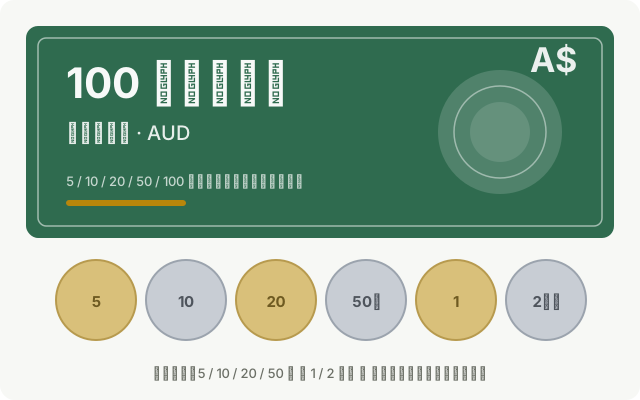
The official legal tender of Tuvalu is the Australian Dollar (currency code AUD, symbol A$), with 1 Australian Dollar equal to 100 cents. Tuvalu does not have a central bank and does not issue its own paper currency—the Australian Dollar serves as the legal currency. Some coins issued by Tuvalu are also in circulation, with face values equivalent to their Australian counterparts. Since 1976, Tuvalu has issued its own series of coins, primarily for small local transactions, and also produces a wide range of themed commemorative coins for global coin collectors—this has become an important source of foreign exchange earnings.
Denominations
The banknotes commonly used are Australia’s full range of polymer notes: 5, 10, 20, 50, and 100 Australian Dollars. Tuvalu’s own coins include denominations of 5, 10, 20, and 50 cents, as well as 1 and 2 Dollars. Earlier versions also included 1 and 2 cent coins, often featuring the Tuvaluan coat of arms, royal portraits, or local scenes. Due to limited issuance, local change often mixes Tuvaluan and Australian coins, both of which are accepted across Tuvalu. Travelers don’t need to worry about the origin of the coins—just use them at face value. Because of their limited mintage and attractive designs, well-preserved Tuvaluan coins and commemorative issues often carry a premium in coin collector markets. Consider picking up a few from a post office or bank before departure—they serve as both souvenirs and a tangible reflection of this small nation’s unique fiscal model.
Cash and Payment Habits
Tuvalu is entirely a cash-based society. The National Bank of Tuvalu in Funafuti has ATMs and teller services, but they only accept certain foreign bank cards, and machine cash availability is unreliable. Almost all transactions—from shops and ferries to homestays and taxis—are cash-only, with debit cards and mobile payments almost non-existent. It’s advisable to bring enough Australian Dollar cash (preferably in 20, 50, and 100 denominations along with smaller bills) with you when transiting through Suva, Fiji. Withdrawing cash upon arrival is a risky option.
Traveler Tips
- Plan your daily budget in cash—around 150–250 Australian Dollars per person should cover accommodation and meals.
- Small-denomination Australian Dollars are especially important on outer islands and ferries, so bring plenty in advance.
- A departure fee (around several dozen Australian Dollars) is required when leaving the country—keep some cash aside for this.
- Commemorative coins and the .tv domain are two of Tuvalu’s unique “signature income” sources—you can inquire about purchasing coins at the post office or bank.
Flag Meaning
Flag Design
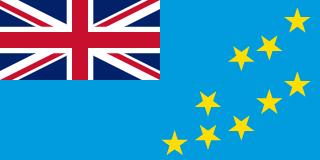
The flag of Tuvalu is rectangular, with a 1:2 aspect ratio. The background is sky blue (light blue), with the Union Jack in the upper left corner, occupying about half the length of the flag. On the right side (the fly side), there are nine yellow five-pointed stars arranged in an arc, roughly representing the actual geographic distribution of the nine islands and atolls. The star in the lower right corner corresponds to the location of the main island, Funafuti.
Meaning
The sky blue color symbolizes the Pacific sky and ocean, reflecting the low-lying nature of this ocean-bound nation. The Union Jack in the upper left represents Tuvalu’s historical ties to the United Kingdom and its status as a Commonwealth member. The nine golden stars stand for the nine islands and atolls that make up the country, with yellow symbolizing sunlight and hope. An interesting historical note: when the flag was first adopted, it had only eight stars, representing the “eight inhabited islands.” In 1996, a ninth star was added to acknowledge the later-inhabited island of Niulakita, aligning the flag’s symbolism with the country’s name, “eight standing together.”
History and Legal Status
The current flag design was established during the self-governing period in 1976 and officially adopted upon independence on October 1, 1978. Around 1995, the then-government briefly replaced it with a new flag without the Union Jack and featuring more prominent island imagery, but after a public referendum and widespread feedback, the original design was reinstated in 1997 and has been in use ever since. The flag, along with the coat of arms and national anthem, is protected under the Flag Act. It is flown at government buildings, airports, schools, and public institutions on important occasions, serving as the most important national symbol of this small nation. At the United Nations General Assembly and global climate negotiations, the sky-blue flag with nine stars has become a highly recognizable visual emblem representing Tuvalu’s voice on low-lying island issues.
Tuvalu Travel Guide
All Guides »Tuvalu Travel Quick Guide: Visas, Seasons, Budget & Island Etiquette
Before arriving in the world’s fourth smallest country, get clear on visa on arr...
Tuvalu 7-Day Atoll Route: A Slow Journey Through Funafuti and Outer Reef Sands 7 days
Designed around the weekly limited flight schedule, this itinerary captures lago...
Tuvalu 4-Day Short Trip: Highlights of Funafuti Atoll 4 Days
Even with just four days off, you can tick off the world’s fourth smallest count...
Top Experiences in Tuvalu: Lagoons, Sandbars, and Runway Sunsets
The country may be small, but what it offers is uniquely memorable: here’s how t...
Tuvalu Food Guide: Coconuts, Reef Fish, and Island Home Flavors
There are no restaurant streets, but everything on the table comes from the sea ...
Tuvalu Travel Guide: Ultra-Rare Flights, Runway Squares, and Cycling the Atolls
Traveling around Tuvalu boils down to one simple rule: treat the scarce flights ...
10 Practical Tips for Traveling to Tuvalu
In one of the world’s hardest-to-reach countries, getting these details right in...