Syria
A historic civilization on the eastern Mediterranean coast, renowned for the Old City of Damascus and the Citadel of Aleppo, though long-term conflict has created a severe safety situation for travelers.
Syria (Syrian Arab Republic)
| Capital | Damascus |
|---|---|
| Continent | Asia |
| Languages | Arabic |
| Currency | Syrian Pound (SYP £S) |
| Time Zone | UTC+3 |
| Dialling Code | +963 |
| Area / Population | Approximately 185,000 square kilometers / Approximately 23 million (figures have been affected by recent developments and may be uncertain) |
| Visa | Most foreign visitors need to apply for a visa to enter Syria in advance, typically through the Syrian embassy or consulate in their own country or a nearby diplomatic mission. Upon arrival, travelers are also required to complete a residence registration as per regulations. Multiple government agencies have issued safety alerts advising against travel to Syria. If travel is essential, travelers must closely monitor the latest travel advisories, purchase insurance covering emergency medical care and evacuation, and prepare a comprehensive safety plan in advance. |
| Best Season | Theoretically comfortable seasons are March to May and September to November. Summers are hot and humid along the coast and hot and dry inland, while winters are cold in the northern mountainous areas. Due to the local security situation, seasonal guidance is for reference only; always follow official safety advisories before traveling. |
| Main Cities | Damascus, Aleppo, Homs, Hama, Latakia, Tartus, Palmyra, Bosra |
Syria in Detail
Overview of Syria
Syria (Syrian Arab Republic) is located in the western part of Asia, on the eastern coast of the Mediterranean Sea. It borders Turkey to the north, Iraq to the east, Jordan to the south, Lebanon and Israel to the southwest, and the Mediterranean Sea to the west. The country covers an area of approximately 185,000 square kilometers. Its capital, Damascus, is situated on the banks of the Barada River in the southwest and is one of the oldest continuously inhabited cities in the world. The official language is Arabic, and the population is predominantly Arab, with ethnic groups such as Kurds and Armenians. Religious beliefs are diverse.
Syria is located at the crossroads of Asia, Europe, and Africa. Throughout history, it has been ruled by the Roman, Byzantine, Arab, Ottoman, and French empires, leaving behind a rich cultural heritage. Since 2011, Syria has been engulfed in prolonged armed conflict, which has severely damaged national infrastructure and the socio-economic fabric. The security situation for travelers is extremely serious—an unavoidable aspect of understanding modern-day Syria.
Geography and Climate
Syria’s terrain can be divided into several regions from west to east: coastal plains, western mountains, central plains, eastern plateaus, and southeastern deserts. The western coastal area experiences a Mediterranean climate, with mild, rainy winters and hot, humid summers. The central and eastern parts have semi-arid and arid climates, characterized by hot, dry summers and large diurnal temperature variations. The northeastern Euphrates River basin is a key agricultural zone, while the southeast extends into the Syrian Desert. The highest peak is Mount Hermon in the western mountains, reaching approximately 2,814 meters above sea level.
Most of the country receives rainfall between November and March. Spring (March to May) and autumn (September to November) offer relatively pleasant weather and traditionally mark the travel season. Summers are hot and humid along the coast and hot and dry inland, while winters are cold in the north and mountainous areas, with snowfall possible.
Historical Background
Syria is one of the cradles of human civilization, having been home to ancient city-states such as Ebla and Mari. Cities like Damascus and Aleppo boast histories spanning thousands of years. In the 7th century, the rise of the Arab Empire saw the Umayyad Caliphate establish its capital in Damascus in 661 AD, turning it into the center of an empire spanning Asia, Europe, and Africa. This period left behind the grand Umayyad Mosque. The region subsequently came under the rule of the Abbasids, Seljuks, Crusaders, Ayyubids, Mamluks, and Ottomans. In 1516, it was incorporated into the Ottoman Empire, which governed it for four centuries.
After World War I, Syria became a French League of Nations mandate. It gained formal independence in April 1946. Since then, the political landscape has undergone multiple changes, with the Ba'ath Party ruling continuously since 1963. In 2011, large-scale conflict erupted in Syria, evolving into a prolonged civil war. Numerous historical sites and cities were damaged, and millions of people were displaced. By the end of 2024, significant political changes had taken place, ushering in a new transitional phase, with the situation still evolving.
Economy and Currency
Syria’s economy traditionally relies on agriculture, oil and natural gas, textiles, food processing, and handicrafts. Before the war, tourism and remittances also played important roles. The prolonged conflict has severely damaged infrastructure, industry, and agriculture, leading to significant currency depreciation, rising prices, and major challenges for livelihoods and economic reconstruction. The official currency is the Syrian Pound (SYP). In recent years, there has been a notable gap between the official and market exchange rates. Updates on currency reforms and new banknotes should be confirmed via the latest official announcements.
Culture and Society
Syria is a key hub of Arab culture and Islamic civilization. Damascus is known as the “City of Jasmine,” and Aleppo is famed for its grand citadel and historic old city markets. Syrian cuisine holds an important place in Levantine food traditions, featuring dishes such as hummus, baba ghanoush, tabbouleh, fried meatballs (kibbeh), grilled meats, cheese-filled pastries, and sweets renowned in Damascus and Aleppo, including walnut baklava and cheese desserts. Family values and hospitality are highly regarded, with tea, coffee, and shared sweets being integral to daily social interactions.
Tourism Overview
Syria boasts a wealth of historical and cultural attractions: the Old City of Damascus and the Umayyad Mosque, the Citadel of Aleppo, Krak des Chevaliers, the Roman Theatre of Bosra, the ancient city of Palmyra, among others—many of which are UNESCO World Heritage Sites. Some sites have suffered severe damage during the conflict, and artifacts and ruins in places like Palmyra have been destroyed, which is deeply regrettable.
It must be objectively stated that the security situation in Syria is severe. Risks such as armed conflict, bombings, kidnappings, and general crime remain, while transportation, healthcare, and accommodation conditions fall far short of those needed for normal travel. In some areas, communication and electricity services are unstable. Travel is not recommended unless absolutely necessary. If you must go, stay informed of the latest travel advisories, prepare a safety plan, avoid conflict zones and military areas, choose certified service providers, and purchase insurance that includes emergency medical and evacuation coverage.
Local Currency: Syrian Pound (SYP)
Currency Overview
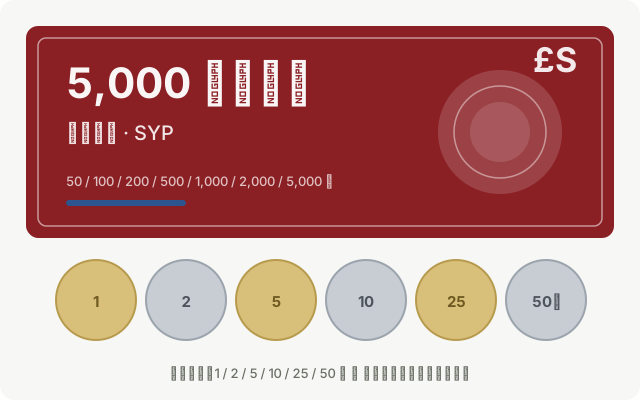
The official currency of Syria is the Syrian Pound (currency code: SYP, symbol: £S, Arabic: ل.س). One Syrian Pound is subdivided into 100 piastres, although piastres are no longer in practical use. The Syrian Pound is issued by the Central Bank of Syria. Years of conflict and economic hardship have caused significant devaluation of the currency, and a wide gap persists between the official and market exchange rates. Its usability outside Syria is also very limited, so travelers should be particularly cautious about currency-related risks.
Denominations
Currently circulating Syrian Pound banknotes include denominations of 50, 100, 200, 500, 1,000, 2,000, and 5,000. The notes often feature imagery of ancient ruins, historical figures, and agricultural scenes, including cultural elements from Palmyra, Bosra, and Aleppo. Coins in denominations of 1, 2, 5, 10, and 25 pounds exist but are rarely used in everyday transactions due to inflation. Recent efforts toward currency reform, including the issuance of new banknotes and the status of old ones, should be verified through the latest official announcements.
Cash and Payment Practices
Due to the security situation and economic environment, cash is the predominant form of payment in Syria. International credit cards and mobile payments are virtually unusable, and ATMs are limited in number and often affected by power and internet outages. Foreign currency circulates to some extent in the market but must be exchanged through official channels in compliance with relevant regulations. Travelers should carry sufficient cash and safeguard it carefully, avoiding displaying large amounts in public.
Traveler Tips
- Given the significant currency depreciation, it is advisable to rely primarily on U.S. dollars or euros in cash, exchanging them through official channels for local currency.
- Keep cash stored separately in small amounts to avoid carrying large bills together, reducing risk exposure.
- Exchange rates are volatile; confirm prices and the settlement currency before making purchases to avoid losses due to rate fluctuations.
- Comply with local financial and foreign exchange regulations, and avoid using informal currency exchange services offered by strangers.
Flag Meaning
Flag Design
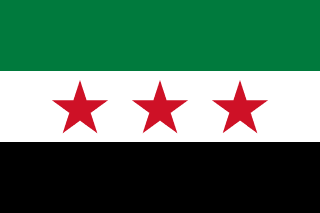
The current official flag of Syria consists of three horizontal bands of equal width in green, white, and black. The white band features three red five-pointed stars arranged horizontally in the center, with an approximate ratio of 2:3. This design originates from the flag used during the Syrian Republic in 1932 and is considered a historical symbol of independence and republican tradition. The previous flag featured red, white, and black horizontal bands with two green five-pointed stars in the center of the white band, which was in use from the 1980s until the end of 2024 when the political situation changed and the flag was replaced.
Meaning
In the current green-white-black tricolor flag, green is generally interpreted as a color associated with Islamic tradition and fertile land, white symbolizes peace and light, and black represents the suffering and oppression endured in the past. The three red five-pointed stars are commonly understood as representing the spirit of Arab unity and independence, as well as the historical memory of key regions in Syria’s history. The two green stars on the former red-white-black flag were part of the pan-Arab color scheme, with various interpretations attributed to them over time.
History and Legal Status
The green-white-black tricolor with three stars was first adopted by the Syrian Republic in 1932 and used as the national flag intermittently between 1932–1958 and 1961–1963. The red-white-black flag with two stars was associated with the United Arab Republic in 1958 and reinstated in the 1980s until the end of 2024, when the political shift led to the reintroduction of the green-white-black tricolor with three stars. The flag is a national symbol and should be treated with respect in public spaces. Travelers should avoid any improper behavior regarding the flag.
Syria Travel Guide
All Guides »Syria Travel Snapshot: Safety Alerts, Visa Status, Cultural Background & Key Essentials
Syria is home to world-class heritage sites such as the Old City of Damascus and...
Concept for a Cultural Route in Syria: A Historical Journey Through Damascus, Aleppo, and Palmyra 7 days
A seven-day cultural itinerary showcasing the highlights of Syrian civilization....
3-Day Cultural Itinerary in Syria: In-Depth Introduction to Damascus Old City (Currently Not Accessible) 3 days
A 3-day itinerary centered around Damascus Old City, showcasing the charms of th...
Essential Heritage List in Syria: Old City of Damascus, Aleppo Citadel, and Palmyra
A roundup of Syria’s most valuable historical heritage sites and highlights, alo...
A Guide to Syrian Cuisine: Levantine Hummus, Kibbeh, and Damascus Sweets
Syria is a hub of Levantine cuisine. This article introduces its signature dishe...
Explanation of Syria’s current transportation situation: flights, land routes, and domestic travel
An objective overview of Syria’s transportation system and the impact of conflic...
Syria Safety and Practical Tips: Advisory Against Travel and Essential Precautions
Ten objective pointers covering Ministry of Foreign Affairs safety advisories, i...