Czechia
A landlocked Central European country famed for its beer and castles, known across Europe for Prague’s millennium-old old town, Bohemian towns, and Pilsner beer culture.
Czechia (Czech Republic)
| Capital | Prague |
|---|---|
| Continent | Europe |
| Languages | Czech |
| Currency | Czech Koruna (CZK Kč) |
| Time Zone | UTC+1 to UTC+2 |
| Dialling Code | +420 |
| Area / Population | 78,900 square kilometres / Approximately 10.87 million |
| Visa | Most foreign visitors need a Schengen visa to visit the Czech Republic. Applications can be submitted to the Czech visa center or other Schengen country embassies or consulates. Required documents typically include a passport, travel itinerary, accommodation details, and travel insurance. The permitted length of stay is as indicated on the visa. It is recommended to book a visa appointment at least one month in advance. |
| Best Season | The best times to visit are May–June and September–October when the climate is mild and there are relatively fewer tourists. July–August is peak season, while December offers the most festive Christmas market atmosphere. |
| Main Cities | Prague, Český Krumlov, Brno, Karlovy Vary, Kutná Hora, Plzeň, Olomouc, Telč |
Czechia in Detail
Czech Republic Overview
The Czech Republic (Czechia) is located in Central Europe and is a typical landlocked country: it borders Germany to the west, Austria to the south, Slovakia to the southeast, and Poland to the northeast, covering an area of approximately 78,900 square kilometres. The capital, Prague (Praha), lies on both banks of the Vltava River and serves as the country’s political, economic, and cultural centre. It is also one of Europe’s best-preserved historic cities, with its metropolitan population accounting for about one-tenth of the national total. Prague is the country’s largest transportation hub.
The Czech Republic is a parliamentary republic. The president is the head of state, while the prime minister holds executive power. The country is divided into 14 regions. Historically, the Czech lands were divided into three parts: Bohemia, Moravia, and Silesia, and these regional differences are still reflected in architecture, dialects, and cuisine. The Czech Republic is a member of the European Union and NATO, as well as the Schengen Area.
Geography and Climate
The Czech landscape is dominated by the Bohemian Basin, surrounded by mountains: the Ore Mountains to the northwest, the Sudetes to the north, the Carpathian Mountains to the northeast and east, and the Bohemian Forest to the southwest. The highest point is Sněžka Mountain, which stands at 1,603 metres. The Vltava River runs north to south and joins the Elbe (Labe) River in Prague, serving as the nation’s symbolic river. Most of the country lies at elevations between 200 and 600 metres, with forests covering about one-third of the land. The country has abundant thermal and mineral spring resources, with spa towns such as Karlovy Vary, Mariánské Lázně, and Jáchymov being well-known across Europe since the Middle Ages.
The climate is temperate continental, with distinct seasons: winters are cold and dry, with January averages around -2°C, while summers are warm, averaging about 19°C in July. The months of May–June and September–October offer pleasant weather and fewer tourists, making them ideal for travel. December, with its festive Christmas markets in Prague and other towns, is another peak travel period.
Historical Background
In the 9th century, Great Moravia was the first powerful regime in the region. Later, the Kingdom of Bohemia played a significant role in Central Europe. In 1348, Charles IV founded Charles University in Prague, the first university in Central Europe, and Prague briefly served as the capital of the Holy Roman Empire. In the 15th century, religious reformer Jan Hus preached here and was executed in 1415, sparking the Hussite Wars.
In 1526, Bohemia came under Habsburg rule. The Defenestration of Prague in 1618 ignited the Thirty Years' War. After World War I in 1918, the First Czechoslovak Republic was established. In 1938, the Sudetenland was ceded following the Munich Agreement, and the region was subsequently occupied by Nazi Germany. From 1948, the Communist Party ruled the country, and the Prague Spring occurred in 1968. The Velvet Revolution in 1989 peacefully ended single-party rule. In 1993, Czechoslovakia peacefully split into the Czech Republic and Slovakia. The Czech Republic joined NATO in 1999 and the EU in 2004.
Economy and Currency
The Czech Republic has a highly industrialized economy in Central and Eastern Europe, with strong sectors in automobile manufacturing (Škoda), machinery, glass and crystal production, brewing, and precision instruments. The official currency is the Czech Koruna (CZK, symbol Kč), issued by the Czech National Bank. Although a member of the EU, the Czech Republic has not adopted the euro, and the koruna is used for all domestic pricing. Some tourist areas may accept euros, but the exchange rate is usually unfavourable.
Culture and Society
The Czech Republic has a rich cultural heritage. Writers such as Kafka, Hašek, and Milan Kundera, as well as composers like Smetana and Dvořák, were either from or developed their careers in the country. Puppetry, glass and crystal crafts, and black-light theatre are distinctive local art forms. Beer culture is a national hallmark—the Czech Republic consistently ranks among the top countries in the world for per capita beer consumption, and both the Pilsner and Budvar lager styles originated here.
Culinary highlights include roast pork knee with sauerkraut and bread dumplings (vepřo knedlo zelo), svíčková (cream sauce beef sirloin), goulash, and trdelník (chimney cake). Traditional pubs (hospoda) are central to social life.
Tourism Overview
The Czech Republic is one of the most popular tourist destinations in Central and Eastern Europe. Prague Castle and Charles Bridge, along with the Astronomical Clock in Old Town Square, form the classic trio of attractions. The Vltava River bend and red-roofed old town of Český Krumlov are hailed as one of Europe’s most beautiful towns. Karlovy Vary and Mariánské Lázně are historic spa resorts. Kutná Hora’s bone church, Brno’s modernist architecture, Plzeň’s beer tours, and Telč’s colourful water fountain square all offer unique experiences beyond Prague.
The country has convenient transport, more affordable prices compared to Western Europe, and a safe environment, making it an excellent base or starting point for exploring Central Europe. The rail network between cities is dense, and Prague is easily accessible by train or long-distance bus to places like Český Krumlov and Brno. The tourism service system is well-developed, with clear signage at attractions and many popular sites offering online ticket booking. The country is suitable for both independent urban travel and deeper exploration combining trains and self-drive.
Local Currency: Czech Koruna (CZK)
Currency Overview
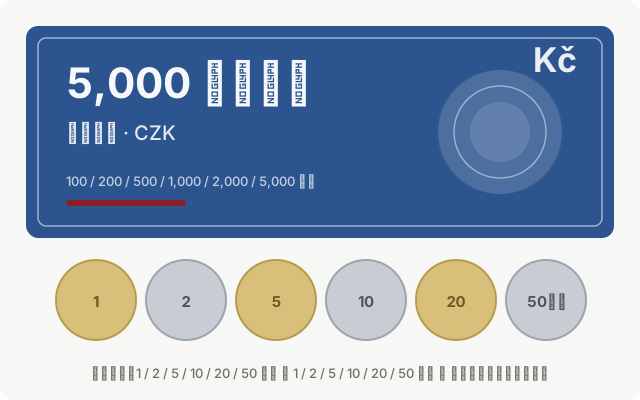
The official currency of the Czech Republic is the Czech Koruna (currency code CZK, symbol Kč, also internationally written as CZK), issued by the Czech National Bank (Česká národní banka). As an EU member, the Czech Republic has not adopted the euro, so the koruna is used for all everyday pricing and transactions. One Czech Koruna equals 100 hellers (haléř), but heller coins have been out of circulation since 2008, making the 1 koruna coin the smallest currently in use. The word "koruna" means "crown" in Czech and shares etymology with currency names in neighbouring countries. The Czech Republic has long been cautious about adopting the euro, and whether to join the eurozone remains a matter of future policy decision. As such, the koruna remains the primary currency within the country for the foreseeable future.
Denomination System
There are six current banknote denominations: 100, 200, 500, 1000, 2000, and 5000 koruna. They feature portraits of Charles IV, educator Komenský, writer Neruda, historian Palacký, singer Dessauerová, and the first president Masaryk. Banknote sizes increase with denomination and incorporate progressively enhanced security features. There are also six coin denominations: 1, 2, 5, 10, 20, and 50 koruna, with the 20 and 50 koruna coins being bimetallic. The 50 koruna coin features the Prague city emblem. Banknotes increase in size with value for quick recognition, while coins vary in material and shape. The bimetal design also aids visibility through touch for those with visual impairments.
Cash and Payment Habits
Credit and debit card usage is widespread in the Czech Republic. Hotels, restaurants, supermarkets, and chain stores generally accept international cards such as Visa and Mastercard, as well as mobile payments like Apple Pay and Google Pay. However, cash may still be required at traditional pubs, open-air markets, small-town shops, churches, and public transport ticket machines. It is advisable to carry some small-denomination koruna bills. In larger cities like Prague, cashless payment options are widely available, but traditional pubs and rural shops may still only accept cash. It is recommended to carry several hundred koruna in cash for transportation tickets, museum donations, and tipping. ATMs are common throughout urban areas, though withdrawal fees per transaction apply. It is often more economical to withdraw larger amounts at once. Exchange rates at airports and city centre kiosks vary significantly, so use only clearly priced, reputable institutions and avoid street money changers.
Traveler Tips
- The Czech Republic uses the koruna, not the euro. While some attractions may accept euros, the exchange rate is typically unfavourable—pay in koruna when possible.
- Heller coins below 1 koruna have long been discontinued, and prices may be rounded to the nearest whole koruna.
- Exchange offices in central Prague vary greatly in reliability. Prioritise bank branches or well-reviewed, reputable exchange services.
- Restaurant bills usually include tax. Tipping is generally 5–10% based on service satisfaction and can be added by rounding up the bill.
- Most businesses accept contactless cards, but traditional pubs and markets often require cash. It’s wise to have both payment methods ready.
Flag Meaning
Flag Design
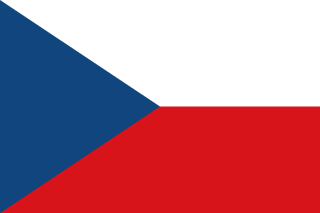
The Czech flag consists of white, red, and blue: the upper half is a white horizontal stripe and the lower half a red horizontal stripe, with a blue isosceles triangle extending from the hoist side to the centre of the flag. The overall flag has a 2:3 width-to-length ratio. The white and red stripes are of equal height, and the blue triangle extends from the hoist edge to the middle of the flag, with its apex falling on the vertical centreline.
Meaning
White symbolises peace and purity, and is also often interpreted as representing the sky. Red symbolises courage and the blood shed for freedom, and corresponds to the red background found in historical coats of arms. The blue triangle was originally intended to represent Slovakia and also symbolises loyalty and the enduring continuity of the nation. The colours white, red, and blue are also common in Slavic symbolism and are culturally connected to the Central European region where the Czech Republic is located. Domestically, the flag is often used alongside the national coat of arms and the presidential flag. The white and red also echo the colour scheme of the historical Bohemian coat of arms. The combination of these three colours and the triangle gives the Czech flag high international recognition.
History and Legal Status
This flag was adopted in 1920 by the first Czechoslovak Republic. The blue triangle was added to distinguish it from the flag of Poland, which also uses white and red. The flag was banned during the Nazi occupation from 1938 to 1945, reinstated after 1945, and given different interpretations after 1948 due to regime changes. When Czechoslovakia peacefully split in 1993, the Czech Republic retained this original flag, while Slovakia adopted a new flag with white, blue, and red horizontal stripes. Since its adoption in 1920, the flag’s design has remained in use for over a century, symbolising both Czechoslovak history and the continuity of the Czech state. By tradition, the flag is flown at the presidential palace, parliament, government buildings, and embassies, and is especially prominent on national memorial days and during sporting events. It is one of the most visible symbols of Czech national identity. According to Czech law, the flag is to be treated with respect, and its display and use are subject to specific regulations.
Czechia Travel Guide
All Guides »Czech Travel Quick Guide: Schengen Visa, Best Seasons, Travel Budget, and Dining Etiquette
How to get to Prague, how to apply for a visa, the best time to visit, how much ...
Classic 7-Day Czech Itinerary: Prague – Kutná Hora – Český Krumlov 7 days
This route connects the thousand-year-old capital Prague, the Sedlec Ossuary (Bo...
4-Day Czech Republic Short Trip: In-Depth Tour of Prague Castle, Old Town, and New Town 4 days
Even just exploring Prague can be incredibly fulfilling: divide your time by dis...
Essential Attractions in the Czech Republic: Prague Castle, Bohemian Towns, and Spa Cities
Beyond Prague, explore Bohemian towns, medieval castles, and spa resorts. This g...
Czech Cuisine Guide: Roast Pork Knuckle, Creamy Beef Sirloin, Goulash, and Beer Culture
Czech cuisine is hearty and filling, complemented by the country’s long-standing...
Czech Republic Transport Guide: Prague Airport, Trams, Intercity Trains, and Long-Distance Buses
How to get from Prague Airport into the city, how to buy and validate tram and m...
10 Practical Tips for Traveling in the Czech Republic: Currency Exchange, Public Transport Validation, and How to Avoid Common Pitfalls
From currency exchange and payment methods to pub etiquette, from validating pub...