Costa Rica
A Central American ecotourism benchmark, this army-free nation is famed for its volcano hot springs, cloud forests, extraordinary biodiversity, and "Pura Vida" lifestyle philosophy.
Costa Rica (Republic of Costa Rica)
| Capital | San José |
|---|---|
| Continent | North America |
| Languages | Spanish |
| Currency | Costa Rican colón (CRC ₡) |
| Time Zone | UTC-6 |
| Dialling Code | +506 |
| Area / Population | 51,100 square kilometers / Approximately 5.2 million |
| Visa | Most foreign visitors need a consular visa to enter Costa Rica. Travelers holding a regular passport from many countries (apply via the Costa Rican embassy or consulate in your own country; required documents may include a police clearance certificate and proof of financial means) may require a visa. However, travelers with valid multiple-entry U.S. or Canadian visas, legal residency allowing multiple entries (excluding U.S. C1/C2/C3 transit visas), or valid Schengen multiple-entry visas and legal residency in certain European countries such as the UK may enter visa-free under eligible conditions, typically for stays of up to 30 days. Travelers transiting through or entering from countries with yellow fever risk must show proof of vaccination. |
| Best Season | The dry season runs from December to April, with sunny weather on the Pacific side and in the central highlands—this is peak travel season. The rainy season lasts from May to November, with frequent afternoon showers, more affordable prices, and lusher scenery. The Caribbean coast receives higher rainfall year-round, so plan trips flexibly. |
| Main Cities | San José, La Fortuna, Monteverde, Manuel Antonio, Tortuguero, Tamarindo, Puerto Caldera, Limón, Cocos Island |
Costa Rica in Detail
Overview of Costa Rica
Costa Rica is located in the southern part of the Central American isthmus, bordered by Nicaragua to the north, Panama to the south, the Caribbean Sea to the east, and the Pacific Ocean to the west. It covers an area of approximately 51,100 square kilometers. The capital, San José, lies in the Central Valley of the central highlands, at an altitude of about 1,170 meters. With a mild climate, it serves as the country’s political, economic, and cultural center. The population is around 5.2 million, and the official language is Spanish. The majority of residents are of mixed European and Indigenous descent, and Catholicism is the predominant religion.
Costa Rica abolished its military after the end of a civil war in 1948, and its 1949 constitution explicitly states that the country shall maintain no standing army. It is now one of the few nations in the world without a military. The defense budget was redirected to education, healthcare, and environmental protection—a decision that has profoundly shaped the country’s peaceful image and development path, earning it a long-standing international reputation as a “peaceful nation.”
Geography and Climate
Located in a volcanically active zone, Costa Rica is crossed by the Central Mountain Range and the Talamanca Mountain Range, with dozens of volcanoes spread across the country. Arenal Volcano, which once had near-continuous eruptions, is now a key site for sightseeing and hot spring resorts; Poás Volcano and Irazú Volcano are known for their crater lakes and coffee plantation landscapes. The central part of the country is a fertile central plateau, flanked by the Caribbean coastal lowlands and the Pacific coastal plains, with rainforests, mangroves, and resort beaches along both coastlines.
The climate is tropical, divided only into dry and rainy seasons throughout the year: the dry season runs from December to April, making it the best time for the Pacific side and the highlands; the rainy season lasts from May to November, with precipitation mainly in the afternoon and the most lush vegetation. The Caribbean side is rainy nearly year-round, featuring a typical tropical rainforest climate; the central highlands are cooler than the coasts due to higher elevation, with cool mornings and evenings, so bring a light jacket.
Historical Background
Christopher Columbus arrived here during his fourth voyage in 1502, and Spain began its colonial rule in the 16th century. During the colonial period, the lack of gold mines and large Indigenous labor forces in Costa Rica led to a relatively equal social structure dominated by smallholder farming—an influence that had a lasting impact on later social stability. In 1821, Central America gained independence from Spain, and Costa Rica was briefly incorporated into the Mexican Empire and the United Provinces of Central America before becoming an independent republic in 1838.
A brief civil war triggered by a disputed presidential election in 1948 ended with José Figueres Ferrer’s victory. He subsequently announced the dissolution of the military and promulgated a new constitution in 1949, granting full rights to women and Afro-Costa Ricans while redirecting resources to education and healthcare. These measures laid the foundation for modern Costa Rica’s democracy and welfare system and have helped the country maintain long-term political stability.
Economy and Currency
Costa Rica is one of the more economically developed countries in Central America. Traditional exports included coffee, bananas, and sugarcane, but in recent years it has transformed into an important hub for medical equipment, electronic components, and ecotourism, with the service sector accounting for over half of the economy. Relying on its nationwide system of national parks and protected areas, ecotourism has become the country’s hallmark and a major source of foreign exchange.
The official currency is the Costa Rican colón (currency code: CRC, symbol: ₡), named in honor of navigator Christopher Columbus. It is issued by the Central Bank of Costa Rica. The colón operates on a floating exchange rate, subject to fluctuations in the international market. Check the daily exchange rate before your trip to budget accordingly.
Culture and Society
The most distinctive philosophy in Costa Rican society is "Pura Vida" (meaning "pure life" or "good life"). It functions as both a greeting and farewell, representing a contented, optimistic, and unhurried attitude toward life, and is considered the core of the national spirit. The local society values education and environmental awareness, with literacy and life expectancy rates that have long led Central America. The Nicoya Peninsula is also one of the world’s renowned “Blue Zones,” with a notably high proportion of centenarians.
The diet is based on rice, black beans, and corn tortillas. A common breakfast dish, "gallo pinto" (fried rice with black beans), is considered a national food. Coffee and cacao culture are deeply rooted, and visiting coffee plantations and chocolate workshops are highly popular experiences. Football is the most beloved sport, and family gatherings, Sunday markets, and beach surfing together form a leisurely daily scene.
Tourism Overview
Costa Rica is a global pioneer and benchmark in ecotourism. Over a quarter of its land area is designated as national parks and protected areas, earning it the nickname “the nature garden of Central America.” Highlights include Arenal Volcano and La Fortuna hot springs, the hanging bridges and hummingbird gardens of Monteverde Cloud Forest, the rainforest beaches of Manuel Antonio and Corcovado National Park, and the sea turtle nesting sites at Tortuguero.
In addition, the Pacific coast destinations of Tamarindo, Santa Teresa, and Montezuma are ideal for surfing and vacationing, while the Caribbean side’s Puerto Viejo is known for its Creole culture and coral reefs. Cocos Island, located about 500 kilometers off the mainland, is a world-class destination for shark diving. Activities such as zip-lining, rafting, canopy bridges, and birdwatching are highly developed, making it a top choice for families, honeymooners, and outdoor enthusiasts alike.
Local Currency: Costa Rican colón (CRC)
Currency Overview
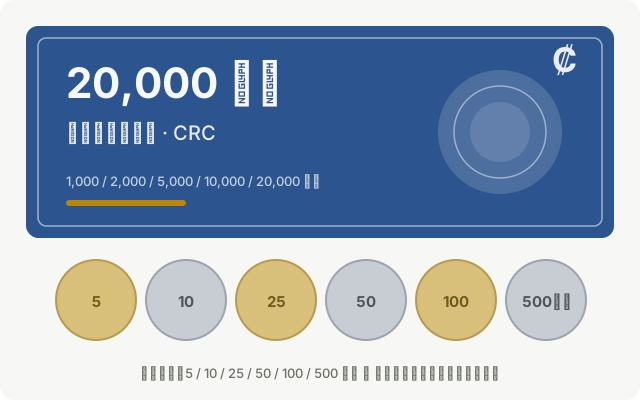
The official currency of Costa Rica is the Costa Rican colón (currency code: CRC, symbol: ₡, often written locally as ₡ or CRC). The currency is named in honor of navigator Cristóbal Colón (Christopher Columbus) and is issued by the Central Bank of Costa Rica (Banco Central de Costa Rica). The colón uses a floating exchange rate, which has shown a gradual depreciation against the U.S. dollar in recent years. Always check the daily exchange rate before converting currency for your trip.
Locally, colón amounts are often verbally expressed in units of “mil” (thousand). For example, “cinco mil” means 5,000 colones. Always confirm whether a price refers to “thousands” or “tens of thousands” to avoid misunderstandings when shopping.
Denomination System
Circulating banknotes come in six denominations: 1,000, 2,000, 5,000, 10,000, 20,000, and 50,000 colones. The notes feature themes related to national historical figures, important buildings, national flag colors, and ecological elements, and are generally printed on polymer or enhanced paper materials for good security and durability.
Coin denominations include 5, 10, 25, 50, 100, and 500 colones. Due to the wide range of coin values, small change can accumulate quickly, so it’s advisable to carry a small coin purse. Some merchants may struggle to provide change for very large bills, so try to use mid-range denominations for smaller transactions.
Cash and Payment Habits
Costa Rica has a well-developed card payment environment in tourist areas. Hotels, restaurants, car rental companies, and large supermarkets generally accept Visa and Mastercard. U.S. dollar cash is also widely accepted at tourist sites, but change is usually given in colones, and the exchange rate may not be favorable. ATMs are widely available, with most supporting withdrawals using foreign bank cards. Both issuing banks and local banks may charge separate transaction fees.
Locals commonly use the mobile payment system SINPE Móvil, but this usually requires a local bank account and phone number, which can be difficult for short-term travelers to set up. Therefore, it’s recommended to carry a moderate amount of cash for national park entry fees, roadside stalls, rural buses, and small purchases, and use cards for other transactions. The price of local goods and services generally includes a 13% value-added tax (IVA), and some restaurants may add a 10% service charge.
Traveler Tips
- Colón notes come in high denominations, and verbal prices are often given in “thousands”—always confirm the exact amount to avoid paying based on incorrect exchange rates.
- U.S. dollars are accepted at tourist sites, but change given in dollars often comes at an unfavorable exchange rate. Opt to pay in colones or use cards when possible.
- Many national park tickets and popular-time entries require online reservations or on-site card payments. Sites like Cocos Island require advance booking through authorized travel agencies.
- Tipping is not mandatory. Restaurants often include a 10% service charge; guides and drivers may be tipped according to the quality of service.
- Departing travelers carrying cash or securities worth $10,000 USD or more must declare it to customs.
Flag Meaning
Flag Design
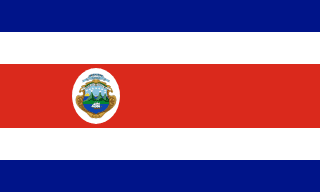
The Costa Rican flag is rectangular, with a width-to-length ratio of 3:5. It consists of five horizontal stripes: blue, white, red, white, and blue from top to bottom. The central red stripe is twice as wide as each of the other stripes. The blue, white, and red bands cycle from top to bottom, with the central red band serving as the visual focus of the flag.
There are two versions of the Costa Rican flag: the civil flag (without the coat of arms), which is the commonly seen version, and the government or state flag (with the coat of arms), which features the coat of arms positioned slightly left of center on the red stripe. The state flag is used by official institutions and for diplomatic purposes.
Meaning
Blue symbolizes the sky, the ocean, and the nation’s ideals; white represents peace, purity, and wisdom, as well as a commitment to peace and stability; red stands for the blood of the people, generosity, and the sacrifices made for freedom and justice, while also echoing the ideals of liberty promoted by the French Revolution. The combination of these three colors is clearly inspired by the French tricolor, and the doubled-width red stripe gives the flag a visually more grounded and vibrant appearance.
The coat of arms above the red stripe includes seven stars (representing the seven provinces), three volcanoes in the center, the Pacific and Atlantic Oceans on either side, a rising sun, and sheaves of wheat and coffee branches. It comprehensively summarizes the country’s history, geography, and agricultural foundation, reflecting the origin of its name, “Rich Coast.”
History and Legal Status
The Costa Rican flag was officially adopted on September 29, 1848, and was designed by Pacifica Fernández Oreamuno, the wife of then-President José María Castro Madriz. It was inspired by the French tricolor, with deeper color tones. In 1906, the version with the coat of arms was officially established as the state flag. Since then, the flag’s proportions and details have undergone several minor adjustments, with the current specifications remaining in use today.
In 1964, Costa Rica passed regulations unifying the flag’s color scheme, proportions, and display methods. Today, the blue-white-red flag is ubiquitous in government offices, schools, public buildings, and sporting events. September 15, Independence Day, and September 29, Flag Day, are the most celebrated national holidays and important occasions for expressing patriotism.
Costa Rica Travel Guide
All Guides »Costa Rica Travel Quick Guide: Visa, Seasons, Budget & Eco Travel Essentials
How to get a visa, choose between dry and rainy seasons, estimate your budget, a...
Classic 7-Day Itinerary in Costa Rica: Volcanoes, Cloud Forests, and Pacific Coast 7 Days
Combining volcano hot springs, cloud forests, and rainforest beaches is the most...
Costa Rica 4-Day Short Trip: Volcano Hot Springs and Cloud Forest 4 Days
Focusing on the Central Highlands and volcanic belt, even a 4-day trip lets you ...
Must-visit attractions in Costa Rica: volcanoes, cloud forests, and islands
A categorized guide to the most worthwhile natural and cultural attractions in C...
Costa Rica Food Guide: Gallo Pinto, Coffee, and Tropical Fruits
From national breakfasts to street-side eateries, explore Costa Rica’s simplicit...
Costa Rica Transportation Guide: Airports, Car Rentals, and Domestic Transfers
How to choose between two international airports, what to watch out for when ren...
10 Practical Tips for Traveling in Costa Rica
From visa requirements to rainforest safety, these details will help ensure a sm...