Benin
A West African country on the Gulf of Guinea, known for the Route of the Slaves and Door of No Return at Ouidah, the Royal Palaces of Abomey, Ganvie Water Village, and Vodun culture.
Benin (Republic of Benin)
| Capital | Porto-Novo (official), Cotonou (economic) |
|---|---|
| Continent | Africa |
| Languages | French |
| Currency | West African CFA franc (XOF CFA) |
| Time Zone | UTC+1 |
| Dialling Code | +229 |
| Area / Population | 115,000 square kilometers / Approximately 14 million |
| Visa | Most foreign visitors need to apply for a visa in advance to visit Benin. Visas can be obtained at the Beninese Embassy in your country or through the online e-Visa system. Entry requires a valid passport, a yellow fever vaccination certificate (yellow card), and a return or onward ticket. Some ports may offer visa on arrival, but please check the latest information from the relevant embassy or immigration authorities. The northern border region of Benin, adjacent to Burkina Faso, has higher security risks. Review the latest travel advisories issued by your country’s foreign ministry or embassy before your trip. |
| Best Season | The dry season from November to March is relatively cool and dry, making it the best time for city tours and wildlife viewing. The southern regions experience rainy seasons from April to July and September to October, while the north has its rainy season from May to October and is extremely hot in March and April. |
| Main Cities | Cotonou, Porto-Novo, Ouidah, Abomey, Ganvie, Pendjari National Park, Natitingou, Grand-Popo |
Benin in Detail
Overview of Benin
Benin (officially the Republic of Benin) is located on the northern coast of the Gulf of Guinea in West Africa. It borders Nigeria to the east, Togo to the west, Burkina Faso and Niger to the north, and the Atlantic Ocean to the south. The country covers an area of approximately 115,000 square kilometers and has a long, narrow shape stretching from north to south. The official capital is Porto-Novo, but the largest city and economic hub is Cotonou, where most government institutions and economic activities are concentrated. The official language is French, and local languages such as Fon and Yoruba are widely spoken. The population is around 14 million.
Previously known as Dahomey, a name derived from the powerful historical Kingdom of Dahomey, the country was renamed Benin in 1975, after the Bay of Benin. Today, Benin is a relatively politically stable country in West Africa with a rich cultural heritage. It is considered the birthplace of Vodun (Voodoo) and an important destination for understanding the history of the transatlantic slave trade and the civilizations of Atlantic coastal kingdoms.
Geography and Climate
Benin’s terrain rises gradually from low coastal plains in the south to central plateaus and the Atakora Mountains in the northwest, with the highest peak reaching about 658 meters. The southern region features a network of coastlines and lagoons, with Lake Nokoué connected to the Cotonou Lagoon. The famous water village of Ganvie is built on Lake Nokoué. The north consists of protected areas with a mix of savannah and forests, and the W-Arly-Pendjari transnational reserve, which spans into Niger and Burkina Faso, is one of West Africa’s most important large wildlife habitats.
The climate is tropical, with the south being hot and humid and featuring two rainy seasons (approximately April to July and September to October) and two dry seasons. The north has a tropical savannah climate, with the rainy season concentrated from May to October and dry, dusty conditions influenced by the Harmattan wind during the dry season. Overall, the period from November to March is the cooler, drier dry season, making it the best time for travel and wildlife viewing, although temperatures in the north can be extremely hot in March and April.
Historical Background
The southern part of Benin was the heartland of the Kingdom of Dahomey during the 17th to 19th centuries. With its capital at Abomey, the kingdom developed a highly organized court and military system. Its famous female regiment, often referred to as the Dahomey Amazons, is well-known in both history and popular culture. The coastal town of Ouidah was an important trading port and a key hub in the transatlantic slave trade, from which countless Africans were forcibly transported to the Americas, leaving a somber historical legacy.
In the late 19th century, France gradually took control of the region and established the colony of Dahomey in 1894. On August 1, 1960, Dahomey gained independence under the leadership of Hubert Maga. After Mathieu Kérékou came to power in 1972, the country was renamed the People's Republic of Benin in 1975 and adopted a period of socialist policies. In 1990, Benin peacefully transitioned to a multiparty democracy and reinstated the name Republic of Benin. Since then, it has experienced several peaceful transfers of power and is regarded as one of Africa’s democratic success stories.
Economy and Currency
Benin’s economy is primarily agricultural, with cotton being the most important cash crop and export. Other significant products include cashews, pineapples, palm oil, and fisheries. The Port of Cotonou serves as a crucial outlet for landlocked neighboring countries such as Niger and Burkina Faso, making transit trade and port services vital to the economy. The industrial base is relatively weak, with most processed goods relying on imports.
The official currency of Benin is the West African CFA franc (XOF), issued by the Central Bank of West African States (BCEAO) headquartered in Dakar, Senegal. Benin is one of the founding members of the West African Economic and Monetary Union. The CFA franc is pegged to the euro at a fixed exchange rate (1 euro ≈ 655.957 CFA francs), making the currency relatively stable and widely used across member states.
Culture and Society
Benin has a rich cultural heritage, with various ethnic groups including the Fon and Yoruba in the south, and the Bariba and Somba in the north. Vodun originated here and remains deeply rooted in southern communities. The annual National Vodun Festival on January 10 features vibrant ceremonies in Ouidah, with powerful displays of drumming, dancing, and ritual. The mud reliefs, royal thrones, and artifacts in the Royal Palaces of Abomey, along with the imagery of the Dahomey Amazons, tell the story of the kingdom’s rise and fall.
The staple diet includes cassava, maize, and yams. Akassa (fermented cassava paste) is common in the south, usually served with peanut sauce stews, palm nut soup, and grilled fish. In the north, maize porridge and millet gruel are popular, along with wagasi (a Fulani cheese) and grilled meat. Popular street foods include pineapple, grilled corn, akara (fried bean cakes), and yovo doko (sweet doughnuts). Benin is also a significant producer of pineapples in West Africa—don’t miss their sweet and juicy flavor.
Tourism Overview
Benin is a key cultural destination in West Africa. The Route of the Slaves and Door of No Return in Ouidah commemorate the painful history of the transatlantic slave trade and provide insight into the memory of the African diaspora. The Royal Palaces of Abomey are a UNESCO World Heritage Site. The nearby Ganvie Water Village, known as the “Venice of West Africa,” is a community where residents live on the water and navigate by boat, and it is on the tentative list for UNESCO World Heritage status. The museums and colonial-era architecture in Porto-Novo, as well as the traditional Tata Somba houses in the Atakora Mountains, showcase diverse historical and architectural features.
Wildlife enthusiasts can visit Pendjari National Park in the north, which is part of the W-Arly-Pendjari transnational World Heritage site and one of West Africa’s most important habitats for elephants, lions, and hippos. However, it is important to note that the northern border region, including areas around Pendjari, has seen increased security risks in recent years. Travelers to the north should join guided tours with proper security, avoid border and remote areas, and stay updated on the latest consular information. Medical and road infrastructure is limited, so bring mosquito repellent, sun protection, and essential medications.
Local Currency: West African CFA franc (XOF)
Currency Overview
The official currency of Benin is the West African CFA franc (currency code XOF, often written as CFA), issued by the Central Bank of West African States (BCEAO). Benin is one of the founding members of the West African Economic and Monetary Union, sharing this currency with Côte d’Ivoire, Senegal, Togo, Niger, Burkina Faso, Mali, and Guinea-Bissau. The CFA franc is pegged to the euro at a fixed exchange rate (1 euro ≈ 655.957 CFA francs), ensuring relative stability and making it one of the more convenient and exchangeable currencies in West Africa. Benin does not issue its own banknotes or coins—the CFA franc circulating in the country is identical to that used in other member states.
Denomination System
CFA franc banknotes in circulation come in denominations of 500, 1,000, 2,000, 5,000, and 10,000 francs. The 1,000 and 2,000 franc notes are reddish-brown, while the 5,000 and 10,000 franc notes are larger denominations, and the 500 franc note is the smallest. Coin denominations include 1, 5, 10, 25, 50, 100, 200, 250, and 500 francs. Due to limited purchasing power and inconvenience in carrying, small coins are rarely used in daily transactions. The smallest commonly used unit is 5 francs, and transactions are typically rounded to the nearest hundred francs. Bargaining is common at markets and souvenir stalls.
Cash and Payment Habits
Cash is the primary payment method in Benin. Card acceptance is limited, generally restricted to star-rated hotels, banks, supermarkets, and international restaurants in Cotonou. Mobile payments and local digital wallets are not easily accessible to foreign travelers. Major markets like Dantokpa in Cotonou, as well as street food vendors, taxis, minibuses, and craft stalls, only accept cash. Carry small-denomination bills. U.S. dollars and euros can be exchanged for CFA francs at Cotonou Airport, banks, and authorized exchange offices. Bank rates are more favorable, and private exchanges should be counted in person with attention to safety. While there are many exchange points due to the busy Port of Cotonou and transit trade, banks and licensed institutions are recommended.
Traveler Tips
- It is advisable to carry euros or U.S. dollars and exchange them at banks or authorized exchange offices. Avoid carrying large amounts of cash.
- The CFA franc is pegged to the euro, with an approximate exchange rate of 1,000 francs to 1.5 euros.
- Cash is essential, especially when visiting northern protected areas and rural regions, as card payment options are limited.
- Unused CFA francs can be exchanged back at the airport before departure, but the currency is not usable outside the union member states. Plan your cash usage accordingly.
- Bargaining is acceptable in markets, but do so politely. Avoid aggressively haggling or publicly counting large bills, which may draw unwanted attention.
Flag Meaning
Flag Design
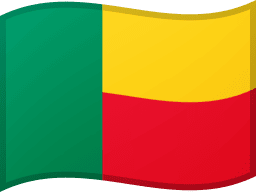
The flag of Benin consists of a vertical green stripe on the hoist side and a horizontal red band above a yellow band on the right. The flag has a 2:3 aspect ratio. These colors are common in Pan-African symbolism, and the design is bold and symmetrical, making it highly recognizable. The combination of green, red, and yellow is typical among West African nations, but Benin’s vertical and horizontal arrangement gives it a distinctive visual identity.
Meaning
Green symbolizes hope and renewal, reflecting aspirations for a new beginning for the nation. Red represents the courage and sacrifice made in the struggle for independence and freedom. Yellow stands for the country’s wealth and the richness of its land, signifying resources and future prosperity. Together, these colors reflect Pan-African ideals and express Benin’s hopes for unity, labor, and prosperity following the end of colonial rule. The central vertical green stripe signifies the foundation and direction for national development.
History and Legal Status
The flag of Benin was officially adopted on August 1, 1960, the day of the country’s independence. In 1975, when the country was renamed the People's Republic of Benin and adopted a new political direction, the flag was changed to a green field with a red star in the upper left corner. After the peaceful transition to democracy in 1990 and the restoration of the Republic of Benin, the original green-red-yellow tricolor was reinstated and has been in use ever since. This change and return of the flag encapsulate Benin’s modern history from colonization and independence to transformation. Today, the flag is prominently displayed on national holidays, at government buildings, schools, and ports, serving as a key symbol of national identity.
Benin Travel Guide
All Guides »Benin Travel Quick Guide: Visas, Seasons, Budget & Northern Safety Reminder
Traveling to Benin for cultural experiences isn't too difficult, but you'll need...
Benin 7-Day Classic Route: Cotonou – Ganvié – Ouidah – Abomey – Pendjari 7 days
From water villages and the Slave Route to palaces and nature reserves, explore ...
Benin 4-day short trip: Cotonou – Ganvié – Ouidah 4 days
Experience the highlights of southern Benin in four days: water villages, the Ro...
Essential Attractions in Benin: The Slave Route, Royal Palaces, and Water Villages
A regional guide to Benin’s top sights, including highlights, recommended visit ...
Benin Food Guide: Akassa, Wagasi, and Sweet Pineapple
Cassava, corn, and peanuts form the flavor base of Beninese cuisine, complemente...
Benin Transport Guide: Airport Transfers, Motorbike Taxis, and Lake Boats
A complete guide to getting from Cotonou Airport into town, zipping around by mo...
10 Practical Tips for Traveling in Benin
From bargaining with motorbike taxis to staying safe in the north, these details...