Australia
A travel destination that spans an entire continent, renowned for its stunning coastlines, unique wildlife, and diverse immigrant culture.
Australia (Commonwealth of Australia)
| Capital | Canberra |
|---|---|
| Continent | Oceania |
| Languages | English |
| Currency | Australian Dollar (AUD A$) |
| Time Zone | UTC+8 to UTC+11 (3 hours during daylight saving) |
| Dialling Code | +61 |
| Area / Population | 7.692 million square kilometers / Approximately 27 million |
| Visa | Most foreign visitors need to apply online in advance for a Visitor Visa (subclass 600) via the Department of Home Affairs' ImmiAccount system. The visa is usually issued electronically, typically allowing a single stay of no more than 3 months. An Electronic Travel Authority (subclass 601) is also available for passport holders of certain countries. |
| Best Season | Seasons in the Southern Hemisphere are opposite to those in the Northern Hemisphere. Sydney and Melbourne are most pleasant from October to April; northern destinations like Cairns and Darwin have their dry season from May to October; Uluru is most comfortable in winter from May to August. |
| Main Cities | Sydney, Melbourne, Brisbane, Gold Coast, Cairns, Perth, Adelaide, Hobart |
Australia in Detail
Australia Overview
Australia (officially the Commonwealth of Australia) is located in the Southern Hemisphere in Oceania and is the world’s only country that occupies an entire continent. It covers an area of approximately 7.692 million square kilometers, including the Australian mainland, Tasmania, and numerous surrounding islands. To the east, it borders the Coral Sea and Tasman Sea of the Pacific Ocean, to the west the Indian Ocean, to the north the Timor Sea and Arafura Sea across from Indonesia, and to the south it lies in proximity to New Zealand.
Australia is a federal constitutional monarchy with the British monarch as the head of state, represented by a governor-general. Governance is divided between the federal government and six states and two major territories. Its capital is Canberra, purpose-built as a political center to resolve the rivalry between Sydney and Melbourne after the federation was formed. The largest city is Sydney. With a population of around 27 million, the majority is concentrated along the southeastern coast, while the interior consists largely of vast deserts and sparsely populated pastoral areas.
Geography and Climate
The Australian continent can be roughly divided into three topographic zones: the Great Dividing Range in the east, which stretches north to south with gentle yet extensive mountain ranges, where Mount Kosciuszko reaches 2,228 meters and snow can be seen in winter; the Central Lowland, which includes the Great Artesian Basin and vast plains supported by underground water sources vital to inland grazing; and the western region, characterized by ancient plateaus and expansive deserts. In the heart of the continent lies Uluru (also known as Ayers Rock), a massive red sandstone monolith sacred to Indigenous Australians and a highly symbolic natural landmark of the nation.
The climate varies significantly: the north has a tropical climate with distinct wet and dry seasons—hot and humid from November to April, and dry and sunny from May to October. The central area features a desert and semi-desert climate with extreme temperature variations between day and night. The southern coastal regions enjoy a temperate climate with four distinct seasons. Influenced by the Southern Hemisphere, Australia’s seasons are the reverse of those in the Northern Hemisphere: December to February is summer, and June to August is winter—this reversal is essential to consider when planning a trip.
Historical Background
The Aboriginal and Torres Strait Islander peoples are among the world’s oldest continuous cultures, with histories spanning tens of thousands of years and deep spiritual connections to the land, rivers, and wildlife. Dutch navigators were the first Europeans to reach the shores in 1606, and in 1770, British Captain Cook claimed the eastern coast for Britain. On January 26, 1788, the First Fleet of Britain established a penal colony at Sydney Cove, a date now commemorated as Australia Day.
The mid-19th century gold rushes brought a wave of free settlers, rapidly boosting population and economic growth. On January 1, 1901, the colonies united to form the Commonwealth of Australia as a self-governing dominion. During both World Wars, Australia fought alongside Britain. The Gallipoli campaign in 1915 gave rise to ANZAC Day (April 25), a key national remembrance day. After WWII, Australia gradually adopted a multicultural policy, officially abandoning the White Australia Policy in 1972, leading to significant immigration from Asia and around the world and reshaping its modern society.
Economy and Currency
Australia is a highly developed market economy. Mineral resource exports, particularly iron ore, coal, gold, and lithium, have long been economic pillars with global impact. Agriculture and livestock are also strong sectors, with wool, beef, wheat, and wine enjoying international renown. Other important industries include education, tourism, financial services, and film production. The vast land combined with a small population results in a uniquely high per capita resource endowment.
The official currency is the Australian Dollar (AUD), commonly referred to as the Aussie dollar or Aussie. It is one of the actively traded currencies in the international forex market and was among the first countries to issue polymer plastic banknotes, which are designed for both security and aesthetic appeal.
Culture and Society
Australia is a quintessential multicultural society where immigrants from around the world have helped shape an open and inclusive national character. Aboriginal art, dot painting, and Dreamtime creation stories are cultural cornerstones. Sport and outdoor activities are central to life, with cricket, Australian Rules Football, rugby league, tennis, and surfing enjoying widespread popularity. The coffee culture is also thriving, with Melbourne recognized as one of the world’s great specialty coffee capitals.
English is the common language, and the social atmosphere is relaxed and informal, with an emphasis on equality and humor. The country’s vast size and sparse population mean towns are far apart, making air and road travel essential. Long-distance driving requires careful planning regarding fuel and supply stops.
Tourism Overview
Australia’s tourism highlights can be categorized into “nature” and “cities.” Natural attractions include the Great Barrier Reef off Queensland’s coast, with Cairns and the Whitsunday Islands as main gateways; Uluru and Kata Tjuta in the Northern Territory, famous for their dramatic color changes at sunrise and sunset; Tasmania’s pristine wilderness, Kangaroo Island’s wildlife, and Western Australia’s pink lakes. Urban highlights feature Sydney Opera House and Harbour Bridge; Melbourne’s laneways and street art; Brisbane and the Gold Coast’s sunny beaches; and Perth’s riverside charm.
Additional draws include the Twelve Apostles along the Great Ocean Road, the eucalypt forests and Three Sisters rock formation in the Blue Mountains, and numerous national parks along the southeast coast—all ideal for road trips. Given the large distances and long flights involved, it is advisable to focus a single trip on one region rather than trying to cover too much ground.
Local Currency: Australian Dollar (AUD)
Currency Overview
The official currency of Australia is the Australian Dollar (currency code: AUD, symbol: A$, also commonly written as AUD internationally). Introduced on February 14, 1966, the Australian Dollar replaced the Australian Pound and adopted the decimal system, with 1 AUD equal to 100 cents. In 1983, the currency transitioned to a floating exchange rate and has since become one of the actively traded major currencies in the international forex market, often closely correlated with the prices of commodities such as iron ore and coal.
Denominations
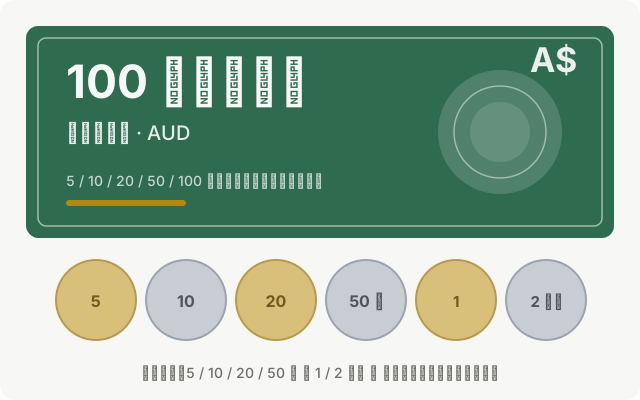
Current banknotes come in denominations of 5, 10, 20, 50, and 100 AUD. Australia was the first country in the world to issue polymer (plastic) banknotes, starting with commemorative plastic notes in 1988 before fully replacing paper currency. The newer notes incorporate tactile Braille features and complex transparent window security elements, making them durable and difficult to counterfeit.
Coins are issued in 5, 10, 20, and 50 cents, as well as 1 and 2 AUD. Due to cost and circulation factors, 1-cent and 2-cent coins have been withdrawn from use, and there is no paper equivalent for the 1 AUD coin. Coin designs feature native Australian animals such as the echidna, lyrebird, platypus, and kangaroo, adding collectible interest. Australia is also one of the few developed nations still using high-denomination 1 AUD and 2 AUD coins.
Cash and Payment Habits
Australia is one of the most cashless societies globally. Credit cards, debit cards, and contactless payments (tap and go) are widely accepted in supermarkets, restaurants, public transport, and even markets, with mobile payments also commonly used. Some merchants, especially smaller cafes and food trucks, may add a surcharge of about 1% to 2% for card payments. Large cash transactions are relatively rare, and some businesses no longer accept cash at all.
Travelers are advised to rely mainly on bank cards and mobile payments, carrying only a small amount of cash for emergencies—for example, rural bus fares, small parking fees, or purchases at markets. Foreign currency can be exchanged at airports, banks, and currency exchange outlets, with banks and specialized exchange services generally offering better rates. Using overseas bank cards at ATMs usually incurs fees, so it is recommended to withdraw cash in moderate amounts.
Traveler Tips
- Prices displayed already include a 10% Goods and Services Tax (GST); no additional tax needs to be calculated.
- Restaurants generally do not add service charges or expect tipping, though 5% to 10% is appreciated for good service at upscale establishments.
- Card payments may incur surcharges; check for notices at the checkout counter.
- Some remote areas have limited ATM access; ensure you carry enough cash and have a full tank before venturing into the outback.
Flag Meaning
Flag Design
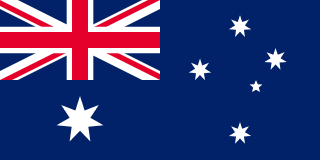
The Australian flag is a dark blue rectangle with a 1:2 aspect ratio. The upper left corner (hoist side) features the Union Jack; below it is a large white seven-pointed star known as the Commonwealth Star; on the right side (fly side) are five white stars forming the Southern Cross constellation, one small five-pointed star and four larger seven-pointed stars.
Meaning
The Union Jack in the upper left represents Australia’s historical ties and heritage as a member of the British Commonwealth. The seven-pointed Commonwealth Star symbolizes the unity of the federation, with its seven points representing the six states and one federal territory. The Southern Cross on the right is one of the most recognizable constellations in the Southern Hemisphere, signifying Australia’s location and a sense of identity under these stars. The blue background and white stars create a dignified and clear design.
History and Legal Status
Upon the formation of the Commonwealth of Australia in 1901, a competition for flag designs was held, and the winning design—submitted by five individuals including a schoolchild—has remained in use with only minor adjustments. The number of points on the stars was modified in 1903 and finalized as seven in 1908. The Flags Act of 1953 legally established this design as the national flag, with subsequent legislation further defining its use.
Today, the Australian flag is prominently displayed on Australia Day (January 26), ANZAC Day, at sporting events, and on government buildings. There is ongoing public discussion about changing the flag to better reflect Indigenous culture and national independence, but the current design remains a widely respected national symbol.
Australia Travel Guide
All Guides »Australia Travel Quick Guide: Visas, Seasons, Budget & Taboos
How to apply for an e-visa, how seasons work in the Southern Hemisphere, how muc...
Classic 8-Day Australia Itinerary: Sydney – Melbourne – Great Ocean Road 8 days
Cover both eastern cities and the most scenic coastal drive, experiencing urban ...
Australia 4-Day Short Trip: In-Depth Tour of Sydney and the Blue Mountains 4 days
Enjoy a fulfilling trip without leaving Sydney: four relaxed routes covering the...
Essential Attractions in Australia: From the Sydney Opera House to Uluru
Coastlines, deserts, rainforests, and urban landmarks—here’s a region-by-region ...
Australian Food Guide: From Meat Pies to Specialty Coffee
An Aussie breakfast, seafood, multicultural cuisine, and a flat white make up Au...
Australia Travel Guide: Airport Express, Transport Cards & Driving
From getting into the city from the airport to inter-state flights, Australia’s ...
10 Practical Tips for Traveling in Australia
Sun protection, beach safety, credit card surcharges, and long distances—these a...