Togo
A narrow sliver of a country along the West African Gulf of Guinea, a hidden travel gem famed as the birthplace of Vodun beliefs, the historic Slave Coast, and the Koutammakou mud tower-house UNESCO World Heritage Site.
Togo (Republic of Togo)
| Capital | Lomé |
|---|---|
| Continent | Africa |
| Languages | French |
| Currency | West African CFA franc (XOF CFA) |
| Time Zone | UTC+0 |
| Dialling Code | +228 |
| Area / Population | 56,800 square kilometres / Approximately 9 million |
| Visa | Most foreign visitors need a visa to enter Togo. You can apply for an e-Visa online via Togo’s official platform or get a visa on arrival at Lomé Airport, typically for a 7-day stay with possible extension. Visa policies may change, so check the latest announcements from Togo’s immigration authorities and your country’s embassy or consulate in Togo before travel. |
| Best Season | The dry season from November to February offers cool, dry weather and is the best time to visit both the north and south. The rainy season runs from March to October, with peak rainfall in the south occurring from April to June and September to October—bring rain gear during these months. |
| Main Cities | Lomé, Palimé, Mount Agou, Kétou, Aného, Lake Togo, Kara, Sokodé, Koutammakou |
Togo in Detail
About Togo
Togo (officially the Republic of Togo) is a narrow country along the West African Gulf of Guinea. It borders Ghana to the west, Benin to the east, Burkina Faso to the north, and the Gulf of Guinea (part of the Atlantic Ocean) to the south. Stretching about 600 km from north to south and just 50 km at its narrowest east–west point, it covers an area of approximately 56,800 square kilometres. The capital, Lomé, lies on the southwestern coast and serves as the political, economic, and port hub of the nation, as well as an important deep-water port and transshipment centre in West Africa.
Togo is a presidential republic divided into five regions: Maritime, Plateaux, Centrale, Kara, and Savanes. French is the official language, while Ewe and Kabiyé are widely spoken among locals. The country’s name comes from Lake Togo near Togoville, east of the capital—in the local language, “Togo” means “by the water” or “land behind the lake.”
Geography and Climate
Togo can be broadly divided into three zones: coastal plains and lagoon areas in the south, central plateau and hills, and savanna and low hills in the north. The southern part features low-lying coasts and the Lake Togo lagoon system. The central region consists of plateaus at altitudes of 200 to 600 metres, including Mount Agou, the country’s highest peak at around 986 metres, which is surrounded by coffee and cocoa farms. The northern region transitions into Sudanian savanna and is part of the Niger River basin, supporting crops such as cotton and grains.
The climate is tropical, with the south having a tropical monsoon climate and the north a tropical savanna climate. The year is roughly split into a dry season (November to February—dry and relatively cool) and a rainy season (March to October, with two rainfall peaks in the south). Average annual temperatures in the south are around 27°C, with greater diurnal temperature variations in the north. The best time to visit is between November and February.
Historical Background
Since the 15th century, Togo’s coastline has interacted with European traders from Portugal, the Netherlands, and Denmark. The area was once a key hub in the Atlantic slave trade and, along with its neighbours, was known as the “Slave Coast.” Aného was an important trading port from the 17th to 19th centuries and served as the capital of German Togoland and later French Togoland.
In 1884, Germany declared the region that is now Togo a protectorate, establishing German Togoland and building the port of Lomé and a railway. During World War I, British and French forces occupied the territory in 1914. After the war, the League of Nations divided it into British Togoland (western part) and French Togoland (eastern part) under mandates. In 1956, the British section voted to join Ghana, while French Togoland gained independence on 27 April 1960, becoming the Republic of Togo. This date is now Togo’s national day, marked by Lomé’s Independence Monument. Since then, the country has experienced several changes in government.
Economy and Currency
Togo’s economy relies mainly on agriculture, phosphate mining, and port-based re-export trade. Phosphate was long the top export earner, and Lomé Port is one of West Africa’s deep-water ports, handling cargo for inland neighbours such as Burkina Faso, Niger, and Mali. Agriculture includes staples like cassava, yams, maize, and sorghum, with cash crops such as coffee, cocoa, cotton, and oil palm.
The national currency is the West African CFA franc (XOF, symbol CFA), issued by the Central Bank of West African States (BCEAO). It is pegged to the euro at a fixed rate (1 euro ≈ 655.957 CFA francs), making the exchange rate very stable. The CFA franc is used across eight West African Economic and Monetary Union countries, so travellers can move between Togo and nations like Benin or Côte d’Ivoire without exchanging money.
Culture and Society
Along with neighbouring Benin, Togo is one of the birthplaces of Vodun (Voodoo), a traditional belief system rooted in animism that remains widespread in the southern coastal areas. Lomé’s Akodessewa Market (commonly known as the Voodoo Market) sells ritual items and herbs—a fascinating window into local spiritual practices. Visitors should be respectful and always ask permission before taking photos.
In the northern Kara Region, the Koutammakou cultural landscape is home to the Batammariba people, known for their distinctive two-storey mud tower-houses called Takienta. This site was inscribed as a UNESCO World Heritage Site in 2004. Staple foods include cassava, yams, and maize, often pounded into fufu and served with soup. Palm oil, peanuts, and chillies are widely used. Notable dishes include coconut rice, grilled fish, and peanut soup.
Tourism Overview
Togo offers a rare West African experience where “northern and southern landscapes can be explored in a single day.” Southern Lomé boasts beaches, lagoons, and bustling markets, while Lake Togo and Togoville showcase vibrant lakeside spiritual culture. Northwestern Palimé and Mount Agou are great for waterfall hikes in coffee and cocoa-growing highlands. Central Kara, northern Sokodé, and Koutammakou lead into sweeping savannas, traditional mud architecture, and edge-of-Sahel scenery. While tourism infrastructure is still developing, the country rewards adventurous, culturally curious visitors. Consider hiring a car or joining guided tours, and take precautions against mosquitoes and unsafe drinking water.
Local Currency: West African CFA franc (XOF)
Currency Overview
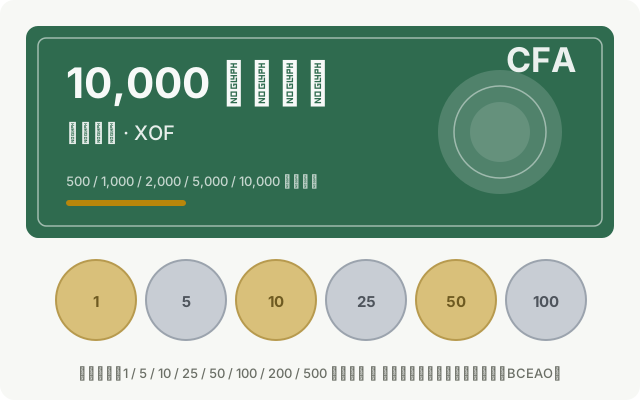
Togo uses the West African CFA franc (Franc CFA, currency code XOF, symbol CFA), issued by the Central Bank of West African States (BCEAO). It is the common currency of eight member states in the West African Economic and Monetary Union, including Togo, Benin, Burkina Faso, Côte d’Ivoire, Guinea-Bissau, Mali, Niger, and Senegal. The CFA franc is pegged to the euro at a fixed rate of 1 euro ≈ 655.957 CFA francs, ensuring long-term exchange rate stability and minimal fluctuation for travellers.
Denominations
Current banknotes come in denominations of 500, 1,000, 2,000, 5,000, and 10,000 CFA francs, featuring designs reflecting regional culture and economic themes, plus the BCEAO logo. Recent editions have updated designs with more emphasis on shared regional identity. Coins are issued in 1, 5, 10, 25, 50, 100, 200, and 500 CFA francs. Coins of 1 and 5 CFA francs are rarely used in daily transactions, while 25 and 200 CFA coins are mainly for making change.
Cash and Payment Practices
Togo is largely a cash-based society. Local markets, street vendors, taxis, and rural areas typically accept only cash. Cards and mobile payments are accepted in some hotels, supermarkets, and petrol stations in cities like Lomé, but are not widespread. Visa and Mastercard may work at select ATMs and merchants in major cities, but coverage is limited.
It’s best to exchange for CFA francs at Lomé Airport, banks, or authorised exchange counters, and carry a mix of notes including small denominations for everyday use. Mobile payment services like those operated by Togocom and Flooz are growing in popularity but remain difficult for most foreign visitors to use—cash is still king for short trips.
Traveller Tips
- The CFA franc is pegged to the euro, but US dollars are the practical alternative. Bring Euros or US Dollars for conversion locally.
- Togo shares the CFA franc with Benin, Côte d’Ivoire, and other West African nations—no need to exchange money when crossing these borders.
- ATMs are scarce and may not accept foreign cards. Withdraw enough cash in advance in cities like Lomé.
- Avoid using informal street currency exchanges; stick to banks and authorised booths.
Flag Meaning
Flag Design
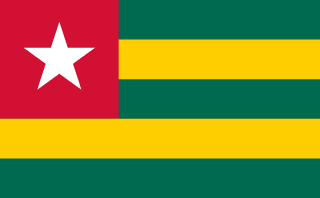
The flag of Togo consists of five equal horizontal stripes and a red square in the upper left corner. The stripes run from top to bottom in green, yellow, green, yellow, and green. The red square at the hoist side contains a white five-pointed star in the centre. The flag’s aspect ratio is close to the golden ratio (1:1.618). The red square’s width is about equal to the width of three stripes, and the white star is centred within it—resulting in a balanced and vibrant design overall.
Meaning
Green represents agriculture, nature, and hope—reflecting Togo’s farmlands, forests, and grasslands stretching from south to north. Yellow stands for the country’s mineral wealth and natural resources, as well as the people’s hopes for bountiful harvests. Red symbolises the blood and sacrifice of patriots in the struggle for independence, echoed by the red square bearing the white star. The white star signifies hope, purity, and the ideal of independence, as well as serving as a guiding light. The tricolour scheme of red, yellow, and green also reflects pan-African colours, with the white star on red symbolising Togo’s independence and renewal within the African continent.
History and Legal Status
The Togolese flag was officially adopted on 27 April 1960, the day of independence, and was designed by artist Paul Ahyi, who was also a renowned painter and sculptor. Combining pan-African colours with the red square and white star, the flag embodies the pride and aspirations of a newly independent nation. It has remained unchanged since independence. Today, the flag is prominently displayed at Lomé’s Independence Monument, government buildings, schools, and during national celebrations—especially on 27 April. The red-and-white star motif also appears on the national coat of arms and passport cover, together with two white lions forming the full national emblem.
Togo Travel Guide
All Guides »Togo Travel Quick Guide: Visa on Arrival, Best Time to Visit, Budget & Etiquette Tips
How to get a visa, the best time to visit, daily travel costs, and key etiquette...
Togo 7-Day Classic Route: Lomé — Lake Togo — Kpalimé — Koutammakou Mud Tower Houses 7 days
Traveling north from the capital’s coastal area through the Slave Coast and coff...
Togo 4-Day Short Trip Itinerary: Lomé, Lake Togo, and Kpalimé Waterfalls 4 Days
Limited time? Stick to the south: Divide your trip into zones—capital city, lago...
Recommended list of must-visit attractions in Togo: from the beaches of Lomé to the World Heritage mud tower houses of the north
A regional breakdown of over ten top attractions and experiences in Togo, includ...
The Ultimate Guide to Togolese Cuisine: Fufu, Palm Oil, and Street Food Explained
The foundation of Togolese flavors lies in cassava, yams, palm oil, and peanuts....
Complete Guide to Transportation in Togo: Airport Transfers, Motorbike Taxis, Intercity Buses, and Private Car Hire
How to get from Lomé Airport into the city, choose between motorbike taxis and s...
10 Practical Travel Tips for Togo: Visa, Health, Cash, and Safety
From visa arrangements and vaccinations to cash preparation and personal safety,...