Solomon Islands
A Melanesian island nation in the southwestern Pacific, known for World War II relics and shipwrecks in Iron Bottom Sound, Marovo Lagoon, and the East Rennell World Heritage Site.
Solomon Islands
| Capital | Honiara |
|---|---|
| Continent | Oceania |
| Languages | English |
| Currency | Solomon Islands dollar (SBD SI$) |
| Time Zone | UTC+11 |
| Dialling Code | +677 |
| Area / Population | Approximately 28,800 square kilometers / Approximately 720,000 |
| Visa | Most visitors need to apply for a visa in advance or follow official procedures for on-arrival entry, depending on the latest guidance from local embassies, consulates, and immigration authorities. Many travel itineraries involve transit through Australia, Fiji, or Papua New Guinea, so check whether you need a transit visa. |
| Best Season | The relatively dry and cool season from May to October features stable weather and low humidity, making it the best time for diving and island travel; the rainy season from November to April brings frequent showers and possible tropical cyclones. |
| Main Cities | Honiara, Guadalcanal Island, Tulagi, Florida Islands, Marovo Lagoon, Gizo, Munda, East Rennell Island |
Solomon Islands in Detail
Solomon Islands Overview
The Solomon Islands is a Melanesian island nation located in the southwestern Pacific, east of Papua New Guinea, comprising about 992 islands with a land area of approximately 28,800 square kilometers. The country is divided into nine provinces and a capital district, with the capital Honiara situated on the northern coast of Guadalcanal Island, serving as the national political, economic, and transportation hub. The official language is English, Pijin (a Solomons Creole) is widely spoken, and over 70 indigenous languages coexist, making it a typical multilingual Melanesian society.
A member of the Commonwealth, the Solomon Islands has the British monarch as its head of state, represented by a governor-general, and operates under a constitutional monarchy and parliamentary democracy. Its economy relies on agriculture, fishing, forestry, and minor mining, with timber and tuna as major exports. With its vast maritime territory, extensive coral reefs, and numerous WWII shipwrecks, the Solomon Islands is seen as a potential destination for diving and eco-tourism.
Geography and Climate
The islands stretch about 1,500 kilometers from northwest to southeast, with major island groups including Guadalcanal, Malaita, Choiseul, Isabel, New Georgia, Makira, the Santa Cruz Islands, and the Reef Islands and Bellona Atoll. Most islands are volcanic, with rugged terrain and rainforest cover, while some, like East Rennell Island, are raised coral atolls. The country has many short, fast-flowing streams, with plains mainly along the coasts and population concentrated on Guadalcanal and Malaita.
The climate is tropical maritime, with high temperatures and rainfall year-round. The average annual temperature is around 27°C, with high humidity. The rainy season runs from November to April, featuring afternoon showers and possible tropical cyclones, while the relatively dry and cool season from May to October is ideal for diving and island travel. Mountainous areas receive significantly more rainfall on windward slopes than leeward ones, resulting in distinct microclimates across the islands.
Historical Background
The Solomon Islands have been inhabited by Melanesians for thousands of years. In 1568, Spanish explorer Álvaro de Mendaña arrived and named the islands after the legendary Solomon’s gold mines. Over the centuries, European colonizers and missionaries arrived, and in the late 19th century, Germany and Britain divided spheres of influence. In 1893, Britain established a protectorate, and after a 1899 agreement with Germany, most of the islands came under British control.
During World War II, the islands became a key battleground in the Pacific. In 1942, Japanese forces occupied Tulagi and Guadalcanal, building an airstrip there—later known as Henderson Field. From 1942 to 1943, the Allies and Japanese fought intense battles over Guadalcanal, widely regarded as a turning point in the Pacific War. The Solomon Islands gained self-government in 1976 and became fully independent on July 7, 1978, joining the Commonwealth.
Post-independence, the Solomon Islands faced ethnic conflicts and social unrest, with severe unrest between 1998 and 2003 due to tensions between Guadalcanal and Malaita communities, which were eventually resolved with regional intervention. While political stability has improved in recent years, the country still faces challenges in economic development, employment, and infrastructure.
Economy and Currency
The Solomon Islands has a relatively undiversified economy, with forestry, fishing, and agriculture as main pillars. Log exports have long accounted for a significant share of export revenue, and the country has abundant tuna resources, offering potential for fisheries development. Small-scale gold mining and a growing tourism sector also provide employment and foreign exchange. The economy is highly dependent on imports, including food, fuel, and manufactured goods, resulting in relatively high local prices.
The official currency is the Solomon Islands dollar (SBD), issued by the Central Bank of the Solomon Islands. Cash is primarily obtained from banks and ATMs in Honiara, with limited financial services on outer islands, so travelers should carry enough cash for such destinations. Foreign credit cards are accepted at hotels, resorts, and large supermarkets, but small vendors, markets, and rural areas typically deal only in cash.
Culture and Society
Solomon Islands society is rooted in Melanesian culture, with strong tribal and family ties. Most people live in rural areas, relying on subsistence agriculture and fishing. Traditional shell money was historically used for valuable exchanges and bride price, while red feather money made from red feathers was once used on Rennell Island as a symbol of high value—both remain culturally significant in ceremonies and traditions.
Coastal and highland tribes differ markedly in language, customs, and social organization. Wood carving, canoe carving, shell jewelry, and bamboo weaving are representative crafts, with pigs and taro holding ceremonial importance. Christianity is widespread, and many villages maintain dual governance structures of churches and chiefs, blending traditional customs with modern life.
Tourism Overview
The Solomon Islands’ tourism highlights lie in its pristine environment and underwater attractions. The region remains largely undeveloped commercially, offering visitors untouched coral reefs, lagoons, and rainforests. The Marovo Lagoon in the Western Province is acclaimed as one of the world’s largest double-barrier reef lagoons, with crystal-clear waters and scattered islands. East Rennell in the Renell and Bellona Province is a UNESCO World Heritage-listed raised coral atoll.
Guadalcanal and its surrounding waters preserve numerous WWII relics, including the sunken ships and aircraft in Iron Bottom Sound, a popular destination for divers. Travelers typically fly into Honiara and then take domestic flights or boats to the Western Province, Tulagi, and the Florida Islands. Accommodation and facilities are limited, making it ideal for travelers seeking off-the-beaten-path experiences.
Local Currency: Solomon Islands dollar (SBD)
Currency Overview
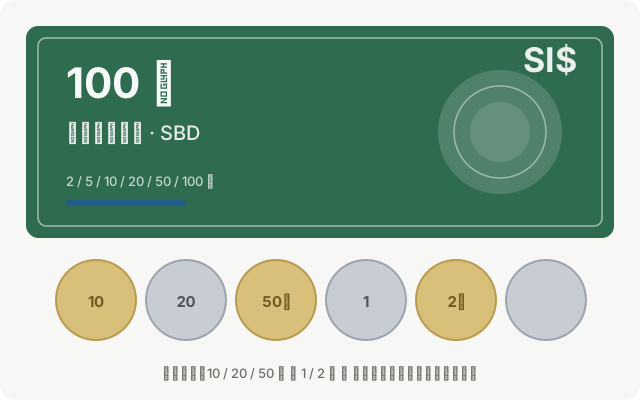
The official currency of the Solomon Islands is the Solomon Islands dollar (currency code SBD, symbol SI$, locally written as $ or SBD). One Solomon Islands dollar equals 100 cents. The currency is issued by the Central Bank of Solomon Islands (established in 1976). The Solomon Islands dollar was introduced in 1977, replacing the Australian dollar and becoming the national currency upon independence.
Denominations
Current banknotes include denominations of 5, 10, 20, 50, and 100 dollars, featuring designs related to marine life, traditional crafts, island life, and natural scenery. They are color-coded for easy identification. Coins come in 5, 10, 20, and 50 cents, as well as 1 and 2 dollars, with some commemorative coins. Due to the country’s reliance on imports and everyday small transactions, coins and low-denomination bills are commonly used in daily purchases.
Cash and Payment Habits
The Solomon Islands is largely a cash-based economy. While banks and ATMs are relatively concentrated in Honiara—with some connections to banks in Australia and New Zealand—ATMs are scarce or unavailable outside the capital, and most vendors accept only cash. Hotels, resorts, larger supermarkets, and travel agencies typically accept foreign credit cards such as Visa and Mastercard, although some may charge additional fees.
It’s recommended to withdraw enough cash in Honiara before heading to the outer islands, and to carry small bills and coins for use at markets, for boat fares, motorbike taxis, and small shops. Foreign currency can be exchanged at Honiara Airport, banks, and authorized exchange bureaus. The local currency is generally not accepted; travellers usually bring U.S. dollars or Australian dollars, with exchange rates based on daily rates.
Traveler Tips
- Outer islands have almost no ATMs; prepare cash equivalent to 1.5 times your trip duration.
- Markets and rural areas only accept cash; carry extra 5 and 10 dollar bills.
- Foreign credit cards may be accepted at resorts but could incur fees.
- Try to use or exchange all Solomon Islands dollars before leaving, as foreign exchange options are limited.
Flag Meaning
Flag Design
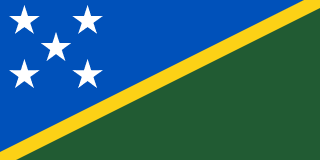
The flag of the Solomon Islands is rectangular, with a 1:2 aspect ratio. A diagonal yellow stripe runs from the bottom left (hoist side) to the top right, dividing the flag into two triangles: a blue upper triangle (near the hoist) with five white five-pointed stars arranged in an X pattern, and a green lower triangle. The narrow yellow stripe cleanly separates the blue and green sections, creating a simple yet striking design.
Meaning
Blue represents the Pacific Ocean and the sky, symbolizing the country’s vast maritime resources and blue territories. Green stands for the lush vegetation and fertile land. The yellow stripe symbolizes the sun, signifying hope and brightness. The five white stars represent the country’s main island groups and correspond to the initial administrative divisions, embodying equality among the islands. The design visually conveys the nation’s geographic identity as an island nation and the unity of its islands.
History and Legal Status
The Solomon Islands flag was officially adopted on November 18, 1977, predating the country’s independence on July 7, 1978, and replacing the flag of the British Solomon Islands Protectorate. After independence, it became the official national flag and remains in use today. The five stars initially represented five administrative regions, but with subsequent provincial changes, they are now more widely seen as symbols of the main island groups and national unity.
Today, the flag is prominently displayed at government buildings, schools, ports, and sporting events, and serves as the national emblem during international events like the Commonwealth Games. Along with the coat of arms and national anthem, it forms the national symbols of the Solomon Islands.
Solomon Islands Travel Guide
All Guides »Solomon Islands Travel Quick Guide: Visa, Seasons, Budget & Village Etiquette
Get the visa, seasonal info, budget, and village etiquette basics sorted before ...
7-Day Classic Solomon Islands Itinerary: Honiara – Guadalcanal – Western Province 7 Days
Start your journey in Honiara, exploring World War II sites and Ironbottom Sound...
Solomon Islands 4-Day Short Trip: In-Depth Exploration of Honiara and Guadalcanal 4 days
With limited time, focus on Honiara and Guadalcanal to fully experience WWII sit...
Must-visit Attractions in the Solomon Islands: WWII Sites, Lagoons & World Heritage
From the sunken wrecks of Iron Bottom Bay to Marovo Lagoon and East Rennell – a ...
Solomon Islands Food Guide: Coconut Milk Seafood, Root Crops, and Kava
Featuring root crops, coconut milk seafood, and tropical fruits, with price rang...
Travel Guide to Transportation in the Solomon Islands: International Connections, Domestic Flights, and Inter-Island Ferries
How to reach Honiara, get around the city, and choose between flights or boats f...
10 Practical Tips for Traveling in the Solomon Islands
From visas and layovers, to cash preparation, diving safety, and village etiquet...