Pakistan
A South Asian ancient civilization and a mountainous nation, home to Mughal monuments, the Karakoram Mountains and K2, as well as a profound Islamic culture.
Pakistan (Islamic Republic of Pakistan)
| Capital | Islamabad |
|---|---|
| Continent | Asia |
| Languages | Urdu, English |
| Currency | Pakistani Rupee (PKR Rs) |
| Time Zone | UTC+5 |
| Dialling Code | +92 |
| Area / Population | Approximately 881,900 square kilometres / Approximately 240 million |
| Visa | Most foreign visitors need to apply for a visa in advance to visit Pakistan. Common visa types include tourism and business, and electronic visas may be available in some cases. A No Objection Certificate (NOC) is also required for visiting certain controlled tourist areas in the northern region. The country’s Ministry of Foreign Affairs and embassies or consulates abroad have issued multiple safety advisories. Be sure to check the latest notices before travel and purchase insurance that includes emergency evacuation coverage. |
| Best Season | The best time to visit the northern mountainous areas is May–June and September–October, when the climate is pleasant and mountain views are clear. The plains are best visited from November to March, avoiding extreme heat and the monsoon season. |
| Main Cities | Islamabad, Lahore, Karachi, Peshawar, Gilgit, Hunza, Skardu, Multan |
Pakistan in Detail
Pakistan Overview
Pakistan (Islamic Republic of Pakistan) is located in the northwest of the South Asian subcontinent, bordered by India to the east, Afghanistan to the northwest, Iran to the west, and China to the northeast, with the Arabian Sea to the south. The country covers an area of approximately 881,900 square kilometres. Its capital, Islamabad, is situated on the Potwar Plateau in the north and forms a metropolitan area together with its sister city Rawalpindi. The country is divided into four provinces—Punjab, Sindh, Khyber Pakhtunkhwa, and Balochistan—as well as several administrative territories.
Pakistan has a population of over 240 million, making it the second most populous country in South Asia and one of the most populous in the world. The official languages are Urdu and English. Islam is the state religion, and the vast majority of the population is Muslim, giving the country’s society and culture a strong blend of Islamic and South Asian influences.
Geography and Climate
Pakistan features extremely diverse terrain: the north is where the Karakoram, Hindu Kush, and Himalaya mountain ranges meet, and the world’s second-highest peak, K2 (8,611 metres), is located on the border in the Karakoram range. The central part consists of the Indus River Plain, which is the core area for the country’s population and agriculture. The west is home to the Balochistan Plateau and deserts, while the southern Arabian Sea coast includes port cities such as Karachi.
The Indus River runs across the country and is vital for agriculture and daily life. The Punjab and Sindh provinces along the river are the main grain-producing regions. In terms of climate, the plains experience hot summers, with temperatures exceeding 40°C, and mild winters. The northern mountainous areas have cool summers and cold, snowy winters. The monsoon season lasts from July to September, and short periods of heavy rainfall and flash floods can occur in the south and mountainous regions.
Historical Background
This land is one of the cradles of the ancient Indus Valley Civilization. The ruins of Mohenjo-daro and Harappa bear witness to urban civilisation from 5,000 years ago. Later, the region went through the Vedic period, invasions by Persians and Greeks (Alexander the Great once reached here), the Maurya Empire, the Kushan Empire, and the Mughal Empire. Gandhara Buddhist art flourished in the Taxila area. During the Mughal period, Lahore became an important cultural and architectural hub in South Asia.
After the 18th century, Britain gradually took control of South Asia, and the India-Pakistan region was incorporated into British India. In 1947, the partition of India and Pakistan led to the independence of Pakistan as a Muslim-majority nation, and in 1971, East Pakistan separated to become Bangladesh. Since then, Pakistan has experienced many ups and downs in politics, economy, and security, gradually developing into an important country in South Asia and playing a key role in regional affairs.
Economy and Currency
Pakistan’s economy is primarily agricultural. Key crops include cotton, wheat, rice, and sugarcane, and the textile industry is the most important manufacturing sector and export industry. Other sectors such as food processing, cement, leather, sports goods (Sialkot is a well-known producer of hand-stitched footballs), and information services also play significant roles. Overseas remittances are an important source of foreign exchange and are crucial for stabilising the balance of payments.
The official currency is the Pakistani Rupee (PKR), issued by the State Bank of Pakistan. The rupee operates under a managed floating exchange rate. In recent years, it has depreciated noticeably due to inflation and foreign exchange pressures. Travellers should exchange and spend based on real-time exchange rates.
Culture and Society
Pakistani culture is deeply rooted in Islamic traditions while also incorporating elements from Persia, Central Asia, and indigenous South Asian culture. Mosques are found throughout the country, and the call to prayer five times a day forms the urban soundscape. During Ramadan, public dining is often unavailable during the day. Punjabis are known for their hospitality. Urdu poetry and Qawwali Sufi music have a far-reaching influence, and the poet Iqbal is revered as the national poet.
In terms of food, staples include naan, roti, curry stews, grilled meats (such as tikka and seekh kebab), and rice dishes (like biryani and pulao). Tea culture is widespread, with street-side doodh patti (milk tea) and northern qehwa (green tea) each having their own fans. Cricket is the most beloved sport, and major matches often draw huge crowds.
Tourism Overview
The highlights of tourism in Pakistan are mainly in the north: Gilgit-Baltistan and the Hunza Valley are famous for their snow-capped mountains, glaciers, apricot blossoms, and ancient forts. The Karakoram Highway (KKH), which connects Islamabad with Kashgar, is one of the most spectacular mountain highways in the world. Skardu serves as the gateway to K2 and high-altitude trekking. Among cities, Lahore boasts the Badshahi Mosque, Lahore Fort, and the flag-lowering ceremony at the India-Pakistan border. Karachi offers seaside attractions and Mohatta Palace. Islamabad features the Faisal Mosque, and there are also World Heritage Sites such as Taxila and Mohenjo-daro, each with its own appeal.
It should be noted objectively that the security situation is complex in parts of Pakistan. Areas such as the tribal districts of Khyber Pakhtunkhwa Province and Balochistan Province have long-standing security risks. The diplomatic authorities have repeatedly issued safety advisories. It is recommended to focus travel on major cities such as Islamabad, Lahore, and Karachi, as well as the controlled tourist areas of northern Gilgit-Baltistan. Before travel, pay attention to the latest advisories from the Ministry of Foreign Affairs’ Consular Protection Centre and embassies or consulates in your own country, and avoid border and tribal areas.
Local Currency: Pakistani Rupee (PKR)
Currency Overview
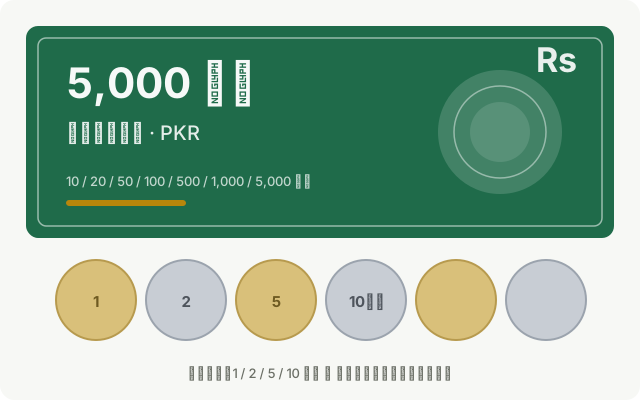
The official currency of Pakistan is the Pakistani Rupee (currency code PKR, symbol Rs). One rupee is equal to 100 paisa, but the paisa coin has largely disappeared from circulation due to inflation, and the smallest commonly used unit is 1 rupee. The rupee is issued by the State Bank of Pakistan (State Bank of Pakistan) and operates under a managed floating exchange rate.
Denomination System
Circulating banknotes mainly come in denominations of 10, 20, 50, 100, 500, 1,000, and 5,000 rupees. Notes of different denominations vary in colour and design, with most featuring a portrait of the founding father Muhammad Ali Jinnah and iconic buildings from various regions. Coins are available in denominations of 1, 2, 5, 10, and 20 rupees, while paisa coins are rarely seen. In recent years, Pakistan has also issued new polymer banknotes with enhanced anti-counterfeiting features.
Cash and Payment Habits
Pakistan remains a highly cash-dependent country. Markets, street shops, taxis, auto-rickshaws, and ordinary restaurants generally only accept cash. Card payments and mobile payments (such as Easypaisa and JazzCash) are gradually becoming more common in cities but remain difficult for foreign tourists to use. ATMs are relatively common in major cities and international airports, and most support cash withdrawals with overseas UnionPay, Visa, and Mastercard cards.
It is recommended to exchange or carry US dollar cash before departure, and then exchange for rupees at banks or authorised exchange points (such as airports or currency exchange shops in large cities), which is usually more cost-effective than exchanging abroad. Both intercity and intracity travel often require cash, so carry sufficient small-denomination rupees. It is often difficult to get change for 500 or 1,000 rupee notes in small purchases.
Traveller Tips
- Exchange foreign currency only at banks or authorised exchange points, and keep the exchange receipts in case you need to convert unused currency back upon departure.
- Carrying foreign currency or rupees above the specified limits in or out of the country requires declaration, subject to customs regulations.
- ATM withdrawals may have limits and fees, so it is advisable to withdraw enough cash in one go.
- Agree on prices for car hire and guides in advance to avoid disputes over additional charges en route.
Flag Meaning
Flag Design
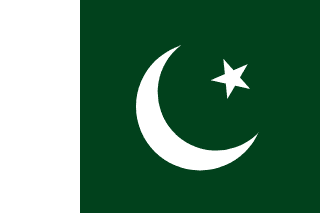
The flag of Pakistan is rectangular, with a width-to-length ratio of 2:3. The side near the flagpole is a white vertical stripe about one-quarter the width of the flag, and the remaining three-quarters are dark green. In the centre of the green area, slightly towards the flagpole side, is a white crescent moon and a white five-pointed star. The crescent opens to the upper right, and the star is located next to the opening of the crescent.
Meaning
Green represents the Muslim community and the Islamic faith, while white represents the country’s non-Muslim religious minorities and also symbolises tolerance and coexistence. The crescent and five-pointed star are traditional Islamic symbols, signifying light, guidance, and progress. The combination of white and green is seen as a symbol of the country’s inclusiveness of different faiths and shared life. The overall design is simple and dignified, with green dominating the layout, reflecting the central role of Islamic culture in national life and echoing the solemn tone of the flag in formal settings.
History and Legal Status
This flag was designed with the participation of Pakistan’s founding father Jinnah and was officially adopted by the Constituent Assembly on 11 August 1947. It was hoisted after Pakistan’s independence on 14 August of the same year. The original design was derived from the flag of the All-India Muslim League, with the addition of the white vertical stripe upon independence to signify respect for religious minorities. The designer intentionally retained this white stripe to address the concerns of minority groups regarding national identity. This detail also makes the Pakistani flag highly recognisable among the flags of South Asian countries. Since then, the flag’s design has remained largely unchanged, becoming a core symbol of Pakistani national identity and widely displayed on Independence Day (14 August) and various national occasions.
Pakistan Travel Guide
All Guides »Pakistan Travel Quick Guide: Visa, Seasons, Budget & Safety Essentials
To ensure a rewarding and safe trip to Pakistan, make sure to clarify visa requi...
Classic 8-Day Pakistan Tour: Islamabad, Karakoram Highway & Hunza 8 Days
Travel north along the Pakistan-China Friendship Highway to see snow-capped moun...
Pakistan 4-Day Short Trip: A Tale of Two Cities – Lahore and Islamabad 4 days
See Mughal-era capitals and a planned modern city in four days – ancient monumen...
Essential Attractions in Pakistan: Snow-Capped Mountains, Ancient Forts, and Mughal Heritage
From northern mountain highways to historic Mughal capitals—here’s a regional gu...
Pakistan Food Guide: Kebabs, Biryani, and Tea Everywhere
From roadside milk tea to Mughal court cuisine, Pakistani meals are richly spice...
Pakistan Transportation Guide: Airport Transfers, Domestic Flights, and Mountain Roads
In major cities, rely on flights and private transfers; in the north, use charte...
10 Practical Tips for Traveling in Pakistan (Including Safety Advice)
Safety boundaries, cash preparation, dress etiquette, and mountain travel tips—g...