Monaco
The world’s second-smallest country, a principality under the Grimaldi family, renowned globally for the Monte Carlo Casino, the F1 street circuit, and its tax-free economy bustling with yachts.
Monaco (Principality of Monaco)
| Capital | Monaco-Ville |
|---|---|
| Continent | Europe |
| Languages | French |
| Currency | Euro (EUR €) |
| Time Zone | UTC+1 to UTC+2 |
| Dialling Code | +377 |
| Area / Population | 2.08 square kilometers / Approximately 39,000 |
| Visa | Monaco itself has no border control; visas are handled by France, and entry is permitted with a valid Schengen visa. Most travelers enter via Nice Airport and reach Monaco on foot or by vehicle from France. |
| Best Season | The best time to visit is from May to October. May hosts the F1 Grand Prix, while September features numerous yacht shows and concerts. June to September offers abundant sunshine, ideal for beach and yachting experiences. |
| Main Cities | Monaco-Ville, Monte Carlo, La Condamine, Fontvieille, Larvotto Beach, Port Hercules |
Monaco in Detail
Overview of Monaco
Monaco (officially the Principality of Monaco) is located on the French Riviera in southern France, bordered almost entirely by France and facing the Mediterranean Sea to the south. Covering just 2.08 square kilometers, it is the world’s second-smallest country after Vatican City and one of the most densely populated. The country is a constitutional monarchy, with the Sovereign Prince from the Grimaldi family serving as head of state. The capital, Monaco-Ville (also known as Monaco-Ville), is built on a rocky promontory extending into the Mediterranean and, together with districts such as Monte Carlo, La Condamine, and Fontvieille, forms the entire nation.
Built on gambling and tourism, and sustained by finance and real estate, Monaco boasts one of the highest GDP per capita levels in the world, making it a true pocket-sized wealthy nation. Since 1869, it has had no personal income tax, attracting global millionaires and retired athletes who have made it their home. The streets are defined by supercars and the masts of luxury yachts moored along the harbor—icons instantly associated with the country.
Geography and Climate
Situated between the Alps and the Mediterranean, Monaco is primarily composed of hilly coastal terrain, with no peak exceeding 200 meters. Its coastline stretches about 4.1 kilometers. Land is extremely precious, and districts such as Fontvieille and Port Hercules are built on reclaimed land. The city rises in layers along the slopes, and elevators, escalators, and public lifts are part of everyday transport. Neighboring French cities like Nice and Menton are very close, and Nice Côte d’Azur Airport is only about 30 kilometers away, with helicopter transfers taking just 7 minutes.
The climate is classic Mediterranean: summers are sunny and dry, with average temperatures around 26°C in July and August and pleasant sea breezes. Winters are mild, averaging about 10°C in January. The region enjoys over 2,800 hours of sunshine annually, making it one of the sunniest places in Europe.
Historical Background
Monaco’s fate has been closely tied to the Grimaldi family. On January 8, 1297, François Grimaldi, disguised as a monk with a sword hidden under his robe, infiltrated a Genoese-controlled rocky fortress and seized Monaco. Except for the period of French annexation from 1793 to 1814, the Grimaldis have ruled for over 700 years, making it one of the longest-reigning monarchies in the world. The 1861 Franco-Monegasque Treaty confirmed Monaco’s independence, and in 1863, the Monte Carlo Casino opened, transforming the once-desolate promontory into a holiday destination for European royalty and nobility.
In 1956, Prince Rainier III and American actress Grace Kelly married at the Saint Nicholas Cathedral, turning Monaco into a fairytale kingdom watched by the world. Monaco joined the United Nations in 1993, and in 2005, Prince Albert II ascended the throne, actively promoting marine conservation and carbon neutrality. The tradition of leadership in oceanography, exemplified by Jacques Cousteau at the Oceanographic Museum, continues to this day.
Economy and Currency
Monaco’s economy is driven by tourism, gambling, banking, real estate, and events. The Monte Carlo Casino and Opera House, designed by Charles Garnier (architect of the Paris Opera), remain highly profitable state-run enterprises. The annual F1 Monaco Grand Prix in May is the crown jewel of motorsport, while the September Yacht Show gathers some of the world’s most luxurious vessels. Though not a member of the European Union, Monaco has customs and currency agreements with the EU and France, aligning its customs and VAT systems closely with France’s.
The official currency is the euro (EUR). Although not an EU member, Monaco issues its own euro coins under a long-standing monetary agreement with the EU. These coins bear the Grimaldi coat of arms, the seal of the Sovereign Prince, and portraits—including that of Prince Albert II—and the Latin motto “Deo Juvante” (With God’s Help). Due to their limited mintage, they are highly sought after in international coin collector markets.
Culture and Society
Monaco’s culture blends the elegance of France’s Côte d’Azur with the refined sophistication of an independent principality. French is the official language, with Monégasque as a traditional dialect, and Italian and English also widely spoken. Despite its small size, the country boasts a rich cultural scene—venues such as the Oceanographic Museum, the New National Museum of Monaco, the Grimaldi Forum, and the Opéra de Monte-Carlo host performances year-round. The Monte Carlo Ballet, led by renowned choreographer Christopher Wheeldon, enjoys international acclaim. Traditional festivals such as the Feast of Saint Devote in January and the Fireworks Festival preserve a sense of medieval pageantry.
Social life centers around the waterfront and exclusive clubs: the Monaco Yacht Club, the Monte-Carlo Masters tennis tournament, the International Circus Festival, and the Historic Grand Prix of Monaco for vintage cars form a dense calendar of high-society events. The streets are spotless and among the safest in the world, with one of the highest police-to-resident ratios, making it very safe for tourists to explore even at night.
Tourism Overview
Monaco is a compact destination where you can explore the highlights in a day or enjoy a deeper experience in two. Start your morning at the Prince’s Palace in the Rock District to catch the 11:55 AM changing of the guard, then visit the impressive Oceanographic Museum and the Cathedral of Sainte-Dévote (where Grace Kelly is buried). In the afternoon, stroll along Port Hercules, gazing up at the superyachts, then step into the gilded halls of the Monte Carlo Casino and the Garnier Opera House. As evening falls, watch the Mediterranean sunset from Larvotto Beach. Motorsport fans can experience the legendary F1 street circuit in May, especially thrilling around the hairpin turns and tunnel sections. Even if you’re just staying in Nice, Monaco is worth a special train trip—the 48-minute ride along the coast offers some of the most stunning scenery on the French Riviera.
Local Currency: Euro (EUR)
Currency Overview
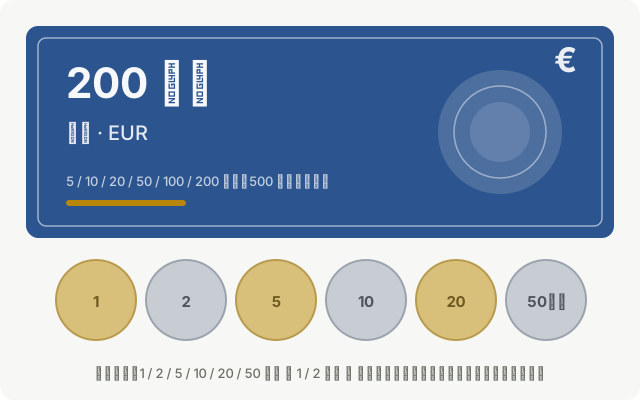
The official currency of Monaco is the euro (currency code: EUR, symbol: €). Although not a member of the European Union, Monaco uses the euro as its sole legal tender under the 2002 (and renewed) Monetary Agreement between Monaco and the EU. The euro is issued under the oversight of the Monaco Treasury, with monetary policy managed by the European Central Bank. This arrangement stems from Monaco’s longstanding customs and currency union with France, meaning that using euros in Monaco is identical to using them in France.
Coin Denominations
Euro banknotes are standardized across the Eurozone, with denominations of 5, 10, 20, 50, 100, and 200 euros. What makes Monaco unique is its euro coins: the 1, 2, and 5-cent coins feature the red-and-white diamond pattern of the Grimaldi coat of arms; the 10, 20, and 50-cent coins display the seal of the Sovereign Prince; and the 1- and 2-euro coins bear the monogram and portrait of Prince Albert II, along with the Latin motto “Deo Juvante” (With God’s Help). Monaco’s coins are produced in very limited quantities each year and are often snapped up by collectors at face value.
Cash and Payment Habits
As a highly international and luxury-oriented destination, Monaco widely accepts Visa, Mastercard, American Express, and UnionPay in hotels, restaurants, and casinos. Mobile payments are also commonly accepted. The Monte Carlo Casino requires presentation of a passport and typically enforces a smart dress code, with minimum bets that are not low. Restaurants along the waterfront and duty-free shops price items similarly to those in France, including a 20% VAT. Nearby cities such as Nice and Menton offer cash withdrawal and card payment options, so it’s advisable to carry a mix of cash and cards for larger purchases.
Monaco has no large bank branches for currency exchange, so visitors usually exchange money at Nice Airport or French banks. Planning your euro cash needs in advance is recommended. Although the euro is legally the only tender, the customs and tax union with France means pricing, tax refunds, and the overall consumer experience are nearly seamless with mainland France.
Traveler Tips
- Monaco’s coins are rarely seen elsewhere and make great souvenirs—some are even worth more than their face value.
- To visit the casino, you must be at least 18 years old and carry a passport. Dress is required to be formal for gambling areas.
- Meals include taxes, and service charges are usually included in the bill. Leaving a small tip of 1–2 euros is optional.
- There are no border checks between Monaco and France, so there’s no need to exchange euros or bank cards again.
Flag Meaning
Flag Design
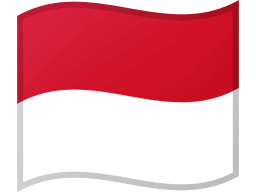
The flag of Monaco consists of two equal horizontal bands of red (top) and white (bottom), in a 4:5 ratio. It is one of the simplest flag designs in the world. The red and white colors come from the Grimaldi family coat of arms—a white diamond pattern on a red background—so the flag can be seen as a geometric representation of those heraldic colors. It is very similar to the flag of Indonesia, differing only slightly in proportions and usage, and is almost indistinguishable from the Polish flag when flipped upside down.
Meaning
Red symbolizes courage, passion, and the heroic traditions of the Grimaldi family, while white represents purity and peace. The red-and-white diamond pattern has been the family crest since the Middle Ages, and the two-color design pays tribute to 700 years of Grimaldi rule. Though the flag has no central emblem, the coat of arms of the Principality—which features two monks holding a shield topped with a royal crown and ermine mantle, along with the motto “Deo Juvante” (With God’s Help)—complements the flag as part of Monaco’s full national symbolism.
History and Legal Status
The red-and-white color scheme has appeared in the Grimaldi coat of arms since the 14th century. On April 4, 1881, Prince Charles III officially adopted the red-and-white horizontal bicolor as the national flag through decree. Prior to that, commercial and official vessels often flew the family coat of arms or the prince’s banner. The 1911 Constitution further affirmed the legal status of both the flag and the coat of arms. The flag of Monaco is often displayed alongside the Prince’s Banner (the red-and-white diamond flag) at the Prince’s Palace, on official yachts, and during ceremonial occasions: the national flag represents the state, while the Prince’s Banner represents the Grimaldi dynasty. Their simultaneous use is a unique hallmark of Monaco’s monarchical identity. On National Day (November 19), the flag is flown citywide, complementing the coat of arms banner in front of the palace.
Monaco Travel Guide
All Guides »Monaco Travel Snapshot: Schengen Visa, Seasons, Budget & Casino Etiquette
The Pocket-Sized Kingdom Accessible with a Schengen Visa: Transportation, Cost o...
Monaco 3-Day Itinerary: The Rock Old Town – Monte Carlo – Seaside & Coastline 3 days
See the principality in two days, then extend to Nice and Èze on day three: expl...
Monaco 1-Day Express: A Principality Day Trip from Nice 1 day
See it all even with limited time: arrive via the Train des Pignes coastal line,...
Must-visit attractions in Monaco: Prince’s Palace, Casino, and Oceanographic Museum
Top experiences packed into just 2 square kilometers: the Changing of the Guard ...
Monaco Food Guide: Barbajuan Dumplings, Mediterranean Seafood, and the World’s Highest Michelin Star Density
This tiny principality boasts the highest concentration of Michelin stars in the...
Complete Monaco Transportation Guide: Nice Airport, Trains, Helicopters, and Free Elevators
Four Ways to Enter and Exit the Principality and Vertical Transport Within the C...
Monaco Travel Tips: Dress Code, Changing of the Guard, and Avoiding F1 Crowds
10 Tips to Fully Experience This Tiny Wealthy Nation: Casino Dress Requirements,...