Japan
A culturally rich East Asian island nation where tradition meets modernity, renowned worldwide for cherry blossoms, hot springs, craftsmanship, and exceptional service.
Japan
| Capital | Tokyo |
|---|---|
| Continent | Asia |
| Languages | Japanese |
| Currency | Japanese Yen (JPY ¥) |
| Time Zone | UTC+9 |
| Dialling Code | +81 |
| Area / Population | 378,000 square kilometers / Approximately 124 million |
| Visa | Most foreign visitors need a visa to enter Japan (single-entry / multiple-entry for 3 years / multiple-entry for 5 years). Applications must be submitted through authorized travel agencies or visa services; individuals generally cannot apply directly at consulates. |
| Best Season | Peak seasons are spring (March–April for cherry blossoms) and autumn (October–November for foliage). Summer is ideal for escaping to Hokkaido, while winter is perfect for skiing and hot springs. |
| Main Cities | Tokyo, Kyoto, Osaka, Hokkaido, Okinawa, Nara, Hakone, Nagoya |
Japan in Detail
Overview of Japan
Japan is an island nation in East Asia, located along the western edge of the Pacific Ocean. It consists of four main islands—Hokkaido, Honshu, Shikoku, and Kyushu—as well as over 14,000 smaller islands, covering a total area of about 378,000 square kilometers. To the east lies the Pacific Ocean, while to the west it faces the Sea of Japan and the East China Sea, across from the Korean Peninsula and China. The capital, Tokyo, is situated on the southern part of the Kanto Plain on Honshu. It serves as Japan’s political, economic, and cultural hub and is one of the most populous metropolitan areas in the world.
Japan is a constitutional monarchy, with the Emperor serving as a symbolic head of state. Executive power is held by the Cabinet and the Prime Minister. The country is divided into 47 prefectures and has one of the largest economies globally, with competitive industries including manufacturing, precision instruments, anime and gaming, and food processing.
Geography and Climate
The Japanese archipelago lies along the Pacific Ring of Fire, characterized by mountainous terrain. Mountains and hills cover about 70% of the land, with Mount Fuji (3,776 meters) being the highest peak and a national symbol. Plains are mainly found along coastal areas, where the majority of the population and cities are concentrated in the Greater Tokyo, Kansai, and Chubu metropolitan regions.
The climate varies significantly from north to south: Hokkaido has a subarctic climate with long, snowy winters; most of Honshu experiences a temperate monsoon climate with distinct seasons; and Okinawa and the southwestern islands have a subtropical climate that is warm and humid. The rainy season typically occurs around June, while typhoons are common between August and October. Cherry blossoms bloom from late March to early April, progressing from south to north, and autumn foliage moves from north to south starting in late November, creating two key travel peak periods.
Historical Background
Japan’s history dates back to the Jomon and Yayoi periods. From the 7th century onward, it adopted centralized governance systems inspired by China’s Sui and Tang dynasties, with Kyoto serving as the capital for over a thousand years starting in 794. By the late 12th century, the country entered the feudal era ruled by shogunates, successively led by the Kamakura, Muromachi, and Edo governments. In 1603, Tokugawa Ieyasu established the Tokugawa shogunate in Edo (now Tokyo), initiating the Edo period—a time of over 200 years of stability and isolation. This era fostered a thriving urban culture that laid the foundation for many traditional festivals, crafts, and culinary practices seen today.
Following the Meiji Restoration in 1868, Japan rapidly modernized and industrialized. In the first half of the 20th century, it pursued expansionist policies and engaged in war, surrendering in 1945. Under U.S.-led reconstruction, Japan adopted a pacifist constitution and experienced rapid economic growth during the 1950s–1980s, becoming the world’s second-largest economy. Since the 1990s, it has entered a period of stability and maturity, known for its highly developed society, orderliness, and safety.
Economy and Currency
Japan is one of the world’s leading developed economies, excelling in automotive, electronics, robotics, precision chemicals, and food industries. The service sector accounts for approximately 70% of GDP. The official currency is the Japanese Yen (JPY), issued by the Bank of Japan. It is one of the major global reserve currencies, often regarded as a safe-haven asset in international markets. While cash usage remains relatively high among developed nations, digital payments (such as Suica and PayPay) have been growing rapidly in recent years.
Culture and Society
Japanese culture blends traditional Eastern values with unique local innovations. Shrines and temples are found throughout urban and rural areas, while practices such as tea ceremony, flower arrangement, calligraphy, Noh theater, and Kabuki reflect classical aesthetics. At the same time, anime, gaming, pop music, and fashion have had a profound global influence on youth culture. Society emphasizes order, politeness, and consideration for others, with exceptionally high standards in customer service. The “craftsman spirit” is a hallmark of national identity.
In terms of cuisine, Washoku (traditional Japanese food) was inscribed on UNESCO’s Intangible Cultural Heritage list in 2013. Dishes such as sushi, ramen, tempura, kaiseki (multi-course meals), and izakaya culture vary widely—from casual street food to Michelin-starred restaurants.
Tourism Overview
Japan is one of Asia’s most popular travel destinations. Its efficient public transportation system—including the Shinkansen (bullet train), subways, and private railways—makes independent travel convenient. Travelers can experience Tokyo’s modern vibrancy, Kyoto’s historic charm, Osaka’s lively street culture, Hokkaido’s ski resorts, or Okinawa’s tropical beaches. With mild security, clear signage, and well-developed tourist facilities, Japan is an excellent choice for both first-time and seasoned travelers.
Local Currency: Japanese Yen (JPY)
Currency Overview
The official currency of Japan is the Japanese Yen (currency code: JPY, symbol: ¥; to distinguish it from other currencies, it is sometimes written as JP¥). The Yen is the third most traded currency globally and a major international reserve currency. It is issued by the Bank of Japan (Japan’s central bank), with banknotes produced by the National Printing Bureau and coins minted by the Japan Mint. The Yen has no fractional units—the smallest denomination is 1 Yen.
Denominations
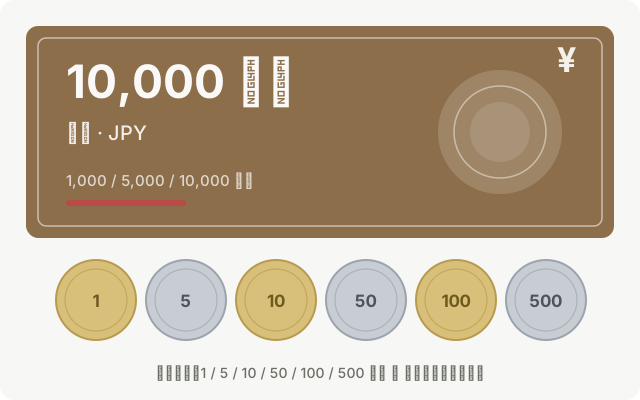
Current banknotes come in three denominations: 1,000 Yen, 5,000 Yen, and 10,000 Yen. Starting July 2024, Japan issued a new series (Series F) of banknotes featuring bacteriologist Kitasato Shibasaburo on the 1,000 Yen note, educator Umeko Tsuda on the 5,000 Yen note, and entrepreneur Shibusawa Eiichi on the 10,000 Yen note. Older designs (featuring Yukichi Fukuzawa, Higuchi Ichiyo, and Hideyo Noguchi) remain in circulation and are accepted alongside the new ones.
Coins are issued in six denominations: 1, 5, 10, 50, 100, and 500 Yen. The 5 Yen coin has a hole in the center and is considered a symbol of good luck, often tossed into offering boxes at shrines. Coins with holes or anti-counterfeiting patterns (50, 100, and 500 Yen) are commonly used in vending machines and coin lockers.
Cash and Payment Habits
Japan remains one of the more cash-dependent developed countries. Small restaurants, traditional shops, temples, and some guesthouses often prefer or only accept cash. However, convenience stores like 7-Eleven, Lawson, and FamilyMart now offer ATM services for withdrawing cash with international debit cards. Transportation IC cards such as Suica and ICOCA can also be used at many convenience stores, vending machines, and restaurants. Apple Pay and Google Pay linked to transportation cards are also very convenient.
It is recommended to carry “5,000–10,000 Yen in cash per person per day” as a base, plus some extra reserves, while using credit cards or IC cards for other purchases. When exchanging foreign currency, use authorized banks, airport exchange counters, or licensed currency exchange services (such as those operated by MUFG or SMBC). Avoid informal street money changers.
Traveler Tips
- Small change (under 1,000 Yen) is often hard to get; carry a coin pouch.
- Most prices include tax (10%; 8% for takeout food), and listed prices usually reflect the final amount.
- The Yen exchange rate fluctuates; check real-time rates before departure.
- Tipping is not customary in Japan; the bill amount is final.
Flag Meaning
Flag Design
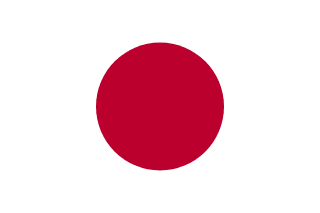
The official name of Japan’s flag is “Nisshoki,” though it is legally referred to as the “Hinomaru,” meaning “circle of the sun.” It features a white rectangular field with a large red circle in the center, commonly called the “Hinomaru” (the sun disc). The flag’s proportions are 2:3, with the red circle’s diameter equal to 3/5 of the flag’s height, positioned exactly in the center. The official shade of red is a deep crimson, not a bright red.
Meaning
The white background symbolizes purity and integrity, while the red circle represents the sun. Japan is known as the “Land of the Rising Sun” because it is the first country in Asia to see the sunrise each day. The reverence for the sun is rooted in Shinto beliefs, with the sun goddess Amaterasu considered the divine ancestor of the Imperial family. The unbroken, endless circle also symbolizes peace and continuity for the nation.
History and Legal Status
The Hinomaru has been a Japanese symbol for centuries. During the Edo period, it was used as the official flag for the shogun’s ships. In 1870, the Meiji government formally designated it as the flag for merchant vessels through the Dajokan Announcement, effectively making it the national flag. After World War II, Japan exercised caution regarding the use of the flag and national anthem until the Flag and Anthem Act was passed in 1999, legally establishing the Hinomaru as the national flag.
Today, the Hinomaru is widely displayed on national holidays, at sporting events, school ceremonies, government buildings, and overseas embassies. It is also used as the ensign of the Japan Maritime Self-Defense Force and is a common national symbol at entry points.
Japan Travel Guide
All Guides »Japan Travel Quick Guide: Visa, Seasons, Budget & Etiquette
Get clear on visa, season, budget, and etiquette before departure, and you’ll av...
Classic 7-day Japan itinerary: Tokyo – Hakone – Kyoto – Nara – Osaka 7 days
The most reliable first-time Japan combo: modern cities, hot springs, ancient ca...
4-Day Short Trip to Japan: In-Depth Exploration of Tokyo 4 days
Even with limited time, you can fully experience Tokyo: the key is organizing at...
Essential Attractions in Japan: From Ancient Capitals to Snowy Mountains
A curated list of the 20 most worthwhile attractions in Japan, organized by city...
A Guide to Japanese Cuisine: From Ramen to Kaiseki
Experience Japan’s layered food scene: from 500-yen street snacks to multi-thous...
Complete Guide to Transportation in Japan: Shinkansen, Subways, and Transportation Cards
Understand the JR Pass, IC cards, and airport express trains to save up to 30% o...
10 Practical Tips for Traveling in Japan
From saving money to avoiding pitfalls, these details can directly enhance your ...