Cape Verde
An archipelagic nation of ten islands in the central Atlantic, known for its historic old towns, the active Fogo volcano, kite surfing spots, and soulful morna music—a Creole country with a melancholic charm.
Cape Verde (Republic of Cape Verde)
| Capital | Praia |
|---|---|
| Continent | Africa |
| Languages | Portuguese |
| Currency | Cape Verdean escudo (CVE $) |
| Time Zone | UTC-1 (CVT) |
| Dialling Code | +238 |
| Area / Population | 4,033 square kilometers / Approximately 550,000 |
| Visa | Cape Verde’s visa policy has undergone frequent changes in recent years, and visa-free arrangements for foreign nationals are subject to variation. Before traveling, confirm the latest requirements through Cape Verde’s official e-visa platform or its embassies/consulates abroad, and allow time for processing. |
| Best Season | Year-round suitability; August to October brings the greenest post-rain landscapes; November to June offers dry, sunny weather ideal for surfing and hiking; June to October is sea turtle nesting season, with sightings possible on Boa Vista. |
| Main Cities | Praia, Santa Maria, Mindelo, São Filipe, Sal Rei, Cidade Velha, Tarrafal, Porto Novo |
Cape Verde in Detail
Overview of Cape Verde
Cape Verde (officially the Republic of Cape Verde) is an island nation in the central Atlantic, located about 570 kilometers off the westernmost point of mainland Africa (Dakar, Senegal). It comprises ten major volcanic islands and several smaller islets, covering a total area of approximately 4,033 square kilometers. The capital, Praia, is situated on the southern coast of Santiago, the largest island, and serves as the country’s political and economic hub. Strategically positioned along historic maritime routes between Europe, South America, and Southern Africa, Cape Verde has long been a vital stopover for Atlantic navigation.
With a population of around 550,000, Cape Verde also has a sizable diaspora—nearly equal in number—spread across Portugal, the United States, Angola, and other regions. Remittances from overseas form a significant part of the national income. Portuguese is the official language, though Kriolu (a local Creole dialect) is widely spoken in daily life. The majority of the population is Catholic, and the country enjoys a reputation for safety, political stability, and effective governance—one of the most well-regarded among Portuguese-speaking African nations.
Geography and Climate
The ten islands are divided into windward (Barlavento) and leeward (Sotavento) groups based on prevailing winds. The Barlavento group includes Santo Antão, São Vicente, Sal, and Boa Vista, while the Sotavento group comprises Santiago, Fogo, and Brava. Most islands feature gently eroded hills, except for Fogo, home to the Pico do Fogo volcano (2,829 meters), one of West Africa’s highest peaks and still active. Its 2014–2015 eruption buried two villages. Island landscapes vary widely: Sal and Boa Vista are characterized by sand dunes and salt flats, while Santo Antão boasts lush valleys, earning it the nickname "Cape Verde’s Garden."
The climate is a dry tropical type, influenced by the northeast trade winds and the Saharan Harmattan, resulting in scarce rainfall concentrated between August and October. Temperatures remain stable year-round, averaging 22–29°C, with refreshing sea breezes that prevent extreme heat—earning the nickname "eternal spring." Atlantic water temperatures range from 22–26°C, making swimming possible throughout the year. The clear, dry conditions also make the islands excellent for stargazing and sailing.
Historical Background
When Portuguese explorers arrived, the Cape Verde Islands were uninhabited. Discovered around 1456, the first settlement was established on Santiago Island in 1462—the city of Cidade Velha (originally Ribeira Grande)—which became the first European colonial outpost in the tropics and a key hub in the early transatlantic slave trade. Over centuries, countless Africans were forcibly transported through here to the Americas. After the decline of the slave trade and shifting maritime routes in the 19th century, the islands experienced economic stagnation, exacerbated by recurrent droughts and famines that drove mass emigration.
In the mid-20th century, Cape Verde and Guinea-Bissau emerged as focal points of anti-colonial movements in Portuguese Africa. On July 5, 1975, Cape Verde gained peaceful independence. Since then, it has maintained a stable multi-party democracy, with its first peaceful transfer of power occurring in 1991. Today, it is a member of the Community of Portuguese Language Countries (CPLP) and is often cited as one of Africa’s democratic success stories.
Economy and Currency
Cape Verde’s economy is service-driven, accounting for roughly 70% of GDP. Key sectors include tourism, port services, remittances, and recently, submarine cable-based data transit. Agriculture is constrained by drought, with most food imported, though the country boasts rich fisheries exporting tuna and lobster to Europe. The national currency, the Cape Verdean escudo (CVE), is issued by the Banco de Cabo Verde (established in 1975) and pegged to the euro at a fixed rate of approximately 110.3 CVE per EUR, ensuring currency stability and ease of budgeting for travelers.
Culture and Society
Cape Verdean culture blends Portuguese and West African traditions in a unique Atlantic synthesis. Kriolu is the mother tongue for most, while morna—a soulful, melancholic music genre expressing themes of longing and displacement—is the national soundtrack. Cesária Évora, the "barefoot diva" from Mindelo, São Vicente, brought this music to global audiences, making it a cultural emblem of the nation. The national dish, cachupa (a hearty stew of corn, beans, and meat), reflects local flavors, while festivals feature a mix of Brazilian and African dance influences.
Family and community ties are deeply valued, and the diaspora has fostered a welcoming attitude toward outsiders. Mindelo, an artistic hub, hosts frequent live morna performances in corner bars, with music festivals and carnivals offering immersive cultural experiences.
Tourism Overview
A favorite Atlantic escape for European travelers, Cape Verde promotes its "ten islands, ten experiences" appeal: kite surfing and Santa Maria Beach on Sal, white sand dunes and turtle nesting on Boa Vista, volcano hikes and crater villages on Fogo, verdant trails on Santo Antão, colonial heritage and African markets in Cidade Velha (Santiago), and Mindelo’s vibrant nightlife. Inter-island flights and ferries connect the islands, with frequent direct flights from Europe and convenient connections via Lisbon or African hubs—making it an emerging niche destination.
Local Currency: Cape Verdean escudo (CVE)
Currency Overview
The Cape Verdean escudo (currency code: CVE, symbol: $ or Esc) is issued by the Banco de Cabo Verde (established in 1975). One escudo equals 100 centavos. Since the late 1990s, the escudo has been pegged to the Portuguese escudo and, later, the euro, maintaining a fixed exchange rate of approximately 110.265:1 with the euro. The currency is highly stable, allowing travelers to easily calculate approximate values using the euro as a reference.
Denominations
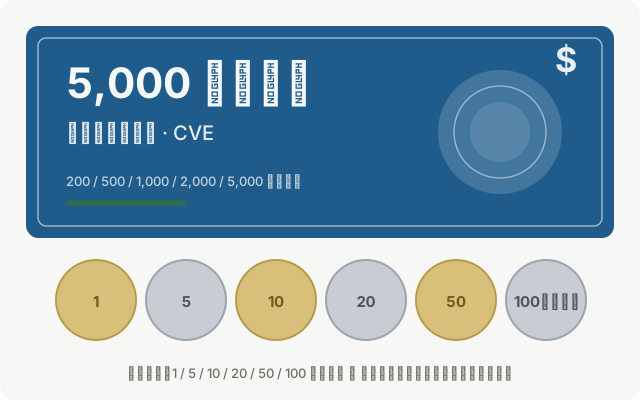
Common banknotes include denominations of 200, 500, 1,000, and 2,000 CVE, with larger 5,000 CVE notes also in circulation. Banknotes often feature portraits of notable Cape Verdean figures, including politicians, musicians, and poets—such as Cesária Évora. Coins come in 1, 5, 10, 20, 50, and 100 CVE denominations, with designs depicting local birds, sailboats, and island motifs. In daily transactions, denominations below 500 CVE are most frequently used.
Cash and Payment Practices
Tourist-friendly towns like Praia, Santa Maria, and Mindelo have numerous ATMs accepting Visa, Mastercard, and some UnionPay cards. Hotels and restaurants generally accept card payments, but shared taxis (aluguer), regular taxis, beach vendors, and casual eateries typically operate on a cash-only basis. While euros are widely accepted in tourist areas, change is usually given in escudos at non-official rates—so it’s advisable to use cards for larger amounts and carry small-denomination cash.
Currency exchange booths are available at airports and in cities, with straightforward transactions using euros. Due to the fixed exchange rate, there’s no need to shop around for better rates. Note that escudos cannot be converted back to foreign currency outside Cape Verde, so spend or exchange any remaining escudos before departure.
Traveler Tips
- The escudo is fixed at approximately 110.3:1 against the euro, making it easy to estimate values in euros—travelers can use euros as a rough reference.
- Always confirm taxi and aluguer fares (typically 100–500 CVE) in advance and carry small bills.
- Use up all escudos before leaving, as they cannot be converted back to foreign currency outside Cape Verde.
- Tipping is not mandatory; 100–200 CVE is a polite gesture in restaurants or bars.
Flag Meaning
Flag Design
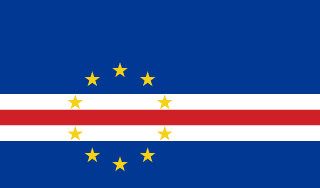
The Cape Verdean flag is rectangular with a 10:17 aspect ratio. The background is blue, with three horizontal white-red-white stripes near the bottom, each occupying about one-third of the flag’s height. Centered on the stripes is a ring of ten yellow five-pointed stars, slightly offset toward the hoist side—creating a highly distinctive design among world flags.
Symbolism
The blue represents the surrounding Atlantic Ocean and the clear skies. The white stripes symbolize peace and the pursuit of a better future, while the red stripe embodies the struggle and resilience of the people. The ten golden stars represent the ten main islands, united in a circle to signify solidarity as an indivisible nation. The combination of blue and stars has earned the flag the nickname "the flag of the Atlantic archipelago." The blue field is also interpreted as a reflection of the nation’s maritime heritage and the global dispersion of its people.
History and Legal Status
The current flag was adopted on September 22, 1992. The original design (1975–1992) featured a black star and corn elements inspired by Guinea-Bissau, reflecting the historical ties between the two nations. In 1992, to assert Cape Verde’s independent identity, the design was changed to its present form, removing partisan symbols. The flag’s use is regulated by the constitution and related laws, prominently displayed on Independence Day (July 5), at government buildings, embassies, and during sporting events.
The national coat of arms also features ten stars and a torch, with the motto "Unidade, Trabalho, Progresso" (Unity, Work, Progress) in Portuguese—echoing the flag’s themes of national unity across the ten islands.
Cape Verde Travel Guide
All Guides »Cape Verde Travel Snapshot: Visa Requirements, Island-Hopping Seasons, Budget Guide & Local Etiquette
How to Enter the Atlantic Archipelago: Visa Policies, Best Time to Visit, Three ...
Classic 7-Day Cape Verde Itinerary: Santiago – Fogo Volcano – Sal Beaches 7 days
Use strategically connected domestic flights to cover a UNESCO World Heritage ol...
4-Day Sal Island Getaway in Cape Verde: Santa Maria Beach & Crater Salt Lake 4 Days
You don’t need to island-hop—base yourself in Santa Maria and explore Sal Island...
A must-visit attractions list for Cape Verde: Old Town heritage, volcanic craters, and Mindelo as the city of music
Explore ten of the most representative attractions island by island, with highli...
Cape Verde Food Guide: Cachupa, Atlantic Grilled Fish, and Fogo Volcano Coffee
A fusion of African and Portuguese flavors: from hearty stews to lobster pasta, ...
Complete Guide to Transportation in Cape Verde: Four International Airports, Inter-Island Small Planes, and Aluguer Shared Minibuses
Getting Around the Archipelago: How to Book Domestic Flights, Ride Shared Buses,...
10 Practical Cape Verde Travel Tips: From Visa Confirmation to Island-Hopping Order
Visa policies, airport taxes, turtle conservation, and volcano warmth—ten tips t...