Bangladesh
A densely populated delta nation in South Asia, renowned for Dhaka’s rickshaw-filled streets, the Sundarbans mangrove forests, and Cox’s Bazar—the world’s longest natural beach.
Bangladesh (People's Republic of Bangladesh)
| Capital | Dhaka |
|---|---|
| Continent | Asia |
| Languages | Bengali |
| Currency | Bangladeshi Taka (BDT ৳) |
| Time Zone | UTC+6 |
| Dialling Code | +880 |
| Area / Population | Approximately 147,600 square kilometers / Approximately 173 million |
| Visa | Most foreign visitors can apply for an e-Visa in advance or obtain a visa on arrival at designated ports. Visa on arrival usually requires a return or onward ticket, hotel reservation, and proof of cash or an international credit card. For specific policies and fees, refer to the latest announcements from the Bangladesh Immigration Department and its embassies or consulates. |
| Best Season | The best travel season is the cool season from November to March, when the weather is dry and pleasant, ideal for city and mangrove explorations. April–May is the hot season, with temperatures often exceeding 35°C. June–October is the monsoon season, when flooding and tropical cyclones are common. |
| Main Cities | Dhaka, Chittagong, Cox's Bazar, Sundarbans, Khulna, Sylhet, Rajshahi, Bogra |
Bangladesh in Detail
Bangladesh Overview
Bangladesh (officially the People's Republic of Bangladesh) is located in the northeastern part of the South Asian subcontinent, in the delta formed by the lower reaches of the Ganges and Brahmaputra rivers. It borders India to the east, west, and north, Myanmar to the southeast, and faces the Bay of Bengal to the south. The country covers an area of approximately 147,600 square kilometers. Its capital, Dhaka, situated in the central part of the country, is the political, economic, and cultural center and one of the most densely populated megacities in the world. The official language is Bengali, and the majority of the population belongs to the Bengali ethnic group. Islam is the predominant religion, alongside Hinduism and other faiths. The country operates under a parliamentary republic system, with the president as the head of state and the prime minister leading the executive branch. With a population of about 173 million, Bangladesh is one of the more populous nations in South Asia.
Bangladesh gained independence from Pakistan in 1971 and is one of the youngest countries in the world. In recent years, its economy has grown rapidly, driven by the garment manufacturing and agriculture sectors. However, challenges persist due to high population density, low-lying terrain, and climate-related risks.
Geography and Climate
Bangladesh lies within one of the world’s largest river deltas, featuring an extensive network of rivers. The Ganges, Brahmaputra, and Meghna rivers converge here before flowing into the Bay of Bengal, creating fertile alluvial plains. Most of the country sits at less than 10 meters above sea level. The coastal region includes the Sundarbans mangroves and numerous riverine islands, while the southeastern Chittagong Hill Tracts are characterized by rugged terrain and dense forests, home to diverse ethnic communities.
The climate is tropical monsoonal, divided into three main seasons: the cool season from November to March, marked by dry and pleasant weather, is the best time for travel; the hot season from April to May, with temperatures frequently exceeding 35°C; and the monsoon season from June to October, when heavy rainfall causes frequent river flooding. The Bay of Bengal is prone to tropical cyclones, especially in May and during October–November, warranting close attention to storm and flood warnings.
Historical Background
The Bengal region has a long history, once known as Vanga. It was successively ruled by the Maurya, Gupta, and Pala dynasties. During the Pala period, Buddhism flourished here, leaving behind Mahayana Buddhist sites such as Paharpur. From the 13th century onward, Islam spread into the region, which later became part of the Delhi Sultanate and the Mughal Empire. Dhaka emerged as a thriving textile and trade hub during the Mughal era, and the famous Dhaka muslin was exported to Europe.
After the 18th century, Bengal gradually came under the control of the British East India Company and became part of British India. Following the partition of India in 1947, eastern Bengal became East Pakistan. Due to escalating linguistic and political tensions, Bangladesh declared independence during the Liberation War in 1971 and officially became a nation that same year.
Economy and Currency
Bangladesh’ economy is anchored by the garment export sector, making it one of the world’s leading apparel exporters and employing a significant portion of the labor force. The agricultural sector focuses on rice, jute, and tea, while remittances from overseas workers also contribute substantially to foreign exchange earnings. In recent years, industries such as information technology, pharmaceuticals, and shipbuilding have been developing, supporting continued economic growth.
The official currency is the Bangladeshi Taka (BDT, symbol ৳), issued by the Bangladesh Bank. The Taka maintains a relatively stable exchange rate against the U.S. dollar, and cash is the primary medium of exchange. While upscale hotels, malls, and some restaurants in cities like Dhaka accept international credit cards, smaller businesses typically deal only in cash.
Culture and Society
Bengali culture centers strongly around language. The 1952 Language Movement in Dhaka led to the recognition of Bengali as an official language, and UNESCO later designated February 21 as International Mother Language Day in honor of this movement. Pohela Boishakh, the Bengali New Year, is a major national celebration featuring traditional attire, parades, and fairs. Rabindranath Tagore, Nobel laureate in literature, originated from the Bengali cultural sphere, and his works remain widely celebrated.
The Bangladeshi diet features rice, fish, and lentils, with fish holding special importance—hilsa fish served with mustard sauce is a signature dish. Curries, biryani, grilled meats, and a variety of sweets are also popular. Rickshaws, adorned with colorful paintings and flower garlands, are iconic in Dhaka, representing a unique form of street art. Cricket is the most beloved sport. Society is generally hospitable, though female travelers should be mindful of local customs regarding dress and appropriate venues.
Tourism Overview
Bangladesh offers a blend of cultural and natural attractions. Dhaka’s Lalbagh Fort, Ahsan Manzil, Dhakeshwari Temple, and old-town markets reflect the layered history of Mughal and colonial eras. Cox’s Bazar boasts a beach stretching approximately 120 kilometers, among the longest natural beaches in the world, with nearby Saint Martin’s Island known for clear waters and coral reefs. In the south, the Sundarbans is one of the world’s largest mangrove forests and a habitat for the Bengal tiger, offering boat tours for birdwatching and crocodile spotting. The northwest features the Paharpur Buddhist ruins and Bogra’s Mahasthangarh archaeological site.
Overall, Bangladesh’ tourism infrastructure is still developing. Urban traffic congestion, varying standards of sanitation and safety, and seasonal risks such as monsoon flooding and cyclones mean travelers should use reliable guides, arrange private transport, stay mindful of food and water hygiene, and avoid travel during the rainy season.
Local Currency: Bangladeshi Taka (BDT)
Currency Overview
The official currency of Bangladesh is the Bangladeshi Taka (currency code: BDT, symbol: ৳, locally also written as Tk), issued by the Bangladesh Bank. One Taka equals 100 poisha. Due to low purchasing power, poisha coins are rarely used in daily transactions. The Taka follows a managed floating exchange rate and remains relatively stable over the years, making it one of the more steady currencies in South Asia.
The term "Taka" originates from the ancient silver coin "tanka" used in the Bengal region. Banknotes and coins often feature symbols of Bengali heritage and national figures, such as portraits of the Father of the Nation, Sheikh Mujibur Rahman, the National Martyrs’ Memorial, the Bengal tiger, and hilsa fish—reflecting distinct regional identity.
Denomination System
Common banknote denominations include 2, 5, 10, 20, 50, 100, 200, 500, and 1,000 Taka, with 1,000 Taka being the highest. Denominations of 2 and 5 Taka are less common. Coins come in 1, 2, 5 Taka, and 1, 5, 10, 25, 50 poisha, though transactions usually combine small coins and notes.
Different denominations are easily distinguishable by color and design—for instance, the 1,000 Taka note is deep purple and depicts the National Martyrs’ Memorial, while the 500 and 200 Taka notes have their own distinctive color schemes, aiding easy identification during exchange and change-making.
Cash and Payment Practices
Bangladesh is a highly cash-dependent society. Most shops, markets, rickshaws, and small restaurants accept only cash. International credit cards (Visa, Mastercard) are accepted in upscale hotels, large malls, and international chain restaurants in Dhaka and Chittagong, but coverage is limited. UnionPay cards are rarely accepted. ATMs are mostly located in urban areas, with only some accepting foreign cards—fees and withdrawal limits vary.
Locals widely use mobile financial services like bKash and Nagad, but these usually require a local phone number and ID, making them impractical for foreign travelers. It is advisable to carry sufficient U.S. dollar cash, exchange it at banks or authorized dealers for Taka, and keep smaller denominations for daily expenses in the city.
Traveler Tips
- Cash is king outside major cities—carry enough Taka and distribute it safely.
- Use only banks or authorized exchange counters for currency conversion, and keep receipts for customs checks.
- Declare foreign cash exceeding allowable limits when entering or leaving the country.
- Tipping is not mandatory but appreciated—small amounts in Taka are welcome for good service in restaurants, hotels, or with drivers.
- Check whether an ATM accepts foreign cards and be aware of possible fees and withdrawal limits.
Flag Meaning
Flag Design
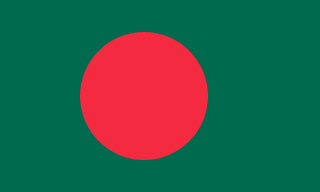
The flag of Bangladesh features a dark green field with a red circle slightly offset toward the hoist side. The flag’s proportions are 3:5. The red circle has a radius equal to one-fifth of the flag’s length, with its center positioned approximately nine-twentieths of the distance from the hoist edge and vertically centered—giving the impression of a slight leftward shift. When the flag is in motion, however, the circle appears centered. The green is a deep shade, and the red has an orange tint, creating strong visual contrast.
The flag’s simple yet powerful design is one of the most recognizable in South Asia.
Symbolism
The green represents the fertile land, lush vegetation, and vitality of Bangladesh, often associated with Islamic faith. The red circle symbolizes the blood of those who died in the struggle for independence, and is also interpreted as the rising sun over the Bay of Bengal, signifying a new beginning and hope. The circle’s slight offset ensures visual centrality even when the flag flutters in the wind.
History and Legal Status
During the 1971 Liberation War, the provisional flag featured a green background with a red circle that included a golden map of Bangladesh. On January 17, 1972, the current design was officially adopted. To simplify production and display, the golden map inside the circle was removed, leaving just the green field and red circle. The flag’s specifications and colors are legally defined and widely used at government buildings, schools, and national events.
Bangladesh Travel Guide
All Guides »Bangladesh Travel Quick Guide: Visa, Seasons, Budget & Local Etiquette Essentials
Before traveling to Bangladesh, understand the options for e-visa and visa on ar...
7-Day Classic Bangladesh Itinerary: Dhaka – Sundarbans – Cox’s Bazar 7 days
Start your journey in Dhaka’s historic old city, then head south to explore the ...
Bangladesh 4-Day Short Trip: A Deep Dive into Dhaka’s Urban Culture and River Transport 4 days
You can still experience the best of Dhaka in just four days: Mughal forts, colo...
Essential Attractions in Bangladesh: Dhaka, the Sundarbans, and Cox’s Bazar
Explore Bangladesh’s top historical sites, mangroves, and beaches by city and na...
Bangladesh Food Guide: Hilsa with Mustard Sauce, Biryani, and Street Sweets
The Bangladeshi Table: Rice and Fish at the Heart of It All — Hilsa with Mustard...
Bangladesh Transportation Guide: Rickshaws, River Travel, Buses, and Domestic Flights Explained
Travel options from Dhaka Airport into the city, getting around congested urban ...
10 Practical Travel Tips for Bangladesh: Hygiene, Transport, Safety, and Pitfalls to Avoid
From drinking water and food safety to traffic jams, cash, mangrove permits, and...