Sierra Leone
A West African Atlantic coastal nation named after the "lion mountains," featuring white-sand beaches on the Freetown Peninsula, a sanctuary for rescued chimpanzees, and historical sites related to the transatlantic slave trade.
Sierra Leone (Republic of Sierra Leone)
| Capital | Freetown |
|---|---|
| Continent | Africa |
| Languages | English |
| Currency | Sierra Leonean leone (SLL Le) |
| Time Zone | UTC+0 |
| Dialling Code | +232 |
| Area / Population | 71,700 square kilometers / Approximately 8 million |
| Visa | Most foreign visitors need to apply for a visa in advance to enter Sierra Leone. An e-visa can be obtained through the official website of the Sierra Leone Immigration Department, and visa on arrival is available in some cases. Entry requires a valid passport and proof of yellow fever vaccination. Be sure to check the latest entry and health regulations. |
| Best Season | The dry season runs from November to April, offering relatively cool and dry weather, making it the best time for beach and wildlife travel. The rainy season lasts from May to October, with frequent rainfall. |
| Main Cities | Freetown, Banana Islands, Turtle Islands, Bunce Island, River No. 2, Kenema, Bo, Makeni |
Sierra Leone in Detail
Overview of Sierra Leone
Sierra Leone (officially the Republic of Sierra Leone) is located in West Africa along the eastern coast of the Atlantic Ocean. It borders Guinea to the north and east, Liberia to the southeast, and faces the Atlantic Ocean to the west, with a coastline of approximately 400 kilometers. The country covers an area of about 71,700 square kilometers. Its capital, Freetown, is situated between a peninsula of hills and a natural harbor, serving as the national center for politics, economy, and culture.
The official language is English. In daily life, Krio is the most widely spoken lingua franca, alongside several ethnic languages such as Mende and Temne. Sierra Leone is a multi-ethnic country, with the Mende and Temne being the major ethnic groups. The population is around 8 million.
Geography and Climate
Sierra Leone’s terrain can be divided into three parts: the western coastal region consists of plains and hilly peninsulas, with the mountains of the Freetown Peninsula extending close to the coast, forming scenic bays and beaches; the central part features hills and plateaus; and the northeastern region is mountainous, with Mount Loma Mansa (approximately 1,948 meters) being the highest peak. The country has an extensive river network, including major rivers such as the Rokel and Sewa. Offshore, there are island groups like the Banana Islands and Turtle Islands.
The climate is tropical monsoonal, with distinct dry and rainy seasons. The dry season runs from November to April, with the Harmattan winds from the Sahara affecting the region from December to February, bringing dry and slightly dusty air. The rainy season lasts from May to October, characterized by heavy rainfall, making it one of the wettest regions in West Africa, with frequent afternoon and evening showers. Coastal areas are hot and humid year-round, while inland plateaus are relatively cooler.
Historical Background
The coastal region of Sierra Leone has long been engaged in trade with the outside world. Portuguese navigators arrived in the mid-15th century and named the area "Serra Leoa" (Lion Mountains) due to the lion-like appearance of the Freetown Peninsula’s hills, which later became the origin of the country’s name. Over the following centuries, European powers established trading posts along the coast, and Sierra Leone became a key hub in the transatlantic slave trade. Bunce Island was one of the notorious slave trading posts during that era.
Starting in 1787, British abolitionists began resettling freed Africans in the Freetown area, and the city gradually developed into an important port and colonial settlement in West Africa. Sierra Leone gained independence in 1961 and became a republic in 1971. From 1991 to 2002, the country experienced a prolonged and devastating civil war, marked by the illegal trade of diamonds and other resources, drawing international attention. This "blood diamond" history has been depicted in various films and documentaries. After the war, Sierra Leone worked with international support to promote reconciliation and economic reconstruction, while also regulating the diamond trade. From 2014 to 2016, the country faced the severe impact of the West African Ebola outbreak but has since gradually recovered.
Economy and Currency
Sierra Leone’s economy is primarily based on agriculture, mining, and services. Mineral resources such as diamonds, rutile, and bauxite are major exports, along with traditional agricultural products like cocoa and coffee. Due to limited infrastructure and industrial development, Sierra Leone is one of the least developed countries in the world. The official currency is the Sierra Leonean leone (currency code: SLL). In 2022, a new currency, the "New Leone" (SLE), was introduced to simplify denominations, and both old and new currencies are currently in circulation.
Culture and Society
Sierra Leonean culture blends indigenous African traditions with Creole influences, featuring vibrant music, dance, and festivals. Rice is the staple food, often served with side dishes such as plasas (leafy greens), peanut stew, and palm oil-based soups, with chili peppers used generously. In cities like Freetown, Chinese restaurants are also available, offering fusion dishes that combine Chinese cuisine with local ingredients, which are popular among visiting traders. In recent years, there has been a growing number of restaurants, cafes, and cultural spaces established by returnees and the diaspora community.
The society values family and community, with Christianity and Islam coexisting in a relatively tolerant religious environment. Affected by the civil war and the Ebola epidemic, efforts have been made to rebuild education and public services. Travelers are advised to interact with locals respectfully and patiently.
Tourism Overview
Sierra Leone’s tourism highlights include both natural attractions and historical sites. Beaches such as River No. 2 on the Freetown Peninsula are known for their white sands and scenic surroundings, often ranked as top beach destinations by travelers. The Banana Islands and Turtle Islands offer opportunities for snorkeling, diving, and boat trips. The Tacugama Chimpanzee Sanctuary, located in the peninsula’s forests, is a renowned facility for rescuing and rehabilitating chimpanzees. Bunce Island preserves historical remnants of the slave trade and is recognized as a globally significant heritage site. The inland towns of Kenema and Bo provide opportunities to explore local nature and culture.
Overall, Sierra Leone’s tourism infrastructure is still in the process of recovery and improvement. Facilities outside the capital are relatively limited. Before traveling, it’s essential to stay informed about local health and safety conditions, take precautions against malaria, and ensure proper vaccinations. It’s advisable to plan your trip through reputable agencies.
Local Currency: Sierra Leonean leone (SLL)
Currency Overview
The official currency of Sierra Leone is the Sierra Leonean leone (currency code: SLL, symbol: Le), issued by the Bank of Sierra Leone. Previously, 1 leone was divided into 100 cents, but these subdivisions are no longer used in everyday transactions. In July 2022, Sierra Leone launched a currency redenomination, introducing the "New Leone" (currency code: SLE) with simplified denominations. One New Leone equals 1,000 old leones, and both currencies circulated concurrently during a transition period with proportional exchange rates.
As a result, travelers may encounter prices listed in both SLL and SLE. Always confirm whether the amount refers to the new or old leone to avoid misunderstandings. Check the latest exchange rates from banks before your trip.
Denominations
The old leone (SLL) included high-denomination banknotes such as 1,000, 2,000, 5,000, and 10,000 leones. With the introduction of the New Leone (SLE), banknotes now come in denominations of 1, 2, 5, 10, and 20 SLE, while coins include 1, 5, 10, 20, and 50 cents. The new series features more modern designs and enhanced security features, often depicting national symbols, prominent figures, and iconic landscapes.
Since the redenomination occurred relatively recently, both old and new currencies and price tags may still be in use. Be sure to count and verify the denomination when receiving change.
Cash and Payment Practices
Sierra Leone operates predominantly on a cash-based economy. Markets, small shops, rural areas, and public transport typically only accept cash. In Freetown, some hotels, restaurants, and larger malls may accept international credit cards, but availability is limited. Mobile money services (such as Orange Money and Africell Money) are widely used among locals for transfers and bill payments, but foreign visitors without a local phone number may find them difficult to use.
It’s recommended to exchange currency at banks or authorized exchange bureaus in Freetown, and carry small denominations for daily expenses and tips. ATMs are mainly found in major cities, and the availability and fees for withdrawing cash with foreign cards vary by location. It’s wise to carry some US dollars in cash as a backup.
Traveler Tips
- Prices may be listed in either old or new leones. Always confirm the unit before making a transaction to avoid confusion.
- Exchange currency only through banks or authorized channels, and keep receipts. Avoid exchanging money with street vendors.
- Outside the capital, options for card payments and ATM withdrawals are limited. Carry sufficient cash and distribute it securely.
- Tipping is common in hotels, restaurants, and for guided services. Carry small bills for convenience.
Flag Meaning
Flag Design
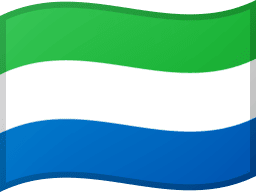
The flag of Sierra Leone is rectangular with a 2:3 aspect ratio, consisting of three horizontal stripes of equal width. The colors, from top to bottom, are green, white, and blue. The flag was officially adopted on April 27, 1961, the day of independence. Its design is simple and balanced, with the three colors evenly distributed.
The green, white, and blue colors create a fresh and striking contrast, reflecting the country’s natural and maritime characteristics. The flag serves as a recognizable national symbol in international events and public settings.
Meaning
Green represents the country’s agriculture, forests, and abundant natural resources, symbolizing hopes for prosperity and development. White stands for unity and justice, signifying equality and fairness among all communities, as well as the nation’s pursuit of peace. Blue symbolizes the Atlantic Ocean and Freetown’s natural harbor, representing the country’s strong connection to the sea. Together, the colors express a shared commitment to nature, justice, and peace, often interpreted as a national vision of "fields—reconciliation—ocean."
History and Legal Status
The Sierra Leonean flag was established at the time of independence, replacing the colonial British Union Jack and other colonial-era flags. April 27, Independence Day, is celebrated annually, and the flag holds special significance during national celebrations. Despite periods of republican reform and civil war, the flag’s design has remained unchanged, serving as a stable symbol of national identity through turmoil. After gaining independence in 1961, Sierra Leone became a republic in 1971, and the flag has been in continuous use since then.
Today, the Sierra Leonean flag is prominently displayed at government buildings, schools, public gatherings, sporting events, and diplomatic occasions. It is also commonly seen on beach resorts and souvenirs. On the international sports stage, the green, white, and blue flag is a powerful representation of the nation.
Sierra Leone Travel Guide
All Guides »Sierra Leone Travel Essentials: Visa, Seasons, Budget & Etiquette
Visa & Health, Dry Season Travel, Daily Budget & Beach Etiquette — Everything Yo...
Sierra Leone Classic 7-Day Itinerary: Freetown – Peninsula Beaches – Archipelagos – Bunce Island – Inland 7 Days
From the capital and the peninsula’s white-sand beaches to chimpanzee sanctuarie...
Sierra Leone 4-Day Short Trip: Freetown and Peninsula Beaches 4 days
Centered around Freetown, explore historic districts, white-sand beaches, and ch...
Essential Attractions in Sierra Leone: Peninsula Beaches, Chimpanzees, and Historic Islands
From River Number Two Beach to Tacugama and Bunce Island, explore the top destin...
Sierra Leone Food Guide: Cassava Leaf Plasas and Peanut Stew
From the national dish cassava leaf plasas to peanut stew and street snacks, und...
Sierra Leone Travel Guide: Lungi Airport, Peninsula Roads, and Ferry Options
A complete guide to ferries and helicopters from the airport to Freetown, gettin...
10 Practical Tips for Traveling in Sierra Leone
Details like health precautions, currency, beach safety, and transportation can ...