North Macedonia
A small inland Balkan country known for Europe’s oldest Lake Ohrid, Byzantine frescoes, and Ottoman-era old towns. It boasts affordable prices and fewer tourists.
North Macedonia (Republic of North Macedonia)
| Capital | Skopje |
|---|---|
| Continent | Europe |
| Languages | Macedonian |
| Currency | Macedonian Denar (MKD ден) |
| Time Zone | UTC+1 to UTC+2 (UTC+2 in summer) |
| Dialling Code | +389 |
| Area / Population | 25,700 square kilometers / Approximately 1.8 million |
| Visa | Most foreign visitors need a visa to enter North Macedonia. Holders of valid multiple-entry Schengen visas or multiple-entry visas issued by EU countries, Bulgaria, or Croatia may be eligible for visa-free entry for up to 15 days. Visa policies can change, so check the latest information with the country’s embassy or consulate in your own country before you travel. |
| Best Season | The best times to visit Lake Ohrid and ancient towns are May–June and September–October when the weather is mild and crowds are smaller. July–August is ideal for lakeside holidays but can be hot and crowded, while winter offers snowscapes and skiing. |
| Main Cities | Skopje, Ohrid, Bitola, Struga, Prespa, Kumanovo, Matka Canyon |
North Macedonia in Detail
Overview of North Macedonia
North Macedonia (known as Република Северна Македонија in Macedonian) is a landlocked country in the central part of the Balkan Peninsula in southeastern Europe, surrounded by mountains. It borders Serbia to the north, Bulgaria to the east, Greece to the south, and Albania to the west, covering an area of about 25,700 square kilometers. Though modest in size compared to other Balkan nations, it sits at a strategic crossroads connecting the Adriatic and Aegean Seas, as well as Central Europe and the Near East. Its capital, Skopje, is located along the upper Vardar River and serves as the nation’s political, economic, and cultural hub, as well as its most densely populated city.
With a population of around 1.8 million, the country is predominantly ethnic Macedonian, with Albanians being the largest minority, primarily residing in the west and northwest. As a result, both Macedonian and Albanian are widely spoken in places like Kumanovo and Tetovo. North Macedonia officially joined NATO in 2020 and has long aimed to become a member of the European Union. The national currency is the Macedonian Denar (MKD), and the official language is Macedonian.
Geography and Climate
The terrain of North Macedonia is dominated by mountains and plateaus, with rugged landscapes and numerous river valleys. The Vardar River flows from north to south, serving as a vital economic artery and transportation route. In the southwest, three notable lakes are clustered together—Lake Ohrid, Lake Prespa, and Lake Dojran. Of these, Lake Ohrid is shared with Albania and is renowned for its crystal-clear waters. As one of Europe’s oldest lakes, it is also a UNESCO World Heritage Site.
Climatically, most of the country experiences a transitional zone between temperate continental and Mediterranean climates. Summers (June–August) are dry and hot, with temperatures often exceeding 30°C in southern lakeside and valley areas. Winters (December–February) are cold and snowy, particularly in mountainous and northern highland regions. Spring and autumn offer mild and pleasant weather, making them ideal for hiking and sightseeing. The varied microclimates due to elevation differences allow for cool lakeside retreats in summer and ski resorts in winter, making it a relatively low-key yet year-round destination in the Balkans.
Historical Background
The territory of modern-day North Macedonia was once part of the northern reaches of the ancient Kingdom of Macedon. The ancient Macedonian Empire, founded by King Philip II and his son Alexander the Great, originated in the southern part of this region. Over time, the area came under the rule of the Roman and Byzantine Empires. From the 6th century onward, Slavic peoples migrated in large numbers, gradually forming the linguistic and cultural foundations of the Macedonian people. By the 9th century, the missionary work of Saints Cyril and Methodius established the region as a key center for Slavic literacy and Eastern Orthodox Christian culture, with Saint Clement of Ohrid founding one of Europe’s oldest educational institutions here.
From the 15th century, the Ottoman Empire ruled the region for nearly five centuries, leaving behind a rich architectural legacy, including mosques, Turkish baths, and bazaars. Following the Balkan Wars of 1912–1913, the area became part of the Kingdom of Serbia and, after World War I, part of the Kingdom of Yugoslavia. After World War II, Macedonia became one of the six constituent republics of the Socialist Federal Republic of Yugoslavia, undergoing rapid industrialization and urbanization.
On September 8, 1991, Macedonia declared independence through a national referendum. However, due to Greece’s objection to the name “Macedonia”—arguing it implied territorial claims over Greece’s northern region of the same name and cultural symbolism disputes—the two countries remained at an impasse for years. In 1993, the country joined the United Nations under the provisional name “Former Yugoslav Republic of Macedonia” (FYROM), and in 1995, it changed its flag design following protests from Greece. In 2018, the historic Prespa Agreement was signed, stipulating the use of the name “North Macedonia,” with Greece agreeing not to block its NATO and EU aspirations. In February 2019, the country’s official name was changed to the “Republic of North Macedonia,” bringing an end to the nearly three-decade-long naming dispute.
Economy and Currency
North Macedonia’s economy is primarily service-based, with manufacturing, textiles and apparel, agriculture, and metal processing also playing significant roles. The country is known for its wine and tobacco exports. In recent years, the government has actively attracted foreign investment, and the information technology outsourcing and software industries have seen rapid growth in Skopje, emerging as new economic drivers. The national currency is the Macedonian Denar (MKD, symbol ден), issued by the National Bank of the Republic of North Macedonia. The currency has maintained a stable exchange rate policy pegged to the euro for years, making it relatively stable compared to other Balkan currencies and reducing currency exchange concerns for travelers.
Culture and Society
North Macedonian society is predominantly Eastern Orthodox Macedonian, alongside a sizable Muslim Albanian population and other ethnic groups, creating a diverse cultural landscape where Eastern Orthodox churches, mosques, and Ottoman-era structures coexist. The country has a rich tradition of music and folklore, with distinctive regional styles in folk brass bands, polyphonic singing, and handmade embroidery. The cuisine reflects influences from Turkish, Greek, and neighboring Balkan cultures, with grilled meats, cheese, spicy sauces, and baked beans being staples. Among these, tavče gravče (baked beans in a clay pot) is considered the national dish, often served with yogurt and bread for a classic home-style meal.
Tourism Overview
North Macedonia is one of the Balkans’ most underrated destinations. The ancient town of Ohrid and its lake are UNESCO World Heritage Sites, with the Church of Saint Sophia housing 11th–14th-century Byzantine frescoes. The lakeside amphitheater and numerous medieval churches tell centuries of faith history. The capital, Skopje, centers around the Stone Bridge over the Vardar River, featuring Ottoman-era mosques, bazaars, and markets. The controversial “Skopje 2014” urban renewal project of the 2010s erected numerous giant statues and neoclassical buildings in the city center and by the bridge, creating a striking, if polarizing, landmark. Other highlights include Matka Canyon, the old town of Bitola, the shores of Lake Struga, and Lake Prespa, offering a mix of natural and cultural experiences.
Overall, North Macedonia is easy to navigate, affordable, and far less crowded than Greece or Croatia, making it ideal for travelers seeking historical depth and tranquility. It’s also a great budget-friendly stop or short-hop connection on a Balkan road trip itinerary.
Local Currency: Macedonian Denar (MKD)
Currency Overview
The official currency of North Macedonia is the Macedonian Denar (currency code: MKD, symbol: ден, often Latinized as den), issued by the National Bank of the Republic of North Macedonia (Народна банка на Република Северна Македонија). One denar is divided into 100 deni, though deni coins are rarely used in daily transactions, with most amounts rounded to whole denar values. Since gaining independence, the country has maintained a stable exchange rate policy pegging the denar to the euro, contributing to its relative stability among Balkan currencies and easing currency exchange concerns for travelers.
Denomination System
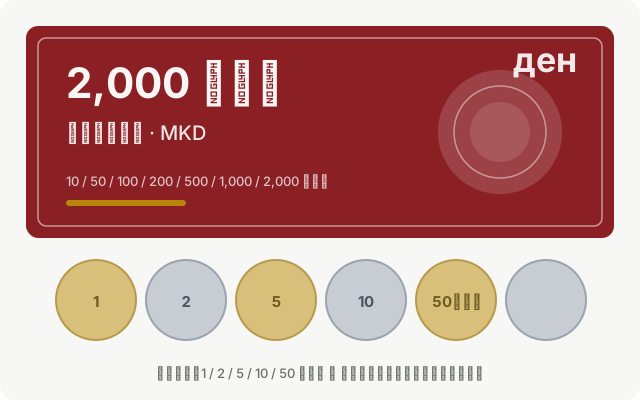
Current banknotes come in denominations of 10, 50, 100, 500, 1000, and 2000 denars. The designs feature national historical figures, landmarks, and flora and fauna, with clear color distinctions: lower denominations often use brown-red and green hues, while higher denominations lean toward blue-purple and reddish-purple tones. Coins are available in 1, 2, 5, 10, and 50 denar values, with varying sizes and materials. The 1 and 2 denar coins are used for minor change, while 10 and 50 denar coins are commonly used for bus fares, coffee, and market transactions. Some older banknotes remain in circulation alongside newer issues.
Cash and Payment Habits
Cash remains the dominant form of payment in North Macedonia, especially at traditional markets, bazaars, small restaurants, rural areas, and tourist vendors, which typically accept only denar in cash. In Skopje and Ohrid, upscale hotels, chain supermarkets, brand-name stores, and some restaurants accept international credit cards like Visa and Mastercard, but UnionPay acceptance is limited. It’s advisable to rely mainly on cash and supplement with cards when possible. ATMs are fairly accessible in major cities and airports, but watch out for cross-bank fees.
For currency exchange, banks and authorized exchange offices (менувачница) in Skopje offer competitive rates, usually better than airport counters. Exchange points are also available in Ohrid’s old town and resort areas, though rates may fluctuate slightly during peak seasons. Since the denar is pegged to the euro, exchanging euros for denar is often more favorable than using U.S. dollars, with fewer issues related to large change discrepancies.
Traveler Tips
- Euros cannot be used directly for purchases, though they can be exchanged. All prices and change are in denars, so carry sufficient cash.
- Restaurant bills may exclude service charges. Tipping 5–10% is customary in upscale establishments, while rounding up is acceptable in casual eateries.
- Use only authorized banks or exchange offices for currency exchange, avoiding street-side informal traders.
- For small purchases, keep some coins handy for public transport and bottled water.
Flag Meaning
Flag Design
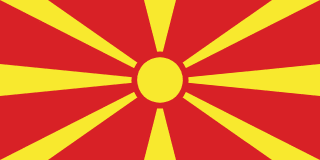
The flag of North Macedonia is a red rectangular banner with a 1:2 aspect ratio, featuring a golden-yellow sun at its center. The sun has eight rays radiating outward to the edges of the flag, creating a dynamic, sunburst-like design. The sun itself is a solid golden-yellow circle, with evenly spaced rays extending uniformly across the flag.
Meaning
Officially referred to as the “Sun of Liberty” (Macedonian: Сонцето на слободата), the red background symbolizes the blood shed for freedom and independence, while the golden sun represents the birth of a new nation, along with light and hope. The eight rays signify the spread of freedom’s light in all directions. The design is simple yet highly recognizable, symbolizing a fresh start and a new chapter for the country, free from past disputes.
History and Legal Status
The current flag was officially adopted on October 5, 1995. Prior to this, following independence in 1991, the country used a flag with a red background and a 16-rayed golden sun (known as the Vergina Sun or Кутлеш Сонце) at its center. This symbol was closely associated with the ancient royal heritage of the Kingdom of Macedon in northern Greece, leading to strong objections from Greece, which considered it part of its historical and cultural heritage. The dispute caused tensions between the two countries, including a brief Greek trade embargo.
To resolve the issue, North Macedonia changed its flag in 1995 under an interim agreement with Greece, adopting the current non-controversial eight-rayed sun design. The naming dispute persisted for nearly two decades until the 2018 Prespa Agreement and the official adoption of the name “North Macedonia” in 2019, which normalized bilateral relations. Today, the red-and-gold flag is widely displayed across government buildings, schools, sports events, and embassies, serving as a powerful national emblem.
North Macedonia Travel Guide
All Guides »North Macedonia Travel Quick Guide: Visa Policy, Best Time to Visit, Budget, and Local Etiquette
Find out how to get a visa, the most comfortable time to visit, your daily trave...
7-Day Classic Route in North Macedonia: Skopje, Matka Canyon, and Lake Ohrid 7 days
From the capital to Europe’s oldest lake, this relaxed itinerary connects stone ...
4-Day Short Trip to North Macedonia: A Leisurely Tour of Skopje and Ohrid 4 days
Even with limited time, you can experience the highlights of North Macedonia: th...
A must-visit attractions list for North Macedonia: Lake Ohrid, canyons, and capital landmarks
Explore North Macedonia’s top sights city by city, with highlights and recommend...
A Guide to North Macedonian Specialties: National Baked Beans, Charcoal-Grilled Meats, and Lake Trout
From the national dish tavče gravče to trout from Lake Ohrid, explore how and wh...
Complete Travel Guide to Transportation in North Macedonia: Airport Transfers, Intercity Buses, and Car Rentals
A guide to getting from Skopje and Ohrid airports into town, plus intercity buse...
Essential Travel Guide to North Macedonia: 10 Practical Tips and Safety Reminders
From visas and cash exchange to church etiquette and mountain driving safety, th...