Latvia
The Art Nouveau capital of the Baltic, renowned for Riga’s Old Town, Jurmala Beach, the centuries-old Song and Dance Festival, and the distinctive flavor of Riga Black Balsam.
Latvia (Republic of Latvia)
| Capital | Riga |
|---|---|
| Continent | Europe |
| Languages | Latvian |
| Currency | Euro (EUR €) |
| Time Zone | UTC+2 to UTC+3 (UTC+3 in daylight saving time) |
| Dialling Code | +371 |
| Area / Population | 64,600 square kilometers / Approximately 1.88 million |
| Visa | As a Schengen country, most foreign visitors need to apply for a Schengen visa (Type C) in advance using a regular passport, submitting materials through a visa center. A single-entry visa allows travel throughout the Schengen Area. |
| Best Season | June to August offers long daylight hours and the most pleasant seaside conditions in Jurmala; December highlights include Riga’s Christmas Market and snowy Old Town scenes, key Baltic winter attractions. |
| Main Cities | Riga, Jurmala, Cēsis, Sigulda, Kuldīga, Ventspils, Daugavpils, Rundāle |
Latvia in Detail
Overview of Latvia
Latvia (officially the Republic of Latvia) is located on the eastern coast of the Baltic Sea in northeastern Europe. It borders Estonia to the north, Lithuania to the south, Russia and Belarus to the east, and faces the Baltic Sea and the Gulf of Riga to the west. The country covers an area of approximately 64,600 square kilometers. Its capital, Riga, situated at the mouth of the Daugava River, is the largest city among the three Baltic states. Its Old Town and Art Nouveau district were collectively inscribed as a UNESCO World Heritage Site in 1997. Riga also serves as the region’s hub for shipping, finance, and culture. Latvia has a population of about 1.88 million. It joined the European Union and NATO in 2004 and adopted the euro in 2014.
Geography and Climate
Latvia is predominantly flat, with over half of its territory covered by forests and a dense network of rivers—more than 12,000 in total. The Gauja River valley, carved by the Gauja River, forms the core landscape of the “Switzerland of Latvia” around Sigulda and Cēsis. The coastline stretches about 500 kilometers, with Jurmala’s white-sand beaches being the Baltic’s most famous seaside resort. Ventspils on the Courland Peninsula is a major ice-free port. The climate is a transitional type between temperate maritime and continental: summers are cool, with July averages around 17–18°C and long daylight hours; winters in Riga see January averages of about -3 to -5°C, often bringing overcast, snowy weather due to Baltic moisture.
Historical Background
The Latvian people are an ancient Baltic ethnic group with a thousand-year tradition of polytheistic folk songs. Riga was founded in 1201 and spent centuries under the influence of the Livonian Order and the German-dominated Hanseatic League, becoming an important trading port. The House of the Blackheads was built by the unmarried merchants’ guild known as the Brotherhood of Blackheads. Later, the region came under Polish-Lithuanian and Swedish rule before being incorporated into the Russian Empire in the 18th century. On November 18, 1918, Latvia declared independence; it was annexed by the Soviet Union in 1940, experiencing war, exile, and mass emigration. In 1989, the “Baltic Way” human chain stretched from Tallinn through Riga to Vilnius. Latvia regained independence in 1991, joined the EU and NATO in 2004, and adopted the euro on January 1, 2014.
Economy and Currency
Latvia’s economy focuses on timber and wood products processing, transit logistics (with Riga and Ventspils ports as regional hubs), food processing, and information services. The IT and sharing economy sectors are growing rapidly. Riga is one of the Baltic region’s aviation hubs, with the highest passenger traffic among the three Baltic capitals. Historically, the Latvian lats was known for its exquisite design. The euro was fully adopted in 2014, making Latvia part of the Baltic eurozone alongside Estonia and Lithuania, enabling highly integrated cross-border business and travel transactions.
Culture and Society
The heart of Latvian culture is song: the country preserves over a million four-line folk poems called “dainas.” The national Song and Dance Festival, held every five years since 1873, features tens of thousands of singers performing together in a spectacular event. Alongside Estonia and Lithuania, this tradition is listed as UNESCO Intangible Cultural Heritage. Singing has played an irreplaceable role in the nation’s survival. Architecturally, Riga’s city center boasts around 800 Art Nouveau buildings, one of the highest concentrations in the world. The cuisine follows Baltic traditions, with rye bread, smoked fish, and Riga Black Balsam as the most iconic items.
Tourism Overview
Riga is the undisputed centerpiece of Latvian travel: its Old Town landmarks like the House of the Blackheads, Riga Cathedral, and St. Peter’s Church spires form a classic skyline. The Art Nouveau facades along Alberta Street are a pilgrimage site for architecture lovers, while the Central Market, housed in former Zeppelin hangars, is a must-visit. Nearby, Jurmala’s seaside promenade and white sands are perfect for relaxation. Sigulda and the Gauja National Park offer castles, cliffs, and zip-lining. Rundāle Palace is the Baltic’s most magnificent Baroque palace. Latvia’s moderate prices and lower tourist density make it ideal for a Baltic States trip combined with Estonia and Lithuania.
Local Currency: Euro (EUR)
Currency Overview
Latvia’s official currency is the euro (currency code: EUR, symbol: €). Latvia previously used its own currency, the lats (LVL, 1 lats = 100 santīmi). On January 1, 2014, it officially joined the eurozone as its 18th member. The fixed conversion rate was 1 euro = 0.702804 lats. After a two-week transition period, the lats was withdrawn from circulation, marking the start of the euro era. The euro is issued jointly by the European Central Bank and the Eurosystem, while Latvia’s central bank, Latvijas Banka, is responsible for minting euro coins and managing cash circulation domestically.
Denomination System
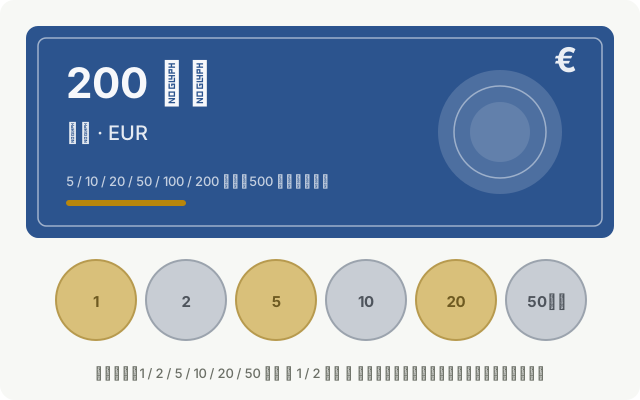
Euro banknotes are universally accepted across the eurozone, with denominations of 5, 10, 20, 50, 100, and 200 euros. Coins come in eight values: 1, 2, 5, 10, 20, 50 euro cents, and 1 and 2 euros. The reverse designs of Latvian coins are divided into three tiers: 1, 2, and 5 cent coins feature Latvia’s small coat of arms; 10, 20, and 50 cent coins display the large coat of arms. The most distinctive are the 1 and 2 euro coins, which bear the image of “Milda,” the national maiden from the 1920s 5 lats silver coin. Depicted wearing a traditional crown, she symbolizes Latvian womanhood and national spirit, holding special meaning for older generations.
Cash and Payment Habits
Cashless payments and contactless options are widely available in Riga and major cities, including malls, supermarkets, restaurants, trams, and airport buses. Apple Pay and Google Pay are commonly accepted. Compared to Estonia, Latvia sees slightly more cash usage: street vendors at the Central Market, rural shops, some Jurmala stalls, and church donations often prefer cash. It’s advisable to carry small bills (20–50 euros). ATMs and exchange services are available at Riga Airport and the Old Town. Bank ATMs typically charge lower fees for foreign cards, but always check rates and commissions at independent street exchange booths.
Traveler Tips
- Latvia uses the euro, so no currency exchange is needed when traveling between Estonia and Lithuania—making tri-country trips seamless.
- Cash is more common at the Central Market, farmers’ markets, and small-town stalls. Carry 5/10/20 euro notes.
- When withdrawing cash from ATMs, ensure the transaction is in euros (EUR). Avoid dynamic currency conversion to your home currency.
- Riga public transport tickets can be purchased at ticket machines, Narvesen convenience stores, or via mobile apps. Always validate your ticket after boarding.
- Restaurant bills usually include service charges, so tipping isn’t mandatory. For good service, rounding up or adding 5% is appreciated.
Flag Meaning
Flag Design
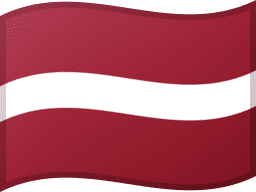
The Latvian flag consists of three horizontal stripes: dark red (wine/red), white, and dark red. The top and bottom dark red stripes are each twice the width of the white stripe. The official aspect ratio is 1:2. The dark red is officially defined as a deep wine-red (approximately 9E3039), not bright red, giving the flag a dignified and somber tone that stands out among world flags.
Meaning
Dark red symbolizes the blood shed by patriots and the resilience of the nation, while white represents purity, justice, and peace. Folklore recounts that in the 13th century, a wounded Latvian tribal chief was wrapped in a white shroud stained with blood—dark red at the edges and white in the middle—inspiring the flag’s design. During the 19th-century national revival, these ancient colors were reinterpreted as symbols of national identity.
History and Legal Status
The Latvian flag is considered one of the oldest in the world. The Livonian Rhymed Chronicle (circa 1280) records its use by tribes around Riga in battle, predating most European national flags. It was officially adopted after independence in 1918 but banned after the 1940 Soviet annexation. It was reinstated three times—by the exile community and during the 1980s “Singing Revolution”—before regaining official status in 1990. Current laws regulate the precise shade of dark red, the 1:2 ratio, and flag display protocols. On Independence Day (November 18) and during the Song and Dance Festival (mid-June), wine-red and white flags adorn Riga’s streets, complementing the medieval Old Town.
Latvia Travel Guide
All Guides »Latvia Travel Quick Guide: Schengen Visa, Seasons, Euro Budget & Riga Travel Pace
Riga Old Town is just the beginning—get your visa, budget, and seasonal plans so...
Classic 6-Day Latvia Itinerary: Riga — Jurmala — Sigulda — Rundāle Palace 6 days
Art Nouveau Old Town, white-sand beaches, river valley castles, and Baroque pala...
Latvia 4-Day Itinerary: Highlights of Riga Old Town and Jurmala 4 days
No hotel changes for four days: two days of in-depth exploration in Riga, one da...
Must-visit attractions in Latvia: Blackheads House, Art Nouveau District, and Jurmala Beach
A regional guide to 14 must-see attractions in Latvia, from Riga Old Town to the...
Latvia Food Guide: Riga Black Balsam, Gray Peas, and Baltic Smoked Fish
From 45-proof black balsam to farm-style gray peas, discover Latvia’s three key ...
Complete Guide to Transportation in Latvia: Getting to and from Riga Airport, Trains, Buses, and City Passes
Riga is a Baltic transport hub: airport buses take 15 minutes to reach the city ...
10 Practical Tips for Traveling in Latvia
From how to drink black balsam, to the schedule of the Song Festival, to choosin...